The Future Of Health Is Personal: Why ELYS Life Is Using AI To Fight Burnout, Stress, And Human Decline
While much of the AI conversation focuses on automation and job displacement, ELYS Life founder Renat Mansurov believes the technology’s greatest impact will be far more personal. In this thought-provoking feature, Mansurov explores how AI-powered personalization, longevity science, and nervous system regulation could help people reduce stress, improve resilience, and unlock sustainable high performance in an increasingly demanding world.
Jun 23, 2026
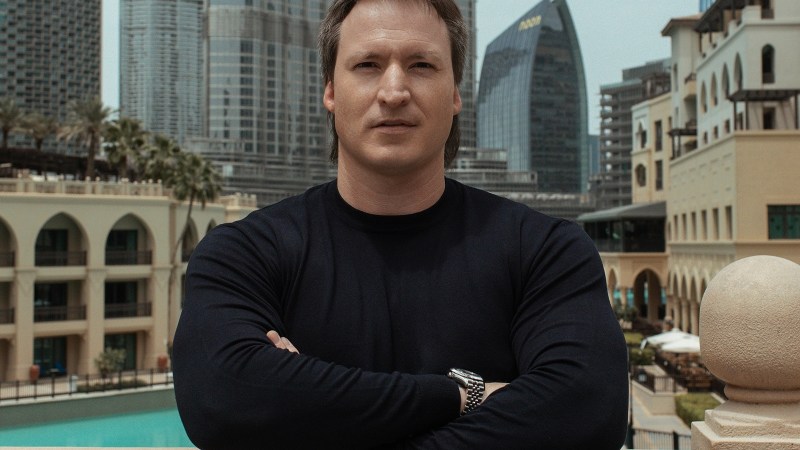
ELYS Life founder Renat Mansurov
ELYS Life founder Renat Mansurov
For years, the conversation around artificial intelligence has been dominated by a single question: Which jobs will AI replace?
But according to Elys Life founder Renat Mansurov, we may be asking the wrong question entirely.
While headlines focus on automation, productivity, and workforce disruption, Mansurov believes AI’s most profound impact will be far more personal. Not in the boardroom. Not in the factory. But within the human body and mind.
“We’ve spent decades building technology to make businesses more efficient,” he says. “Now we have an opportunity to build technology that makes people healthier, calmer, and more resilient.”
It’s a bold vision at a time when modern life appears to be moving in the opposite direction.
Despite having access to more health information than any generation before us, people are increasingly overwhelmed. Sleep quality is declining. Stress levels are rising. Anxiety has become a global epidemic. Millions of professionals spend their days optimizing calendars, meetings, and workflows while neglecting the very system that powers everything else: themselves.
The irony is difficult to ignore.
Never before have people had access to so many podcasts, wearable devices, health apps, supplements, wellness experts, and performance frameworks. Yet burnout remains one of the defining challenges of modern work.
The problem, Mansurov argues, is not a lack of information.
It’s the inability to translate information into meaningful action.
“The modern person is drowning in data but starving for clarity,” he explains.
This is precisely the challenge ELYS Life is attempting to solve.
ELYS Life is being built as an AI-powered longevity and human performance platform that turns fragmented biometric data, stress signals, sleep patterns and lifestyle habits into real-time personalized protocols. Instead of simply showing users another dashboard, ELYS Life aims to guide individuals through practical actions—from stress resets and breathwork to sleep optimization, recovery, movement, supplementation and future smart-environment integrations.
For Mansurov, the next generation of health technology should not overwhelm people with more information. It should simplify decision-making by delivering the right intervention at the right moment, based on an individual’s unique physical and emotional state.
One device tells you to recover. Another tells you to train harder. A podcast recommends a new supplement. A social media influencer promotes an entirely different protocol. The result isn’t optimization. It’s confusion.
This is where Mansurov believes artificial intelligence can change the game.
For decades, healthcare and wellness have largely been built around averages. Average nutritional recommendations. Average sleep guidelines. Average exercise programs.
But human beings are anything but average.
Every person has a unique combination of genetics, stress levels, lifestyle patterns, work schedules, emotional triggers, recovery needs, and behavioral tendencies. What works perfectly for one individual may fail entirely for another.
AI’s real superpower, according to Mansurov, is personalization at scale.
Rather than offering generic advice, intelligent systems can analyze thousands of signals simultaneously—from sleep quality and recovery metrics to stress patterns, activity levels, mood fluctuations, and behavioral habits—to provide guidance tailored to the individual.
In practical terms, this means moving away from reactive healthcare toward proactive wellbeing.
Instead of waiting until someone experiences burnout, chronic stress, anxiety, or physical illness, AI systems could identify warning signs early and intervene before problems escalate.
The implications extend far beyond personal health.
For entrepreneurs, founders, and executives, performance has traditionally been measured through output: revenue growth, fundraising rounds, market expansion, and shareholder returns.
But a growing body of evidence suggests that long-term success depends just as much on the health and resilience of the individual leading the organization.
A sleep-deprived founder does not make better decisions. A chronically stressed executive is not operating at peak cognitive performance. A burned-out entrepreneur cannot sustainably build a high-growth company.
Yet these realities are often overlooked in business culture, where exhaustion has historically been celebrated as a badge of honor.
That mindset, Mansurov believes, is overdue for change.
The next decade may redefine what high performance actually looks like.
Rather than glorifying overwork, future leaders may focus on energy management, nervous system regulation, recovery, emotional stability, and sustainable performance.
In fact, Mansurov predicts that one of the most important longevity conversations of the coming years will revolve around something surprisingly simple: the nervous system.
While biohacking, supplements, and cutting-edge health technologies continue to attract attention, chronic stress remains one of the most underestimated threats to long-term wellbeing.
When the nervous system remains trapped in a constant state of survival mode, everything suffers. Sleep quality declines. Recovery slows. Decision-making deteriorates. Relationships become strained. Physical health begins to erode.
No amount of optimization can compensate for a system that never truly rests.
As a result, practices such as breathwork, recovery protocols, sleep optimization, stress management, and emotional regulation may become as mainstream as fitness itself.
This is where AI could serve not as a replacement for human expertise, but as a daily companion helping individuals navigate the realities of modern life.
Doctors, therapists, coaches, and healthcare professionals will remain essential. However, they cannot be present every moment of every day.
AI can.
One of ELYS’ Life first focus areas is panic attack support and nervous system regulation. The platform is being designed to help users navigate moments of acute stress, fear, or overwhelm through calm, real-time guidance and personalized interventions. Importantly, Mansurov emphasizes that such tools are not intended to replace doctors, therapists, or qualified healthcare professionals, but rather provide an additional layer of support between appointments and moments of crisis while encouraging professional care whenever necessary.
The ambition reflects a broader shift taking place across the health technology sector: moving from reactive interventions toward continuous, preventative support that helps individuals better understand and regulate their wellbeing before problems escalate.
The vision is ambitious, but it reflects a broader shift already underway.
Health is no longer viewed solely as the absence of disease.
Increasingly, it is becoming the foundation upon which everything else is built. Business performance. Leadership effectiveness. Creativity. Relationships. Longevity. Quality of life.
Mansurov also believes Dubai and the wider MENA region are uniquely positioned to become a global hub for AI-powered longevity and human performance. As governments and private-sector leaders continue investing heavily in artificial intelligence, healthcare innovation, wellness ecosystems, and entrepreneurship, the region is creating an environment where the future of preventative health can be built, tested, and scaled.
For a city already known for embracing emerging technologies and ambitious innovation agendas, the convergence of AI, health, and human performance represents a natural next chapter. Mansurov sees this opportunity extending beyond healthcare itself, influencing the way founders, executives, and organizations approach productivity, resilience, and long-term wellbeing.
Perhaps the most important insight is that longevity itself is evolving.
For years, the concept was associated with extending lifespan. Today, a more compelling question is emerging.
Not how long we can live.
But how well.
The future of health may ultimately have less to do with adding years to life and more to do with adding life to every year.
And if AI succeeds in helping people achieve that, its greatest contribution may have nothing to do with replacing human work at all.
It may be helping humans become better versions of themselves.