The Infrastructure Powering The Next Era Of Global Commerce
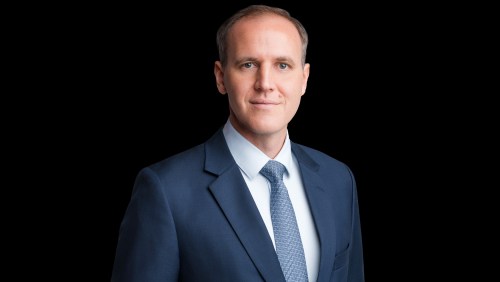
As businesses expand into increasingly complex digital economies, Onicore founder Andrii Bruiaka is building the infrastructure designed to remove friction from global payments, regulation, and market expansion—one integration at a time.
Jun 05, 2026
Onicore
Today, that observation sits at the core of Onicore's mission.
For decades, the promise of financial technology has been remarkably simple: make money move faster.
Yet despite billions invested into payments, banking, and blockchain innovation, the reality remains surprisingly fragmented. Businesses expanding across borders still face disconnected payment systems, regulatory complexities, currency challenges, and local market nuances that can turn growth into a logistical headache.
For Andrii Bruiaka, founder of fintech infrastructure company Onicore, that disconnect represents one of the most important opportunities in modern finance.
“Money is the ultimate product,” Bruiaka says. “It’s the blood of the global economy. Yet its movement is still slowed by outdated infrastructure and fragmented systems.”
That realization would eventually lead him to build Onicore—a payment orchestration platform designed to help businesses launch and scale financial services across multiple jurisdictions without rebuilding their entire financial stack from scratch.
But before founding the company, Bruiaka spent years working behind the scenes of some of finance’s most complex systems.
His career took him deep into banking infrastructure, currency exchange operations, blockchain technologies, cryptography, and anti-money laundering frameworks. It was an experience that exposed a recurring problem: while money had become increasingly digital, the systems supporting it remained fragmented.

“The defining moment came when I saw the huge gap between the theoretical availability of money and its actual security and manageability in a cross-border context,” he explains. “Despite all our technological progress, the plumbing of global finance was still broken.”
Today, that observation sits at the core of Onicore’s mission.
Rather than positioning itself as another payments company, the firm is building what Bruiaka describes as a financial orchestration layer—a technology infrastructure that sits between businesses, financial institutions, payment providers, and regulators.
The goal is simple: dramatically reduce the time required for companies to launch financial products in new markets.
“At its core, Onicore solves the problem of time-to-launch,” says Bruiaka. “We’ve built a core engine that allows businesses to launch transactional systems and financial services without spending years building infrastructure or navigating regulatory relationships from scratch.”
The approach is increasingly relevant as companies expand into high-growth digital economies across regions such as Latin America, Central Asia, Africa, and the Middle East.
For Bruiaka, the era of universal payment solutions is over.
“The one-size-fits-all approach to payments is dead,” he says. “True global scale now requires deep local integration and the ability to adapt to regional financial ecosystems in real time.”
That philosophy has shaped the way Onicore scales. Instead of pursuing growth through volume alone, the company focuses on creating sustainable, high-value partnerships capable of weathering economic uncertainty.
In an era where market volatility has become the norm, Bruiaka believes adaptability is no longer optional.
“Five-year roadmaps have become a liability,” he says. “Today we build for agile resilience. Sustainability is the new growth.”
That mindset extends beyond technology into leadership itself.
As venture capital becomes more selective and founders face increasing pressure to demonstrate profitability, Bruiaka sees a new generation of entrepreneurs emerging—one that balances creativity with discipline.
“The best founders today are becoming creatively cautious,” he says. “They’re more disciplined with capital but more radical in their problem-solving.”
It’s a philosophy reflected in Onicore’s own strategy.
Rather than chasing growth at any cost, the company prioritizes strong unit economics, enterprise partnerships, and long-term regulatory relationships. Bruiaka believes this approach creates a more durable business than the aggressive expansion strategies that defined the previous fintech cycle.
At the same time, he sees artificial intelligence accelerating that transformation.
Like many technology leaders, Bruiaka began experimenting with AI shortly after the arrival of generative AI platforms. But he believes the industry’s biggest shift arrived when AI moved beyond content generation and became capable of interacting directly with real-world systems.
Today, AI plays a significant role inside Onicore, helping automate quality assurance, fraud detection, analytics, reporting, and operational workflows.
Yet Bruiaka remains cautious about the industry’s growing obsession with automation.
“Most people still get one thing wrong,” he says. “They see AI as a replacement for strategy. It isn’t.”
For him, AI is an amplifier rather than a decision-maker.
“It can find patterns at incredible speed, but it can’t build trust or high-level financial partnerships. Those remain fundamentally human.”
That emphasis on trust is particularly important in fintech, where regulation increasingly shapes innovation.
It’s one reason why the UAE has become a strategic market for Onicore.
Operating from the Dubai International Financial Centre (DIFC), the company sees the Emirates as both a gateway and a testing ground for future financial infrastructure.
“The UAE is where East meets West,” Bruiaka says. “It’s one of the few places where digital-first regulation is actively being implemented rather than simply discussed.”
The company plans to deepen its presence in the region, including pursuing an Electronic Money Institution (EMI) license as part of its broader expansion strategy.
For Bruiaka, however, regulation is not an obstacle to innovation—it’s an enabler.
He envisions Onicore becoming a bridge between ambitious businesses entering new markets and regulators seeking transparency and oversight.
“We want to become the trusted layer between both sides,” he says. “A business gains faster market access, while regulators gain visibility and confidence.”
Ultimately, Bruiaka’s vision extends beyond payment processing.
He sees the next generation of financial infrastructure becoming largely invisible—embedded seamlessly into products, services, and digital experiences around the world.
If that future arrives, consumers may never know the technology powering their transactions.
But for Bruiaka, that’s precisely the point.
The best infrastructure isn’t the part people notice.
It’s the part they never have to think about.
For decades, the promise of financial technology has been remarkably simple: make money move faster.
Yet despite billions invested into payments, banking, and blockchain innovation, the reality remains surprisingly fragmented. Businesses expanding across borders still face disconnected payment systems, regulatory complexities, currency challenges, and local market nuances that can turn growth into a logistical headache.
For Andrii Bruiaka, founder of fintech infrastructure company Onicore, that disconnect represents one of the most important opportunities in modern finance.