How EMSTEEL is Turning Industrial Materials into Valuable Resources
EMSTEEL is expanding material recovery and reuse across its steel and cement operations, turning industrial by-products into resources for manufacturing while reducing waste and reliance on raw materials.
EMSTEEL
Image courtesy EMSTEEL
For a steel and building materials producer, circularity is more than waste management. It is about keeping materials in productive use for longer and creating links where material from one industrial process can become a resource for another.
For EMSTEEL, the scale of that opportunity is significant. In 2025, the Group produced 3.3 million tonnes of finished steel products and 2.2 million tonnes of cement, creating substantial opportunities for material recovery, scrap reuse and industrial resource efficiency.
Building on its Mission to Zero ambition, EMSTEEL is advancing a more circular operating model focused on reducing waste at source, increasing material recovery and strengthening synergies between its Steel and Cement businesses. Circularity increasingly influences process design, industrial inputs and resource-management practices across the Group.
Turning steelmaking materials into resources
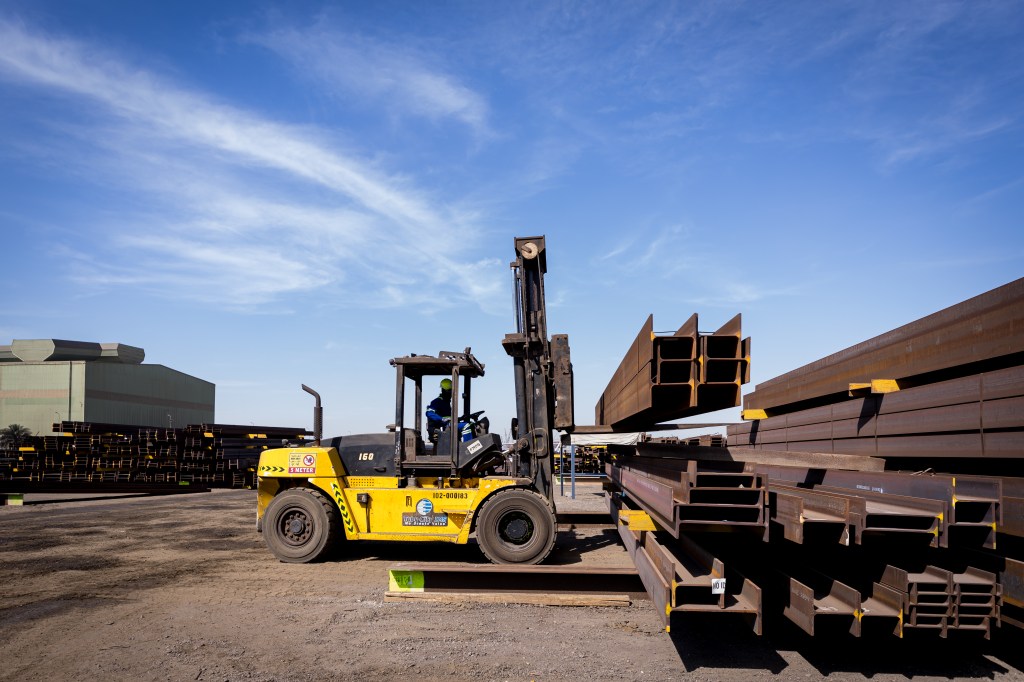
Steelmaking generates several material streams alongside finished steel. EMSTEEL identifies opportunities for these materials to return to production, enter other industrial processes or serve new markets rather than remain in storage or move to disposal.
In 2025, EMSTEEL exceeded its annual utilization target for process materials across its steelmaking operations. Recovery efforts covered mill scale, oxide fines, Direct Reduced Iron (DRI) fines, Direct Reduction Process (DRP) sludge, Electric Arc Furnace (EAF) slag, LF slag and fume treatment plant dust.
The Group also strengthened segregation and operational controls, increased recovery of iron-rich materials and established formal customer agreements supporting regular dispatches. A dedicated committee identified additional customers and applications, while research with Khalifa University expanded responsible utilization pathways and helped reduce storage pressure.
This approach is helping turn materials previously associated with storage or disposal into secondary resources with productive industrial applications, thereby reducing the need for virgin raw materials.
Connecting steel and cement
EMSTEEL’s integrated steel and cement portfolio creates an important circularity opportunity, allowing material generated in one business to support production in another.
A key example is the Group’s partnership with Finnish technology company Magsort, focused on recovering metallics from steel slag and transforming the remaining material into a high-value input for clinker and cement production.
Following successful testing in 2025, the project is now operational, with production performance ahead of target. Processed steel slag has the potential to replace up to 18% of raw materials in cement products, reducing demand for primary raw materials and emissions associated with limestone calcination.
Across the project period through 2032, the initiative is expected to deliver an estimated cumulative CO₂ reduction of more than 1.0 million tonnes. The initiative aims to demonstrate industrial circularity at scale, with material from steel production supporting lower-carbon cement manufacturing.
In addition to the Magsort initiative, EMSTEEL is advancing circularity within its Cement business by utilizing processed steel slag at the Al Mafraq Blocks Factory. Steel slag processed by Harsco is used as a substitute for natural aggregates in concrete block production, replacing up to 25% of aggregate requirements. This approach creates a valuable application for steelmaking by-products, reducing reliance on virgin raw materials and supporting more resource-efficient building materials.
Together, these initiatives highlight how EMSTEEL is strengthening circular economy linkages between its Steel and Cement businesses, transforming steelmaking by-products into valuable inputs for cement and construction materials, while maximizing resource efficiency across the Group’s operations.
Closing the steel loop
Scrap reuse is another core element of EMSTEEL’s circular economy model. In 2025, Emirates Steel utilized more than 350,000 tonnes of recycled scrap (post- and pre-consumer).
Improved recovery from cutting and rolling operations, stronger segregation and internal collection allow steel scrap to return directly to the Electric Arc Furnace process. This keeps valuable material within the production cycle and reduces demand for primary material inputs.
The approach demonstrates how circularity can become part of routine production management rather than a standalone environmental activity.
Reducing material sent to landfill
These efforts are also reflected in EMSTEEL’s waste performance. In 2025, waste directed to landfill decreased 23.6% year on year, while the Group continued strengthening recovery, segregation and waste controls across its operations. EMSTEEL also exceeded its annual utilization target for process materials.
Formal customer agreements have created more consistent and sustainable outlets for recovered materials, supporting regular dispatches, reducing storage build-up and strengthening the market for secondary industrial resources.
The focus is therefore not only on reducing landfill volumes, but also on developing reliable, sustainable and economically viable uses for recovered materials.
Circularity as a business system
EMSTEEL’s circularity model increasingly connects scrap recovery, steelmaking materials, cement production, customers, research partners and technology providers within one industrial ecosystem.
Circularity is also reflected in investment planning. EMSTEEL’s 2025 Green Finance Framework includes sustainable product innovation and renewable energy and energy-efficiency projects. This connects resource efficiency directly with capital allocation and the Group’s wider decarbonization strategy.
For EMSTEEL, circularity is evolving from a waste-management activity into a source of resource efficiency, lower emissions and industrial value. Through stronger links between steel and cement operations, expanded recovery systems and partnerships that create new applications for industrial materials, the Group is working to keep resources in productive use for as long as possible.
RELATED: GCC Promotes Five Industrial Opportunities to Reduce Imports, Strengthen Regional Manufacturing

Entrepreneur Middle East Staff
Entrepreneur Staff