Building Wealth The Right Way: Tajinder Virk On The Power Of Long-Term Investing
On Paradigm, Finvasia Group Co-Founder and CEO Tajinder Virk shares why long-term investing, disciplined leadership, and building real value still matter in today’s fast-moving financial world.
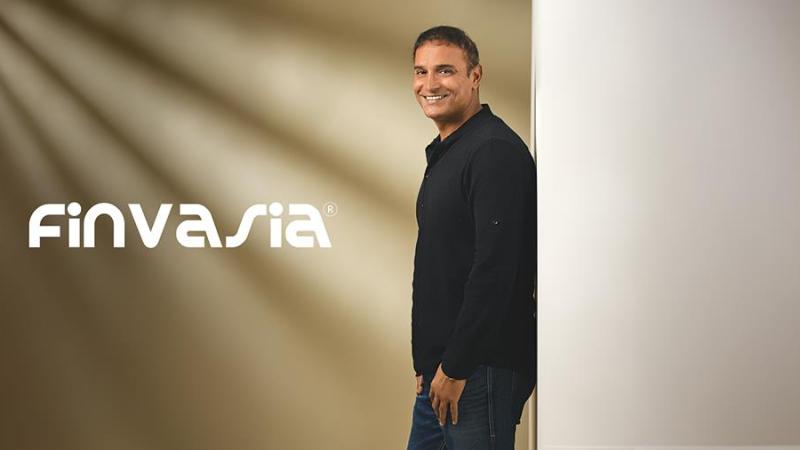
Tajinder Virk
Tajinder Virk, CEO of Finvasia Group, discusses long-term investing, fintech innovation, and entrepreneurship on the Paradigm podcast.
Opinions expressed by Entrepreneur contributors are their own.
You're reading Entrepreneur Middle East, an international franchise of Entrepreneur Media.
At a time when financial markets are evolving faster than ever—shaped by technology, accessibility, and real-time information—Tajinder Virk sees a powerful opportunity for investors to rethink how they approach wealth creation. The Co-Founder and CEO of Finvasia Group and the Founder behind the investment platform Dealing has spent years observing this transformation, and believes it is paving the way for a more thoughtful, disciplined, and ultimately more rewarding era of investing.
While modern trading platforms have made markets more accessible than ever before, they have also introduced new behaviors and habits among investors. For Virk, this moment represents not a setback, but a turning point—an opportunity to return to the fundamentals that have always driven sustainable financial growth: patience, clarity, and long-term thinking.
Speaking on the Paradigm podcast, Virk shared his perspective on how investing culture is shifting, and why the next generation of investors may benefit from slowing down and taking a more deliberate approach to decision-making.
At the core of his thinking is a structural challenge he has observed across global markets: fragmentation. Today, many investors manage their financial lives across multiple platforms—holding international equities in one account, local stocks in another, and digital assets on separate exchanges or wallets. Over time, this creates unnecessary complexity and makes it harder for individuals to maintain a clear, holistic view of their wealth.
Virk’s latest venture, Dealing, was built to address this challenge. By bringing multiple asset classes into a single, unified interface, the platform allows investors to manage global portfolios more seamlessly. But beyond convenience, Dealing reflects a broader philosophy—one that prioritizes long-term value creation over short-term activity.
Unlike many platforms designed around high-frequency trading, Dealing encourages a more measured approach. It is built for investors who are focused not on quick wins, but on steadily building wealth over time.
This philosophy is supported by long-standing market trends. Data across global markets consistently shows that a large percentage of individuals who engage in frequent trading struggle to achieve sustainable returns. For Virk, this reinforces the importance of approaching investing with intention and discipline.
“Investing should be closer to the process of buying a home,” he explains. “It’s not something that should happen in a split second. It should be thoughtful, considered, and aligned with long-term goals.”
That mindset is rooted in his own journey. Virk’s interest in financial markets began early, shaped by conversations within his family about stock markets and initial public offerings. What started as curiosity gradually evolved into a career, leading him from an engineering background to an MBA and eventually into the heart of the global financial system on Wall Street.
His time there provided valuable insights into how markets operate, but it also highlighted opportunities for improvement—particularly around complexity and the role of intermediaries. Motivated by a desire to simplify and modernize these systems, Virk eventually transitioned into entrepreneurship.
Together with his brother, he founded Finvasia Group with a clear vision: to build more efficient, accessible, and user-friendly platforms across industries. Today, the company operates in 12 countries and holds over 35 regulatory registrations globally, with initiatives spanning financial services, healthcare, and beyond.
This global presence has also given Virk a nuanced perspective on regulation. Rather than viewing it as a barrier, he sees thoughtful regulation as a key enabler of sustainable innovation—one that protects investors while supporting the growth of new ideas.
He points to markets like the UAE as strong examples of this balance, where regulators have created frameworks that both safeguard the system and encourage forward-thinking innovation.
Beyond strategy and systems, Virk places strong emphasis on leadership. For him, effective leadership begins with humility, curiosity, and the ability to listen.
“Leaders should listen more than they speak,” he says. “And they should surround themselves with people who are smarter than they are.”
He also underscores the importance of accountability. Every decision within a company has a ripple effect—impacting not just employees, but the families and communities connected to them. Recognizing that responsibility is central to building resilient, sustainable organizations.
Equally important is adaptability. Leaders who are willing to acknowledge mistakes and evolve their thinking, Virk believes, are far better positioned to navigate uncertainty and drive long-term success.
Despite building a global enterprise, his definition of success remains grounded. While financial achievement can create opportunities, he believes true success is ultimately about freedom—the ability to live life on one’s own terms, guided by purpose and meaningful relationships.
“Happiness is one of the few things that grows when you share it,” he reflects.
Looking ahead, Virk sees technology—particularly artificial intelligence—as a transformative force that will continue to reshape industries and redefine the future of work. While certain roles may evolve or become automated, he believes the core qualities that define entrepreneurship will remain distinctly human.
Intuition, resilience, and the ability to learn from failure are not easily replicated by machines. These qualities, he argues, will continue to differentiate those who build lasting companies from those who simply follow trends.
For aspiring entrepreneurs, his advice is clear: focus on solving real problems rather than chasing short-term gains.
Because in the long run, the businesses that endure are not those driven by speed alone—but those built on purpose, discipline, and a commitment to creating meaningful value.
At a time when financial markets are evolving faster than ever—shaped by technology, accessibility, and real-time information—Tajinder Virk sees a powerful opportunity for investors to rethink how they approach wealth creation. The Co-Founder and CEO of Finvasia Group and the Founder behind the investment platform Dealing has spent years observing this transformation, and believes it is paving the way for a more thoughtful, disciplined, and ultimately more rewarding era of investing.
While modern trading platforms have made markets more accessible than ever before, they have also introduced new behaviors and habits among investors. For Virk, this moment represents not a setback, but a turning point—an opportunity to return to the fundamentals that have always driven sustainable financial growth: patience, clarity, and long-term thinking.
Speaking on the Paradigm podcast, Virk shared his perspective on how investing culture is shifting, and why the next generation of investors may benefit from slowing down and taking a more deliberate approach to decision-making.

Mina Vucic • Director of Production and Multimedia, BNC Publishing
Entrepreneur Staff
Mina Vucic is the Director of Production and Multimedia at BNC Publishing, the media house... Read more