Abu Dhabi Can Now Build the Next Silicon Valley
If Silicon Valley were being designed today, it would require more than talent and capital.
Disclosure: Our goal is to feature products and services that we think you'll find interesting and useful. If you purchase them, Entrepreneur may get a small share of the revenue from the sale from our commerce partners.
You're reading Entrepreneur Middle East, an international franchise of Entrepreneur Media.
For decades, Silicon Valley has been treated as a place. In reality, it was never defined by geography. It was a system: a convergence of talent, capital, permissive regulation, institutional risk tolerance, and cultural permission to build before certainty existed. The outcome was compounding. Success created density, density created velocity, and velocity reinforced the system itself.
What made Silicon Valley powerful was not the zip code. It was the architecture. That distinction matters specifically now, because we are entering an era where technology ecosystems no longer need to emerge accidentally, they can be built intentionally.
The world has changed and capital and talent are now global and teams are distributed. Frontier technologies, AI, decentralized infrastructure, programmable finance, digital economies, do not fit neatly inside legacy industrial or regulatory frameworks. They require environments that are designed for iteration, scale, and long-term coordination.
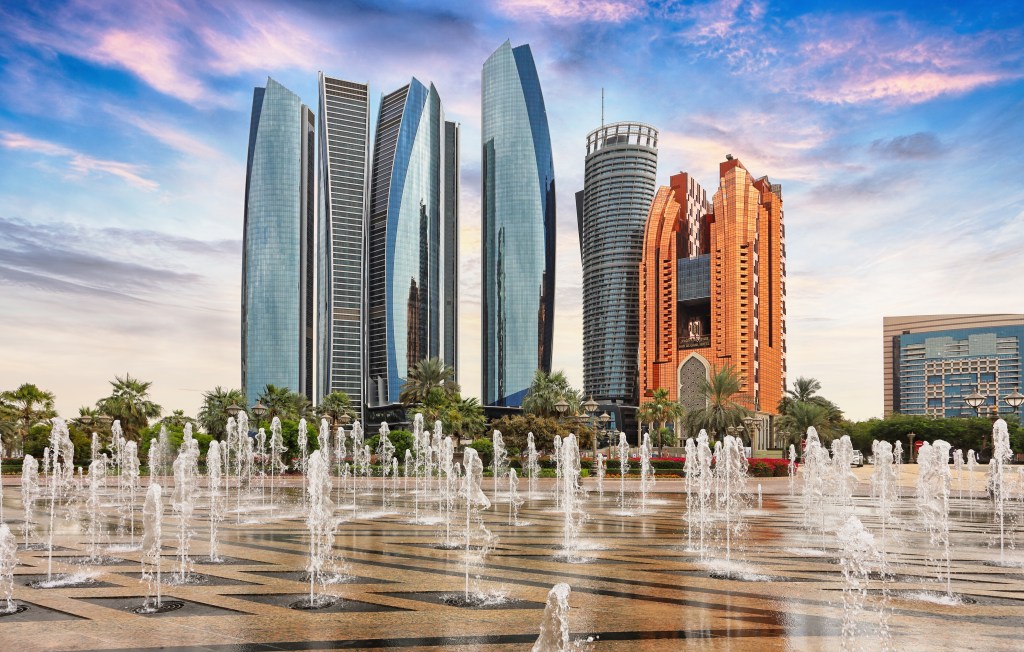
The question, then, is not whether another Silicon Valley can exist. The real question is where it would make the most sense to build one today. Increasingly, the answer points to Abu Dhabi. Over the past several years, the emirate has been assembling the underlying conditions required to support a next-generation technology ecosystem.
Not through imitation, but through system design focusing on safety and stability that enable long-term focus. Institutional clarity enables capital deployment at scale.
Long-horizon investment supports infrastructure-first thinking rather than short-cycle returns. These are not cosmetic advantages, they are structural ones that make all the difference.
Silicon Valley emerged during a specific historical moment, shaped by defense research, academic spillover, and a period of American economic dominance. Its growth was organic, but it was also deeply contextual.
Today’s frontier technologies operate under different constraints and opportunities. They demand regulatory legibility, patient capital, and coordinated execution across public and private stakeholders.
Abu Dhabi’s approach reflects this reality. Rather than isolating innovation into silos, the ecosystem is being built as a coherent whole. Capital, regulation, infrastructure, and talent policy are moving in parallel. Institutions are designed to reduce friction for founders, not increase it. Long-term alignment is prioritized over short-term signaling.
This matters because frontier technology does not scale on momentum alone. It scales on trust, between founders and regulators, between capital and institutions, between operators and markets. At the same time, the ecosystem remains early.
Operator density is still forming and repeat founders are limited. Playbooks are being written in real time. But this is precisely where opportunity exists.
The most influential technology hubs were shaped by early participants who had the ability to define norms, build institutions, and establish standards before maturity set in.
Ecosystems do not become inevitable by accident. They become inevitable when the system supporting them is strong enough to compound. This is where Abu Dhabi is differentiated.
It is not attempting to recreate the past. It is building for the conditions of the present, and the demands of the next decade. A world where AI reshapes labor and company formation, where compute becomes a strategic resource, where ownership, distribution, and value creation are increasingly programmable and where gaming, finance, and digital infrastructure converge into persistent, global economies.
These shifts are structural, not cyclical and structural shifts create openings for new centers of gravity.
If Silicon Valley were being designed today, it would require more than talent and capital. It would require institutional credibility, global connectivity, long-term funding capacity, and a clear mandate to operate as a platform, not just a city.
That combination is rare. Abu Dhabi has it.
This is why we are building Beam Ventures here. Frontier founders need more than investment. They need an environment that supports execution at scale, provides access to partners and institutions, and encourages long-term thinking over short-term optimization.
The future of technology will not be determined by the loudest ecosystems.
It will be shaped by the ones that build the strongest systems.
For decades, Silicon Valley has been treated as a place. In reality, it was never defined by geography. It was a system: a convergence of talent, capital, permissive regulation, institutional risk tolerance, and cultural permission to build before certainty existed. The outcome was compounding. Success created density, density created velocity, and velocity reinforced the system itself.
What made Silicon Valley powerful was not the zip code. It was the architecture. That distinction matters specifically now, because we are entering an era where technology ecosystems no longer need to emerge accidentally, they can be built intentionally.
The world has changed and capital and talent are now global and teams are distributed. Frontier technologies, AI, decentralized infrastructure, programmable finance, digital economies, do not fit neatly inside legacy industrial or regulatory frameworks. They require environments that are designed for iteration, scale, and long-term coordination.