Inside FII9: Rebellions
The FII9 Innovators Pitch 2025, hosted by the Future Investment Initiative (FII) Institute, spotlighted five startups that presented breakthrough AI-powered solutions transforming healthcare, sustainable materials, and next-generation computing. In this series, we explore how each of these innovators is shaping the future with technologies designed to deliver real-world impact.

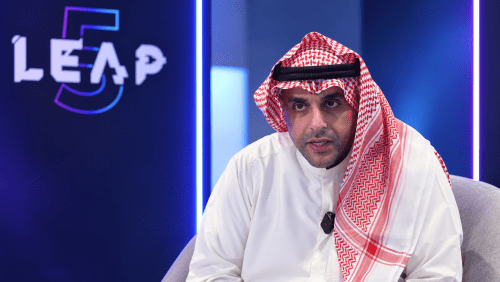
Sunghyun Park, co-founder and CEO, Rebellions
You're reading Entrepreneur Middle East, an international franchise of Entrepreneur Media.
REBELLIONS
Developing next-generation AI inference chips that redefine compute efficiency.
In a move that underscores the growing global momentum around AI hardware, Rebellions has become the first Korean AI semiconductor startup to establish a corporate presence in Saudi Arabia.
Known for its advanced AI inference chips that combine high performance with remarkable energy efficiency, the Seoul-based company is now positioning itself at the heart of the Kingdom’s rapidly expanding tech ecosystem—aligning with Saudi Arabia’s ambition to become a hub for artificial intelligence, deep tech, and sustainable innovation.
“We address one of the biggest bottlenecks in AI today — the fact that running advanced models at scale is becoming unsustainably expensive and energy-intensive,” says Sunghyun Park, co-founder and CEO, Rebellions. “Our chips are purpose-built for inference, the stage where AI meets real-world users, services, and industries. By combining hardware efficiency with a developer-friendly software stack, we make high-performance AI deployment dramatically more accessible. In short, we enable organizations to run more with less — less power, less cost, less complexity — without compromising on capability.”
The idea was inspired by a noticeable gap between the semiconductor industry’s investment priorities and the practical needs of enterprises. While most AI hardware development had focused on model training, many real-world applications such as chatbots, vision systems, and edge analytics continued to face significant inefficiencies. “We believed the future of AI would depend not only on training larger models but on serving them efficiently and sustainably,” Park says. “That insight led to Rebellions: a company focused entirely on purpose-built inference hardware designed for the era of ubiquitous AI services.”
Rebellions’ enterprise-focused approach is validated by its strong industry alliances. In July 2024, Waed Ventures, Aramco’s venture capital arm, led a US$15 million Series B extension investment round, marking the company’s first MENA investor and supporting Rebellions’ entry into the Kingdom’s AI infrastructure market. Since then, Rebellions raised US$250 million in a Series C at a valuation of US$1.4 billion.
Today, Rebellions is not only delivering rack-unit products to Aramco’s data center, but cooperating with other enterprises in Saudi Arabia, in addition to its growing activity in the United States, Europe, and key Asia-Pacific markets.
In taking part in the FII9 Innovators Pitch 2025, the Rebellions team highlighted their key message: the next leap in AI won’t come from being bigger or faster — it will come from being smarter, more efficient, and more responsible. “We wanted to highlight that performance and sustainability don’t have to be trade-offs; they can, and must, coexist,” Park explains. “Standing alongside some of the world’s most innovative startups reaffirmed our belief that AI hardware from Korea can compete — and collaborate — on a truly global scale.”

The recognition from the FII9 Innovators Pitch 2025, Young says, served both as validation and motivation. “It validates the years of engineering discipline, long nights, and patient problem-solving that go into deep-tech innovation — and it motivates us to keep pushing boundaries,” he says. “More than anything, it symbolizes that world-class semiconductor innovation can emerge from Asia and scale globally. We see it not as a trophy but as a responsibility to keep proving that high-impact, high-efficiency AI technology can be built outside of Silicon Valley.”
Furthermore, the exposure at FII9 opened new opportunities across the Middle East. “We’re now exploring collaborations that combine Korea’s semiconductor excellence with Saudi Arabia’s vision for AI-driven transformation,” Park explains. “In practical terms, it accelerates our ability to localize manufacturing, certification, and developer support in key global markets.”
In two years’ time, Park points out, the team aims to see Rebellions chips deployed across multiple regions, powering AI data centers and enterprise workloads at scale. “We plan to strengthen our software ecosystem so that developers can build, optimize, and deploy on Rebellions hardware as easily as they would on any mainstream platform. At the same time, we’ll continue to expand our presence in strategic markets like the Middle East and Southeast Asia, where demand for sovereign and efficient AI infrastructure is accelerating,” Park concludes.
‘TREP TALK: Sunghyun Park, co-founder and CEO, Rebellions, Advises Entrepreneurs
“Stay focused on real problems, not just trends. Deep-tech takes time, and progress can feel slow — but conviction compounds. Build with integrity, surround yourself with people who challenge you, and measure success not only by valuation but by the value you create for others. Ultimately, technology should serve people and the planet; if you hold that belief at your core, the rest will follow.”
REBELLIONS
Developing next-generation AI inference chips that redefine compute efficiency.
In a move that underscores the growing global momentum around AI hardware, Rebellions has become the first Korean AI semiconductor startup to establish a corporate presence in Saudi Arabia.
Known for its advanced AI inference chips that combine high performance with remarkable energy efficiency, the Seoul-based company is now positioning itself at the heart of the Kingdom’s rapidly expanding tech ecosystem—aligning with Saudi Arabia’s ambition to become a hub for artificial intelligence, deep tech, and sustainable innovation.

Tamara Pupic • Editor in Chief, Entrepreneur Middle East
Entrepreneur Staff
Tamara Pupic is the Editor in Chief of Entrepreneur Middle East.