A Real Estate Pioneer’s Take on the Making of Enduring Communities
For Meraki Group Founder and Chairman Ajay Rajendran, the relationship between real estate and education offers a window into a much bigger question: what makes people put down roots in a city?
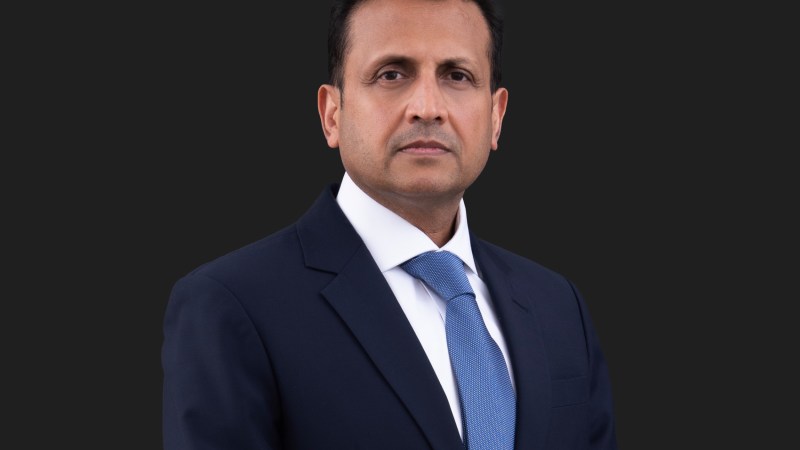
Meraki Group Founder and Chairman Ajay Rajendran
You're reading Entrepreneur Middle East, an international franchise of Entrepreneur Media.
Ajay Rajendran, founder and Chairman of Meraki Group, has been right at the front of Dubai’s transformation, watching it unfold. When he arrived in 2002, the population stood at just over 1 million. Today, it has surpassed 4.5 million, with the Dubai 2040 Urban Master Plan preparing the city for 5.8 million residents by 2040.
“People are no longer coming to Dubai with a two or three-year horizon,” he says. “They are building careers, buying homes, educating their children and, increasingly, planning their futures here. When that happens, what people expect from a city naturally changes.”
That evolution has shaped how Rajendran thinks about development.
Meraki’s interests span real estate, premium K-12 education, and a fully integrated construction ecosystem, with capabilities across civil and MEP contracting, structural steel, aluminium and façade systems, and architectural metal works.
Its education portfolio includes Hartland International School, North London Collegiate School (NLCS) Dubai and Singapore, and St Paul’s International School Singapore with further ventures set to join the Group in its next phase of growth in the education space.
On paper, these are distinct businesses. However, Rajendran increasingly sees them as interconnected parts of the same equation: building homes, infrastructure and institutions that allow communities to grow and endure.
Dubai has become exceptionally good at building with speed. However, as the city matures, Rajendran believes the conversation is moving from how much is being built, towards what allows individual developments to become established communities. Schools, green spaces, healthcare and connectivity all strongly influence whether residents put down roots.
“Putting residential buildings next to each other does not necessarily create a community,” he says. “People need reasons to stay. For families, education is one of the strongest reasons.”
Through Meraki’s four schools across Dubai and Singapore, Rajendran has seen how a reputable school can become an anchor not only for students, but for the wider neighbourhood around it. Families organise significant parts of their lives around education and where their children attend school influences where they live, their commute and whether they are willing to relocate at all.
“Education brings a certain stability to a community,” Rajendran explains. “When families are happy with the school, the home, and the environment around them, there is less reason to move. That stability is valuable socially, but it also contributes to the long-term strength of the residential market.”
Rajendran’s perspective has been shaped by more than 20 years across construction and real estate. Before establishing Meraki Group in 2015, he served as Co-Chairman of Sobha Group and was involved in landmark developments. Those years taught him that a project’s success rarely comes down to a single grand idea — more often, it’s how hundreds of smaller decisions come together. That thinking runs through Meraki’s residential portfolio: at Nirvana Residences, landscaped environments are integrated throughout the development through Nirvana Groves, with natural light, ventilation and green pockets as part of the broader experience.
This is also where Rajendran believes the definition of value in real estate is changing. As Dubai’s resident population grows and more buyers purchase homes for their own use, developers are increasingly serving two expectations at once: investment performance and quality of life.
“You have to think about value beyond the day you sell the property,” Rajendran says. “What will make somebody want to live there five years from now? Those are the questions that ultimately build the reputation of a development and of the developer behind it.”
It explains another defining characteristic of Meraki’s vertically integrated model, which Rajendran believes creates greater accountability for the final product. At The Haven, 73% of homes were delivered snag-free, and one-bedroom residences have commanded rents of around AED 75,000 annually, compared with approximately AED 63,000 for similar units in the wider Majan area.
The same long-term thinking explains Meraki’s commitment to education. Among more than 6,200 IB schools worldwide, NLCS Singapore ranks 18th and NLCS Dubai 22nd, with both among the youngest schools to enter the global top 25.
“The next phase of growth cannot only be about adding supply,” Rajendran says. “We have to think about what kind of city we are creating for the people who will live here.”
Ajay Rajendran, founder and Chairman of Meraki Group, has been right at the front of Dubai’s transformation, watching it unfold. When he arrived in 2002, the population stood at just over 1 million. Today, it has surpassed 4.5 million, with the Dubai 2040 Urban Master Plan preparing the city for 5.8 million residents by 2040.
“People are no longer coming to Dubai with a two or three-year horizon,” he says. “They are building careers, buying homes, educating their children and, increasingly, planning their futures here. When that happens, what people expect from a city naturally changes.”
That evolution has shaped how Rajendran thinks about development.

Entrepreneur Middle East Staff
Entrepreneur Staff