From Listening To Acting: Abdullah Asiri, Founder and CEO, Lucidya
Abdullah Asiri built a Saudi AI company on the wager that the region’s four hundred million Arabic speakers deserved technology built for them first, not translated for them later.
You're reading Entrepreneur Middle East, an international franchise of Entrepreneur Media.
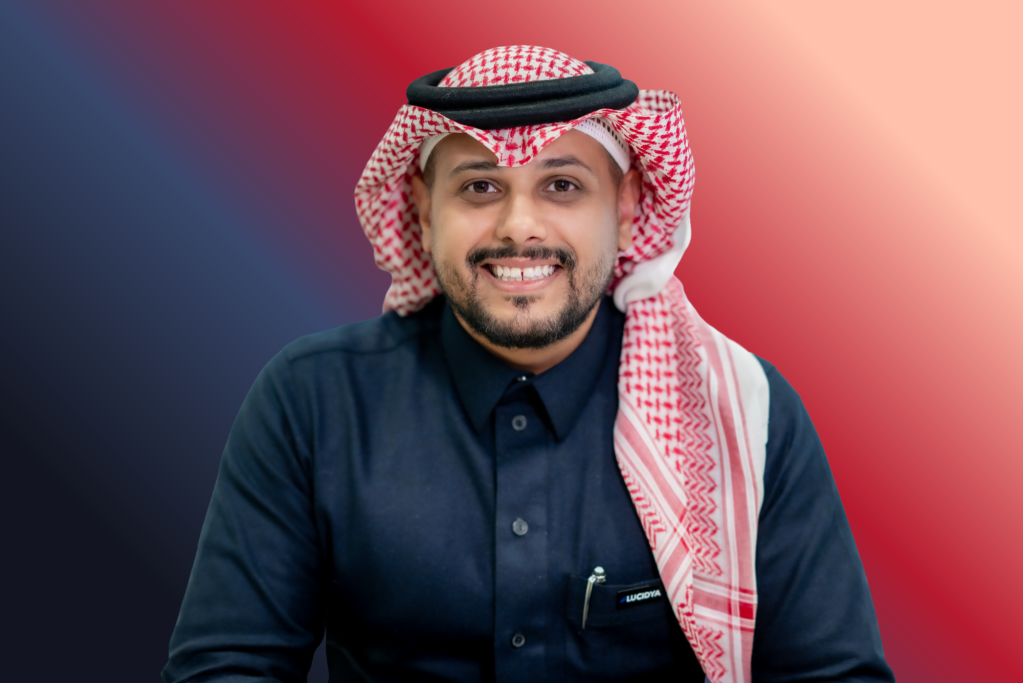
This article was the cover story for Entrepreneur Middle East’s October 2026 Special Edition.
Most technology companies make broad claims about artificial intelligence that amount to little more than marketing language. Lucidya is making a harder one. Lucidya is the Agentic CX Platform that enables organizations to autonomously turn customer and market intelligence into real-time resolution and measurable business outcomes, and its Founder and Chief Executive Officer, Abdullah Asiri, argues that nearly ten years of Arabic-language data, collected before anyone was rewarding that choice, has produced a technical advantage that competitors cannot simply fund their way into. It is a claim that only holds up if the company can prove it outside Saudi Arabia, in markets where nobody cares where the flag comes from. That is precisely the test Asiri has now set for himself.
Lucidya was founded in 2016 in Jeddah by Abdullah Asiri alongside Hatem Kameli, Mohamed Milyani and Zuhair Khayyat. Today it serves customers in thirteen countries from banking and government to travel, insurance and logistics, and Frost & Sullivan has named it a category leader in AI-powered customer experience. Its platform brings together social listening, media monitoring, customer profiling, surveys and omnichannel engagement through its OmniServe solution, with proprietary models the company says understand seventeen Arabic dialects, from Khaliji to Maghrebi, and achieve ninety-two percent across. In an extended interview, Asiri walked us through the decisions that built that position, the ones he regrets moving too slowly on, and why he thinks Saudi Arabia’s technology sector is only now being tested for real.
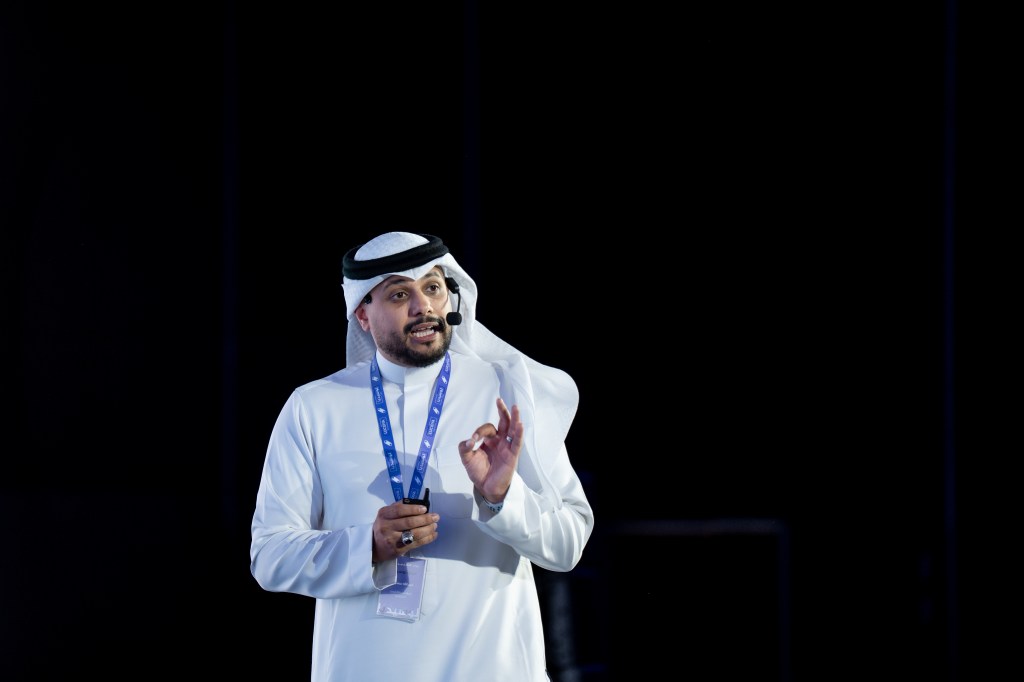
The Company Forced Him to Change, Not the Other Way Around
Asiri is unusually blunt about how little of his own leadership evolution was voluntary. “The honest answer is that I have had to become a different CEO roughly every eighteen months, and each time it was the company forcing the change, not me choosing it,” he said. In the earliest years, that meant doing everything himself. “In the early years, leadership meant doing. I was writing the pitch, sitting in the sales meetings, arguing with engineers about model accuracy. That is not a style, that is survival.”
The first real break came between 2022 and 2023, when Lucidya had one working product, social listening, and a comfortable path to keep compounding on it. Instead, the company shipped OmniServe, a customer data platform and engagement tools inside roughly twelve months, and revenue grew. But Asiri points to a quieter consequence as the more important one. “I stopped being able to hold the whole company in my head. That was the moment I understood my job was no longer to make good decisions. It was to build an organisation that makes good decisions without me in the room.”
That realization also meant embracing a different approach to leadership: bringing in experienced specialists across key functions and trusting them to lead. Lucidya’s chief financial officer previously ran global finance at a company generating seventy times its revenue. Its vice president of engineering helped scale a company through a $3.5 billion IPO. Its chief revenue officer owned revenue in the fastest-growing region for a $100 billion company.
“Hiring them was the easy part. Getting out of their way was much harder,” Asiri said. “I had to unlearn a habit I did not know I had, which is walking into a meeting, hearing a problem, and immediately supplying the answer. It feels like leadership. It is not. What happens over time is that people stop bringing you their thinking and start bringing you a decision to rubber-stamp.”
He credits Liz Wiseman‘s book Multipliers with naming the pattern precisely. “I was an accidental diminisher,” he said. “Now I try to walk in with questions instead of answers, and I hold myself to a simple rule. If someone else can make a call at seventy percent of my quality, they make it. My bandwidth belongs to the ten percent of decisions that only I can make.”
The third shift, Asiri says, is happening right now, as agentic AI forces Lucidya to reconsider what a customer service organization is, including its own. “It is genuinely difficult to disrupt a product you built and that clients are happily paying for,” he said. “Choosing to do it anyway, while scaling past three hundred people across multiple countries, has demanded a kind of leadership I did not have five years ago. Less certainty, more clarity. Slower on the decisions you cannot reverse, and much faster on the ones you can.” He summarizes ten years in a single line: “I started as the person with the answers, and I am trying to become the person who builds the place the answers come from.”
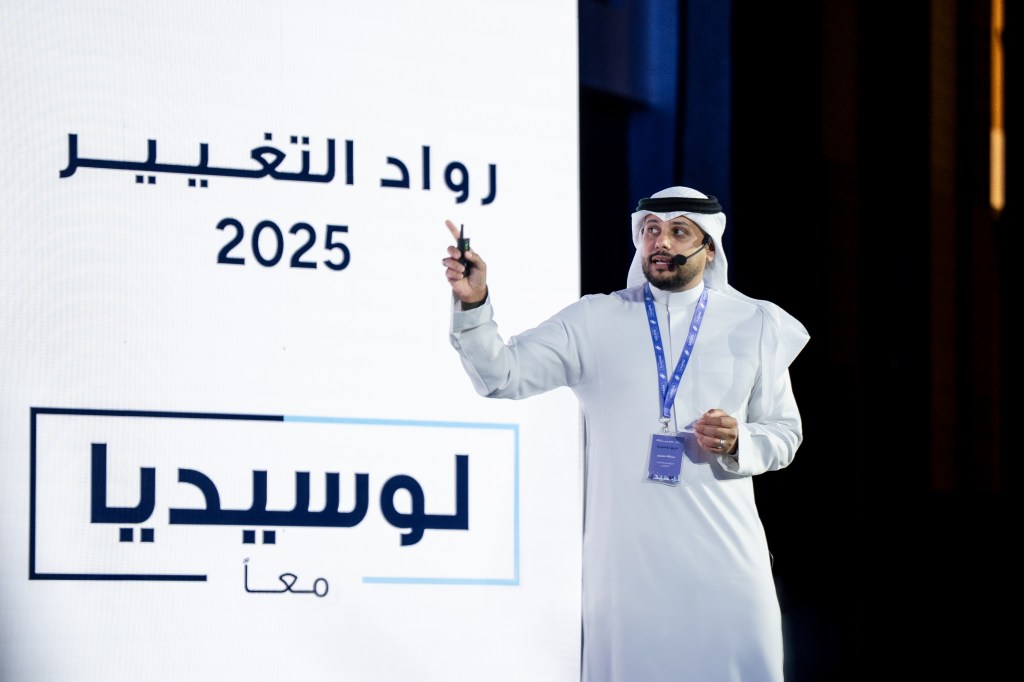
Arabic as the Primary Product
Asked which single decision most shaped the company’s trajectory, Asiri does not hesitate. “The first was deciding that Arabic would be the product, not a feature,” he said. In 2016, the obvious and cheaper path was to build a strong English tool and bolt on Arabic support later. Lucidya went the other way, and paid for it in slower fundraising and harder investor conversations. “What it bought us is the thing nobody can buy back: 10 years of Arabic conversation data, more than ten billion public posts, and models trained on seventeen sub-dialects,” he said. “Today our Arabic models outperform general-purpose frontier models on regional dialect. That gap did not come from being clever. It came from starting earlier and never switching.”
The second consequential decision was choosing to earn credibility in the public sector first, against conventional startup advice to chase faster-moving private clients. “We chose the harder path on purpose, because serving ministries forces you to solve data residency, security certification and compliance properly rather than promising to solve them later,” Asiri said. That standard, once met, made the move into banking, telecom, retail and travel a step down in friction rather than up. Lucidya now serves brands across more than ten industries.
The third was resisting pressure, once large language models arrived in 2023, to strip out proprietary research and become a thin layer on top of someone else’s API. “We chose a hybrid instead,” Asiri said. “We use frontier models where they genuinely win, and we keep our own models where Arabic dialect, Saudi context and accuracy actually decide whether a customer trusts the output. If we had outsourced our intelligence layer in 2023, we would be a distribution company today with no defensible position.”
Of the four, Asiri singles out Arabic-first as structurally different from the rest. “Arabic-first is the only one of the four that compounds while I sleep,” he said. “Every conversation that runs through our platform makes the models better, which makes the product better, which brings more conversations. The other decisions were good judgement. That one was structural.”
He is equally candid about a mistake he says he has repeated. “On senior people who were not working, I have consistently moved too slowly. Every time, the delay cost more than the correction would have,” he said. “I now force myself to answer one question before any significant people decision: in six months, will I regret not having made this call sooner? If the answer is yes, I move within two weeks.”
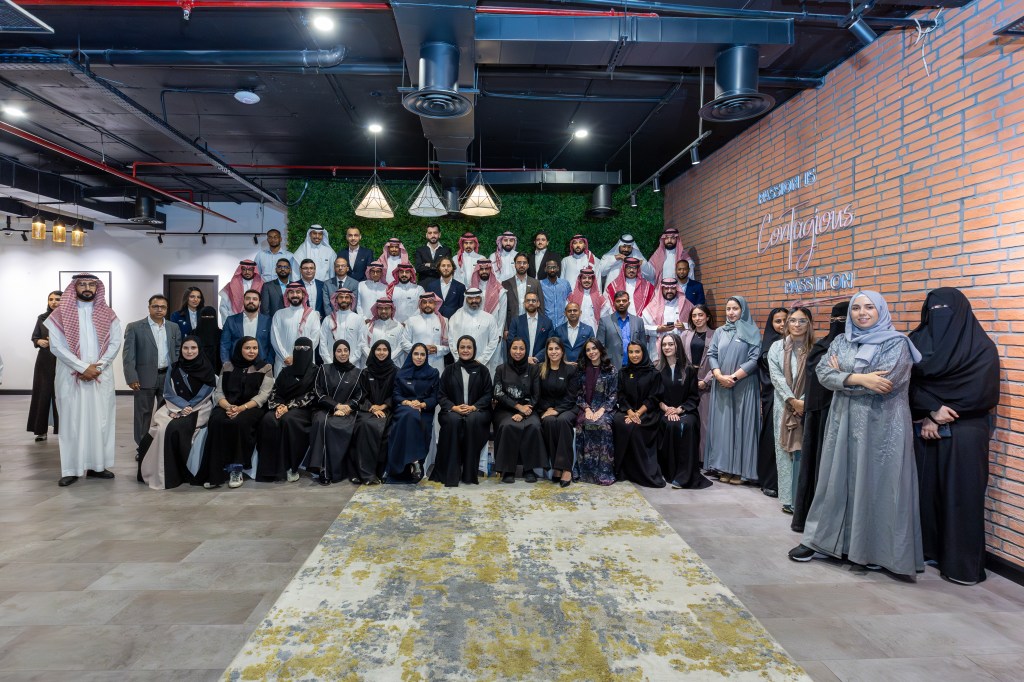
Competing on Capability
For Asiri, Saudi Arabia’s next generation of global companies will be defined by a harder test than the one their predecessors faced. “The previous generation of successful Saudi companies largely competed on access, meaning privileged relationships and a privileged position in a protected market,” he said. “That model produced real businesses, but it does not travel. The moment you leave the Kingdom, access is worth nothing.” What has changed, in his telling, is that global vendors are already inside the Kingdom competing directly. “We do not win those deals because we are Saudi. We win them when our product is measurably better at the thing the customer actually needs, and we lose them when it is not. That pressure is the best thing that has happened to Saudi technology.”
Asiri traces his own ambition back to a specific sentence he has carried for fifteen years, since starting his first company in 2011. “When I came back from the United States, the dream was very specific. Not to build a successful Saudi company serving Saudi customers. To build technology made in Saudi Arabia and export it, from the east of China to the west of the United States,” he said. “It sounded unreasonable when I first said it out loud, and I said it anyway, because if you do not name the destination you will never build toward it.”
He argues Lucidya’s international claim rests on something narrow and defensible rather than a national story. “Arabic is not a niche language. It is spoken by more than four hundred million people, and until recently it was served by technology built as an afterthought,” he said. The second thing that travels, he says, is the operating standard forced on the company by Saudi regulation. “Building to that standard means that when we sell in the Gulf, in the United Kingdom or in the United States, we are not scrambling to meet requirements we have never seen. We are already above them.”
That is no longer theoretical. Lucidya now serves customers across thirteen countries including the United Kingdom and the United States, with a sales team on the ground building the American market. “It is early and it is hard, and I would rather talk about it honestly than package it as a success story before it is one,” Asiri said. He is careful to separate the exciting parts of the Saudi technology story from the unglamorous ones still being proven. “Not raising money, not launching products, but sustaining retention, holding margin discipline over years, and building management depth that does not depend on the founder. Those are unglamorous and they are what separates a company that scales from a company that has a good few years.”
The internal standard he holds Lucidya to is deliberately stripped of national framing. “If we build a company that would be competitive if you removed the Saudi flag from it entirely, then the Saudi flag becomes a genuine advantage rather than an explanation,” he said. “Not ‘impressive for a Saudi company.’ Just good.” He returns, unprompted, to what he says he cares about more than any outcome for Lucidya itself. “I want the next generation of Saudi founders to start from a bigger default. Not to build for Riyadh and think about the world later, but to assume from the first day that what they build is meant to leave the country. In five years, I do not want anyone to find it remarkable that a global category leader in AI came out of Riyadh.”
From Analysis to Action
Asiri resists the now-common habit of companies claiming to be Agentic CX without the label meaning very much. “The distinction that actually matters is whether AI is the thing you sell or the thing you added,” he said. He points to three layers that make Lucidya’s use of AI structural rather than decorative: nearly ten years of compounding Arabic conversation data, more than fifty proprietary models running in production alongside frontier models where they genuinely perform better, and a shift from analysis to action that he considers the real turning point. “For most of our history the product answered questions. What are customers saying, what is the sentiment, where is the problem. Valuable, but it stops at the insight and a human still has to do the work,” he said. “Our AI Agent closes the loop. It resolves the case inside the customer’s own systems, under policy controls, with an audit trail, and escalates when it should.”
The results from one deployment, run over five months, are specific. “The agent handled around eighty-five percent of eligible cases with no human touch and removed roughly six thousand hours of work from that team,” Asiri said. “That is not a better dashboard. That is capacity that did not exist before.” It is the basis for a line he repeats often, including from the stage at LEAP. “Agentic AI is an organisational redesign disguised as a technology purchase. Companies buy it expecting a tool and discover it changes what their teams are for. The ones who treat it as a procurement decision get a chatbot with a bigger budget. The ones who treat it as a redesign get a different cost structure and a different service standard.”
Asked what separates companies that turn AI pilots into real business impact from those stuck in permanent experimentation, Asiri points first to measurement discipline. “Most projects begin with ‘we should be doing something with AI.’ That is how you end up with a demo,” he said. “The companies that succeed start from a specific operational number they are already accountable for. Cost per contact. Backlog. Time to resolution. First response SLA.” The second is resisting the pull toward impressive demos in favor of unglamorous, high-volume work. The third, which he calls the single biggest failure point he sees, is refusing to give AI systems real authority. “Organisations deploy AI that can talk but not act, because giving a system write access to the CRM or the order management platform feels dangerous. So the AI has a nice conversation and then hands off to a human who does the actual work. You have added a step, not removed one.”
He argues governance belongs at the start of a project, not as a checkpoint at the end, and that the deepest failure is treating automation as a technology purchase rather than a redesign of work itself. “If you automate forty percent of a process and change nothing else, you keep the same team doing the same workflow with a slightly lighter load, and the savings never appear,” he said. “That is why I keep saying that agentic AI arrives disguised as a technology purchase and is actually an organisational redesign.”
On where the industry goes next, Asiri predicts the last three years of generative AI in customer experience will look, in hindsight, like a false start. “Chatbots that finally sounded human. That was a genuine improvement over the scripted decision trees people hated, but it solved the wrong half of the problem,” he said. “A system that apologises fluently and then transfers you to a queue has not helped you.” The real shift ahead, in his view, is the move from conversation to execution, which he says will invert the economics of the entire industry, make service proactive rather than reactive, retire deflection as a metric companies boast about, and make governance a purchasing criterion rather than a compliance checkbox.
A Deliberate, Staged Path Abroad
Asiri is openly skeptical of the instinct that drives most companies to expand internationally. “My honest position is that most companies expand internationally too early, and they do it for the wrong reason,” he said. “Expansion is exciting, it looks good in a board deck, and it is often a way of avoiding harder work in the home market. I have had to talk myself out of it more than once.” Lucidya’s rule, as he describes it, is to stage everything and commit real money only at the final step, moving through phases he calls explore, test, validate and scale.
He divides Lucidya’s markets into three tiers. The Gulf is treated as an extension of home rather than a foreign market, given shared language and overlapping enterprise customers. The United States, where Lucidya already has customers and a sales team on the ground, is the market Asiri says he cares most about, precisely because it offers no local advantage to hide behind. “We are going in product-led, letting people use the product, prove value on their own, and pull us in,” he said. “It is a much harder discipline because there is nowhere to hide behind a relationship. The product either wins or it does not. That is exactly why it is the right test.” The rest of the Middle East and North Africa region, by contrast, is demand-led rather than a target for investment ahead of signal.
Four questions determine where Lucidya goes next, in order: whether there is genuine market pull rather than a slide showing total addressable market, whether the company can win on capability rather than proximity, whether leadership has the bandwidth to enter without diluting focus on the core business, and whether the move compounds by strengthening more than one part of the company at once. “The best expansion moves strengthen more than one thing at once. Revenue, yes, but also product hardening, credibility, talent access, or the ability to enter the next market more cheaply,” he said. “Earn the right to expand, then expand with conviction. When we go somewhere, I want us to be the best option available to that customer, not the interesting one.”
Culture Does Not Decay on Its Own
Asked how Lucidya protects an entrepreneurial culture while scaling past three hundred employees, Asiri pushes back on the framing itself. “What you are actually protecting is decision speed and ownership, and both of those are killed by specific, identifiable behaviours, most of which start at the top. Culture does not decay on its own. Leaders decay it,” he said.
He points to the same seventy percent rule that governs his own decision-making, extended to the rest of the company, and to a discipline of naming, out loud, which decisions are reversible and which are not. “We treat most decisions as two-way doors. Move at fifty or sixty percent confidence, decide now, correct later,” he said. “What kills speed in most scaling companies is applying irreversible-decision rigour to reversible decisions.” He returns again to the risk of accidental diminishing, this time as a company-wide discipline rather than a personal confession, and adds a fourth mechanism: making it safe to kill initiatives that no longer make sense. “We use a simple test: knowing what we know today, would we start this now? If no, we stop it, and stopping it is treated as good judgement rather than failure.”
He is unwilling to treat culture as separate from enjoyment of the work itself. “I want this to be fun. That is not a soft point,” he said. “Nobody does their most inventive work while playing defence, and a scale-up that becomes joyless will still hit its numbers for a year or two before the good people leave. High performing and fun is not a trade-off I accept.”
What the Ecosystem Bought, and What It Still Owes
Asiri credits Saudi Arabia’s public sector with a role he calls decisive in Lucidya’s growth, though he is precise about which parts mattered most. “The most important thing was demand, not subsidy,” he said. “A first enterprise customer teaches you more than any amount of funding, because it forces you to be genuinely good rather than promising.” He counts regulation, often overlooked as a form of support, among the most valuable interventions the Kingdom made. “Data residency requirements, the personal data protection framework, cloud-first policy, national AI ethics guidelines. From the inside, complying with all of that is expensive and slow, and there were moments it felt like a tax on being small. In hindsight it was the single best thing that happened to our product.” Lucidya also holds a research grant with the Saudi Data and AI Authority alongside King Abdullah University of Science and Technology, working on training methods for large language models, a form of collaboration Asiri says did not exist when he started his first company.
He is careful, though, to draw a hard line around what government support can and cannot deliver. “Government support creates the conditions. It does not create the capability, and it must never become the reason a company exists,” he said. “We have never won a competitive deal because we are Saudi. We win when our product is measurably better and we lose when it is not, and I want to keep it that way, because a company built on protection cannot export.”
Looking at what would help most going forward, Asiri argues for fixing procurement rules that inadvertently exclude the scale-ups the Kingdom is trying to build, shifting government and enterprise contracts to pay for measurable outcomes rather than software licenses, and building a public, national benchmark for Arabic-language AI so vendors can be checked against a shared standard rather than making unverifiable claims. He also wants recognition tied to international traction rather than domestic revenue alone. “Local success can be explained by proximity. International revenue cannot. I would rather compete for support on that basis, and I think most serious founders here would say the same.”
Start From the Destination, Not the Task
Asked what has stayed constant across fifteen years and three companies, Asiri returns to a single organizing idea. “The principle that has not moved in my fifteen years of building tech companies is this: start from the destination, not from the task,” he said. “Almost every decision gets tested against where we intend to be, not against whether it is useful this quarter.” He acknowledges the cost of that discipline plainly. “It has a cost. It makes you look stubborn, and sometimes you are simply wrong, in which case you have been stubborn about the wrong destination for two years. But the alternative, optimising for the nearest visible win, produces companies that are busy and going nowhere in particular.”
His advice to founders building from the Middle East toward global scale follows the same logic: name an ambition even when it sounds unreasonable, find the advantage that compounds with time rather than capital, refuse to compete on being local, get disciplined about the unglamorous fundamentals of retention and margin, and move quickly on decisions that can be undone while slowing down on the ones that cannot. His closing advice is the most personal. “Expect it to take longer than you planned. Lucidya is ten years old, and it is only now that competing globally is a credible sentence rather than a hope. If you are three years in and it feels harder than it should, you are probably on schedule.”
For a founder who has spent ten years advocating that Arabic would be an advantage rather than the limitation, that patience reads less like caution than like conviction. “I would rather be one of the companies that went first, took the hits, and left a usable map behind, than the company with the best individual outcome,” Asiri said. “If the founders coming up behind us can learn our lessons without paying for them, that is a better return than anything on our balance sheet.”
This article was the cover story for Entrepreneur Middle East’s October 2026 Special Edition.
Most technology companies make broad claims about artificial intelligence that amount to little more than marketing language. Lucidya is making a harder one. Lucidya is the Agentic CX Platform that enables organizations to autonomously turn customer and market intelligence into real-time resolution and measurable business outcomes, and its Founder and Chief Executive Officer, Abdullah Asiri, argues that nearly ten years of Arabic-language data, collected before anyone was rewarding that choice, has produced a technical advantage that competitors cannot simply fund their way into. It is a claim that only holds up if the company can prove it outside Saudi Arabia, in markets where nobody cares where the flag comes from. That is precisely the test Asiri has now set for himself.
Lucidya was founded in 2016 in Jeddah by Abdullah Asiri alongside Hatem Kameli, Mohamed Milyani and Zuhair Khayyat. Today it serves customers in thirteen countries from banking and government to travel, insurance and logistics, and Frost & Sullivan has named it a category leader in AI-powered customer experience. Its platform brings together social listening, media monitoring, customer profiling, surveys and omnichannel engagement through its OmniServe solution, with proprietary models the company says understand seventeen Arabic dialects, from Khaliji to Maghrebi, and achieve ninety-two percent across. In an extended interview, Asiri walked us through the decisions that built that position, the ones he regrets moving too slowly on, and why he thinks Saudi Arabia’s technology sector is only now being tested for real.

Entrepreneur Middle East Staff
Entrepreneur Staff