Why The Future Belongs To Builders, Not Trend Followers
As AI lowers the barriers to innovation, Andriy Velykyy argues that the future belongs not to those who move the fastest, but to those building solutions that truly matter

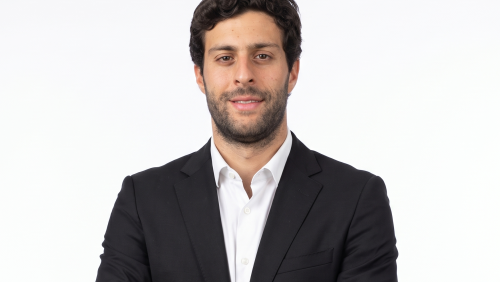
Andriy Velykyy, Founder, Allbridge.io
Opinions expressed by Entrepreneur contributors are their own.
You're reading Entrepreneur Middle East, an international franchise of Entrepreneur Media.
For years, the technology industry has celebrated one defining principle above almost everything else: speed.
Launch faster. Scale faster. Raise capital faster. Pivot faster.
Artificial intelligence has only accelerated that philosophy, reducing the distance between an idea and execution in ways that would have seemed unimaginable only a few years ago. Small teams can now build products that once required entire engineering departments, months of development, and significant financial backing. Founders have access to tools that allow them to prototype, iterate, and test ideas at unprecedented speed, fundamentally changing what it means to build a company in the modern economy.
Yet according to Founder of Allbridge.io Andriy Velykyy, speed alone has never been the true measure of innovation.
While much of today’s conversation revolves around AI’s ability to automate work and increase productivity, Velykyy believes the more interesting question is what happens when everyone has access to exactly the same tools. If building software becomes easier for everyone, competitive advantage inevitably shifts elsewhere—not towards technology itself, but towards originality, judgment, and the ability to solve problems worth solving.
“Everybody can build now,” he says. “The real question becomes: who actually has something interesting to say?”
It is a perspective shaped not only by years spent working across enterprise technology, infrastructure, and business development, but also by a lifelong fascination with innovation that began long before artificial intelligence entered the mainstream conversation.
Originally from Kyiv, Velykyy describes himself simply as “a math guy,” although that barely captures the influences that shaped his career. Statistics may have formed the foundation of his formal education, but much of his curiosity came from science fiction novels, fantasy worlds, early internet culture, and countless hours spent experimenting with computers. Even today, tattoos inspired by fictional universes serve as reminders of the stories that influenced how he thinks about technology, humanity, and the future.
Looking back, he believes those early experiences mattered far more than any business textbook.
“My grandfather brought me my first computer when I was very young,” he recalls. “Back then, having a computer at home felt like somebody had smuggled a small piece of the future into your apartment.”
One childhood trip to France proved particularly memorable. Encountering a Game Boy and early console games for the first time, he became fascinated by the idea that technology could transport people into entirely new worlds. Those seemingly simple experiences ignited a curiosity that never really disappeared.
That fascination eventually evolved into a career spanning enterprise IT, international business development, and, ultimately, the rapidly evolving world of cryptocurrency and decentralized finance. After earning a Master’s degree in Information Systems Management from Warwick Business School, Velykyy spent years helping build infrastructure for banks and telecommunications companies before moving into blockchain technologies, where innovation often happens at a pace unmatched by almost any other industry.
Having witnessed several technology cycles firsthand, he has developed a healthy skepticism toward hype.
While headlines increasingly suggest that artificial intelligence will replace entire professions, Velykyy believes its most significant contribution lies elsewhere. Rather than eliminating human creativity, AI dramatically lowers the cost of experimentation.
“The distance between an idea and execution keeps shrinking,” he explains.
Today, founders can validate concepts in days instead of months. Product teams can iterate almost instantly. Infrastructure has become significantly more affordable, development tools have become more sophisticated, and access to global talent has never been greater. For entrepreneurs, the barriers to entry have fallen dramatically.
Yet that acceleration comes with its own challenges.
Technology, Velykyy argues, is now evolving faster than human attention can comfortably absorb. New platforms emerge almost daily. Every week introduces another AI model, another productivity tool, another framework promising to revolutionize the way businesses operate. The sheer volume of innovation has created an environment where distinguishing genuine progress from temporary excitement becomes increasingly difficult.
“We’re entering a period where technology evolves faster than human attention comfortably can,” he says. “Half the internet already feels like one giant live beta test.”
Ironically, as software becomes easier to build, creating something truly memorable becomes considerably harder.
Artificial intelligence may democratize product development, but when every founder has access to similar capabilities, technology itself stops being the differentiator. Instead, success increasingly depends on clarity of thinking, originality of vision, and a genuine understanding of customer problems.
In Velykyy’s view, the winners of the next decade will not necessarily be those with the most sophisticated AI models. They will be those capable of asking better questions and solving more meaningful problems.
That distinction becomes particularly important in industries like cryptocurrency and decentralized finance, where innovation carries real financial consequences. AI can accelerate coding, automate research, and streamline product development, but it cannot replace deep engineering expertise when billions of dollars may ultimately depend on a single line of secure code.
“In crypto, one vulnerability instantly becomes an expensive headline,” he says.
For that reason, Velykyy believes founders must learn to distinguish between moving quickly and moving recklessly. Rapid experimentation remains essential during the early stages of product development, but once users begin trusting companies with their money, the philosophy changes entirely. Innovation should be fast. Trust should never be rushed.
For years, the technology industry has celebrated one defining principle above almost everything else: speed.
Launch faster. Scale faster. Raise capital faster. Pivot faster.
Artificial intelligence has only accelerated that philosophy, reducing the distance between an idea and execution in ways that would have seemed unimaginable only a few years ago. Small teams can now build products that once required entire engineering departments, months of development, and significant financial backing. Founders have access to tools that allow them to prototype, iterate, and test ideas at unprecedented speed, fundamentally changing what it means to build a company in the modern economy.

Mina Vucic • Director of Production and Multimedia, BNC Publishing
Entrepreneur Staff
Mina Vucic is the Director of Production and Multimedia at BNC Publishing, the media house... Read more