Entrepreneurship Isn’t Freedom—And Dr. (CA) Ankur Aggarwal Isn’t Pretending It Is
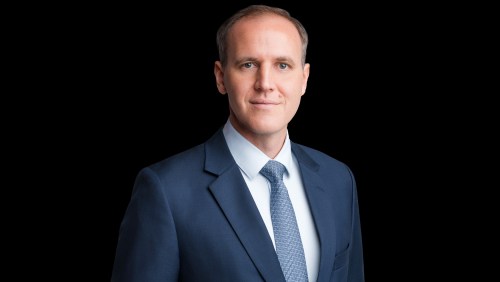
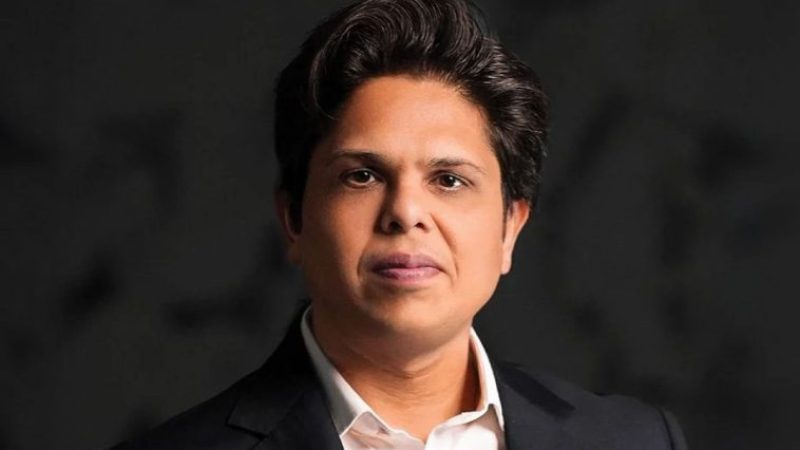
In a market driven by scale and spectacle, Dr. (CA) Ankur Aggarwal, Chairman of BNW Developments, offers a different perspective one rooted in authenticity, responsibility, and presence. In this candid conversation, he reflects on leadership, entrepreneurship, and why real success is not built on perception, but on staying true to who you are.
bnw
Opinions expressed by Entrepreneur contributors are their own.
You're reading Entrepreneur Middle East, an international franchise of Entrepreneur Media.
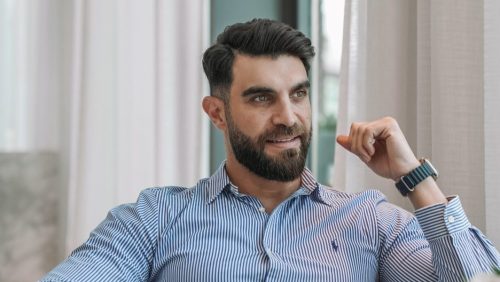
In a city where ambition is often measured in skylines and success is packaged in spectacle, conversations that feel genuinely unfiltered are rare. Inside the Downtown Dubai offices of BNW Developments, Dr. (CA) Ankur Aggarwal does not speak like a man chasing headlines. He speaks like someone uninterested in them.
There is no grand origin story, no dramatic pivot packaged for effect. Instead, his journey reveals itself in quieter moments, shaped not just by business decisions, but by deeply personal experiences that continue to define how he moves through the world. Losing his father at a young age is not something he frames as adversity overcome, but as an absence that never quite leaves. It is, in many ways, the only thing he says he has truly missed. Everything else, he considers a matter of gratitude.
That perspective carries into how he defines success. Not in exits, not in valuations, but in something far less visible. The moment his mother felt proud of him. The moment his son saw him as a hero. Everything else, he suggests, is secondary. It is a recalibration that feels almost at odds with the industry he operates in, one driven by numbers, scale, and constant comparison.
His path into real estate was not mapped out. It was not even intentional. Trained in finance, with a background in auditing and compliance, Dr. (CA) Ankur Aggarwal arrived in Dubai with a different plan entirely. Real estate, at the time, was not the goal. But what he found was an industry that mirrored his understanding of systems, cash flow, and structure. What began as an extension of his existing work slowly evolved into something much larger, not through calculated ambition, but through a willingness to follow where he felt most aligned.
There is a recurring theme in how he speaks: a resistance to overplanning. Not because strategy does not matter, but because he does not believe everything can, or should, be controlled. Timing, he insists, is often beyond you. You work, you build, and sometimes, things unfold in ways you could not have predicted.
That mindset was evident in BNW Developments’ early moves into Ras Al Khaimah, long before the emirate became part of broader industry conversations. At the time, it was a risk. Today, with rising demand and new developments reshaping the landscape, it looks like foresight. He is quick to dismiss that narrative. Not everything is vision, he says. Sometimes, it is simply being willing to move before certainty exists.
What is perhaps most striking, however, is his approach to leadership. In an environment where authority is often equated with distance, Dr. (CA) Ankur Aggarwal leans in the opposite direction. Strip away the corporate language, and his philosophy becomes simple: be human. Not performative empathy, not curated vulnerability, but a genuine ability to understand the people around you. Leadership, in his view, is less about directing and more about feeling. If you can understand people, he believes, everything else follows.
This extends to how he builds his teams. At BNW, the structure is not about control, but about alignment. A shared way of thinking. A shared understanding of numbers, systems, and outcomes. The result is not a company run by one individual, but a system shaped by many. He is clear about one thing: he does not take credit for what has been built. The people around him do.
In a business culture that often rewards performance over authenticity, Dr. (CA) Ankur Aggarwal’s rejection of the “professional mask” feels almost radical. He does not believe in separating who you are at work from who you are in life. To him, that is not professionalism, it is pretence. The more you try to become someone else, the further you move from clarity. And without clarity, confidence becomes fragile.
Confidence, he explains, is not something you construct. It is something that emerges when there is nothing to hide. It is why, in his view, children are naturally confident. They are not performing. They are simply being. Somewhere along the way, that changes.
His perspective on entrepreneurship follows a similar line. It is not glamorous. It is not freedom in the way it is often portrayed. It is responsibility. Constant, unrelenting responsibility. The idea that founders are always happy, always fulfilled, is one of the biggest misconceptions he sees. The more you build, the more you carry. And with that comes a different kind of pressure, one that is rarely visible from the outside.
And yet, there is no sense of disillusionment. If anything, there is a quiet acceptance. Decisions are not about certainty, but about commitment. You do not wait until everything is clear. You decide, and then you make that decision right.
This clarity extends to his view on the market itself. At a time when global narratives often lean toward caution, he remains grounded. Real estate, he insists, is cyclical. Fluctuations are not failures, they are corrections. The fundamentals, particularly in the UAE, remain strong. Demand, confidence, and long-term growth have not disappeared. They have simply paused in perception.
He is equally direct when it comes to investor sentiment. The hesitation seen in moments of uncertainty is not withdrawal, but timing. Buyers may wait, but they do not leave. And when confidence returns, so does momentum, often faster than expected.
What he does not engage in is speculation about the future. Not because he lacks ambition, but because he does not see value in trying to define what cannot yet be known. Legacy, he says, is not something you decide for yourself. It is something others assign to you, over time. His role is not to shape that narrative, but to focus on the work in front of him.
It is a perspective that feels increasingly rare in a region defined by rapid growth and even faster expectations. A focus on the present, not as a philosophical idea, but as a discipline. If you are not present, you are not listening. If you are not listening, you are not leading.
In many ways, Dr. (CA) Ankur Aggarwal’s story is not about real estate at all. It is about mindset. About resisting the pressure to perform a version of success that does not feel real. About building without losing clarity. And about understanding that, in the end, the most sustainable growth does not come from chasing outcomes, but from staying grounded in who you are while everything around you scales.
Because in a city that never stops building, the real differentiator is not always what you create, but how you choose to exist within it.
In a city where ambition is often measured in skylines and success is packaged in spectacle, conversations that feel genuinely unfiltered are rare. Inside the Downtown Dubai offices of BNW Developments, Dr. (CA) Ankur Aggarwal does not speak like a man chasing headlines. He speaks like someone uninterested in them.
There is no grand origin story, no dramatic pivot packaged for effect. Instead, his journey reveals itself in quieter moments, shaped not just by business decisions, but by deeply personal experiences that continue to define how he moves through the world. Losing his father at a young age is not something he frames as adversity overcome, but as an absence that never quite leaves. It is, in many ways, the only thing he says he has truly missed. Everything else, he considers a matter of gratitude.
That perspective carries into how he defines success. Not in exits, not in valuations, but in something far less visible. The moment his mother felt proud of him. The moment his son saw him as a hero. Everything else, he suggests, is secondary. It is a recalibration that feels almost at odds with the industry he operates in, one driven by numbers, scale, and constant comparison.

Mina Vucic • Director of Production and Multimedia, BNC Publishing
Entrepreneur Staff
Mina Vucic is the Director of Production and Multimedia at BNC Publishing, the media house... Read more