Beyond Home Cares: How Rafeeq Connect is Redefining Elderly Support
As loneliness emerges as a growing yet often overlooked challenge of aging in an increasingly modern life, UAE-based startup Rafeeq Connect is rethinking elderly care by offering in-person and virtual companionship services designed to complement family support.
Disclosure: Our goal is to feature products and services that we think you'll find interesting and useful. If you purchase them, Entrepreneur may get a small share of the revenue from the sale from our commerce partners.
You're reading Entrepreneur Middle East, an international franchise of Entrepreneur Media.
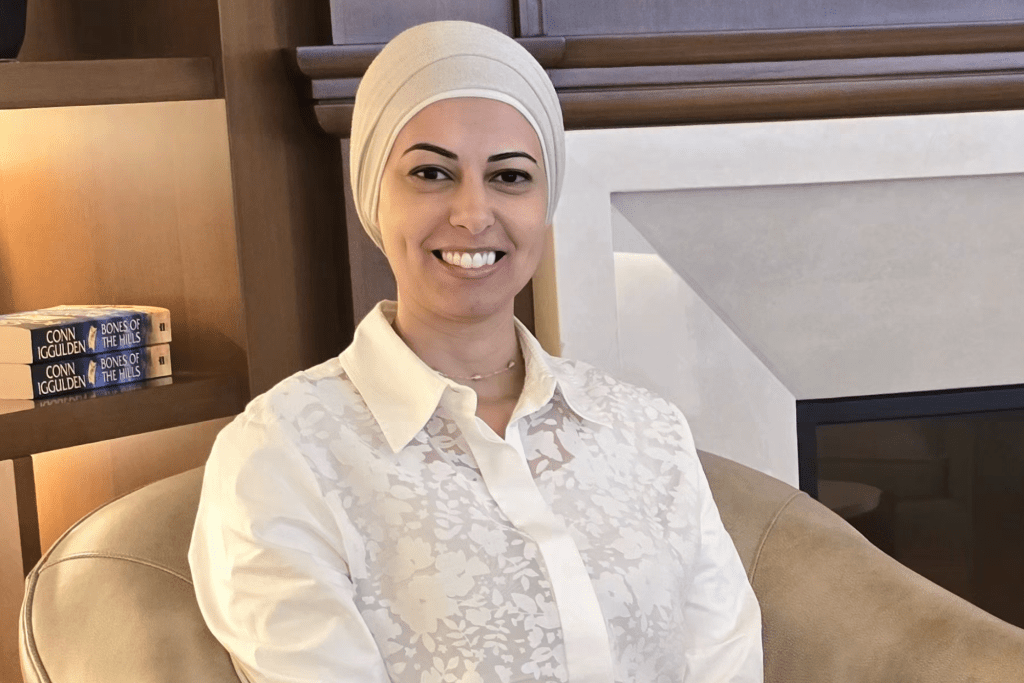
In the UAE, elders are widely regarded as pillars of the community, valued not only for their role within their families but also for their contributions to society. This respect is reflected in both tradition and practice, with the government supporting senior citizens through a range of initiatives, such as discounted services, free transportation, home care, pensions, and housing assistance.
Aligning with these values, Rafeeq Connect, a UAE-based startup, offers a companionship service for elderly people designed to complement family care through consistent human connection. “Rafeeq Connect is built around the idea that companionship itself has value. It is not medical care and not traditional support services,” says Sawsan Shalabi, founder of Rafeeq Connect. “It is structured, consistent human presence, conversation, shared activities, and emotional connection.”
The platform provides both in-person visits and virtual sessions, with a focus on keeping elderly people socially engaged and addressing what it sees as a frequently overlooked issue: loneliness.
A 2025 report by the World Health Organization’s Commission on Social Connection found that one in six people globally experiences loneliness, with serious effects on health and well-being. Beyond emotional strain, the report noted that strong social connections can help reduce inflammation, lower disease risk, and improve overall health outcomes. On the other hand, the study warned that loneliness and social isolation can have serious consequences, increasing the risk of conditions such as stroke, heart disease, and diabetes, while also contributing to cognitive decline. It also highlighted mental health impacts, noting that people who feel lonely are twice as likely to experience anxiety and depression.
“One of the defining realizations for me was understanding how overlooked loneliness is as a challenge of ageing, and really, of modern life in general,” Shalabi explains. “During [the COVID-19 pandemic], this became impossible to ignore. Physical distance made it very clear how essential human connection is to emotional wellbeing, and it was not just older adults who were affected. Loneliness showed up across generations.”
Since 2010, Shalabi had been travelling back and forth to the UAE, but when she finally moved in 2020, her plans quickly coincided with an unexpected global lockdown, just a week later. The pandemic, which significantly reduced face-to-face interactions, coupled with her own separation from her grandparents, made the issue feel even more immediate and personal. “Physical distance made it very clear how essential human connection is to emotional wellbeing,” she recalls. “And it was not just older adults who were affected. Loneliness showed up across generations.”
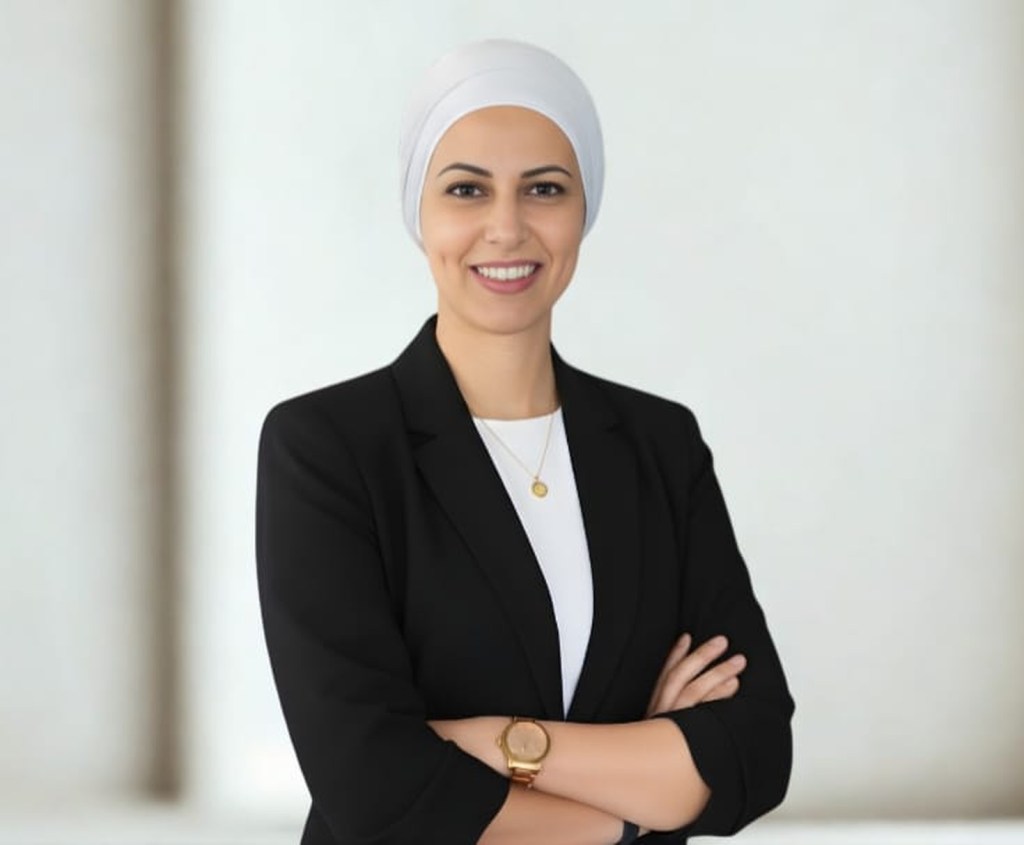
Shalabi built her career in corporate roles focused on strategy and systems, while also gaining exposure to humanitarian work which deepened her interest in people-centred initiatives. Over time, this combination shaped how she approached Rafeeq Connect, both as a service and as a business. In February 2026, she eventually stepped away from her full-time corporate role to focus on the startup. “The decision to leave corporate was not impulsive,” Shalabi admits. “It came from a growing sense that I wanted to build something more directly connected to people.”
“The biggest challenge was stepping away from stability into uncertainty, but at the same time, it felt like a very natural transition. I was moving toward something that felt aligned, not away from something,” she adds.
Rafeeq Connect operates on a subscription model, where families sign up for structured companionship sessions. They share the needs and preferences of their elderly loved one, and the platform matches them with a suitable companion.
Trust and safety are central to the service. According to its official website, companions are carefully selected and screened through interviews and orientation processes to ensure professionalism, kindness, and cultural awareness, as sessions are guided by clear boundaries to ensure comfort and reassurance for families. “What makes it different is that it treats companionship as something intentional, not something left to chance,” Shalabi declares.
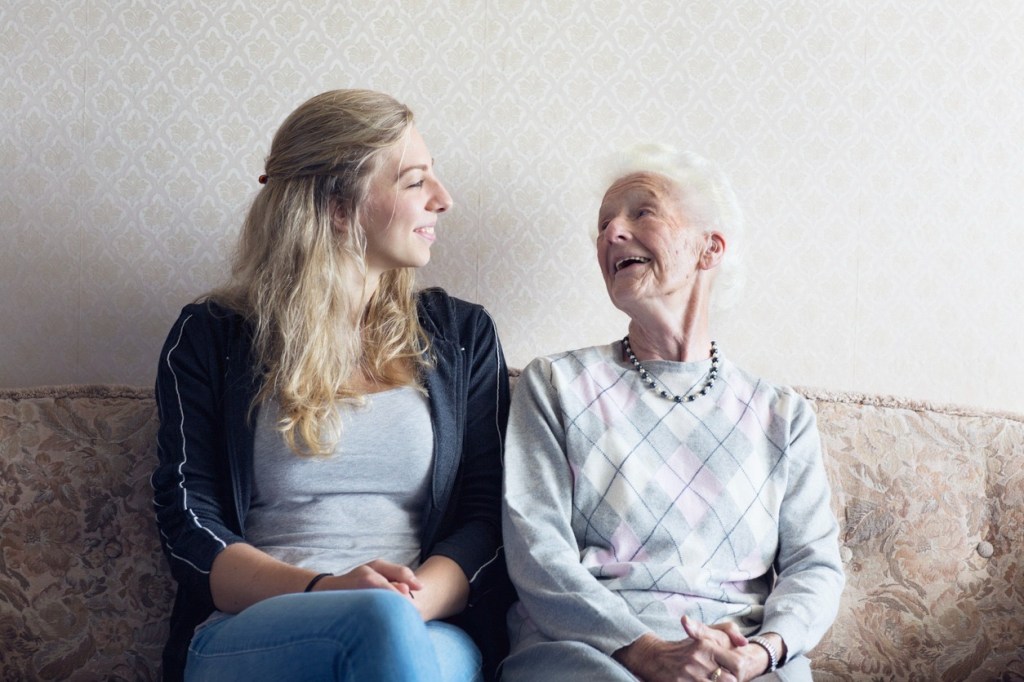
While some home care providers in the UAE already include companionship within broader services, Rafeeq Connect is trying to carve out its own space by making companionship the core offering, rather than an add-on. “Our focus is not on tasks, it is on connection. That changes how everything is designed, from how we select companions, to how we match them, to how sessions are structured,” the founder explains.
Instead of a one-size-fits-all approach, Shalabi stresses that Rafeeq Connect gives importance on personalization, pairing elderly clients with companions based on shared interests, personality, and emotional needs. “Every individual is different,” she says. “We tailor the experience based on personality, interests, and emotional needs.”
“Families are not just looking for someone to visit, they are looking for consistency, safety, and reassurance. That is what we aim to provide,” Shalabi states.
But in a region where elderly care is traditionally seen as a family responsibility, will a paid companionship model really work? Compared to Western markets where institutional elderly care is more common, Shalabi believes the UAE’s family-oriented culture makes Rafeeq Connect’s approach more aligned.
“In the UAE, family connection is deeply rooted, which is something I respect and value. Rafeeq is not here to replace family, but to complement it. Many families care deeply, but life is fast paced, children live abroad, or schedules are demanding. We provide a way to ensure consistent presence,” she clarifies.
At the same time, Shalabi highlights the UAE’s startup ecosystem as a key driver of growth for early-stage founders, pointing to its openness to new ideas, diverse communities, and strong culture of collaboration. “Being part of communities that connect entrepreneurs to each other has created opportunities that go beyond funding, from partnerships to shared learning,” she says.
Looking ahead, Shalabi says expansion is part of the plan, but it will be gradual and intentional. In the short term, the startup aims to strengthen its companion network and refine its matching process. Further down the line, she sees room to explore new formats of engagement, including group interactions, community-driven initiatives, and partnerships that embed companionship into broader wellbeing programmes. “I see Rafeeq Connect evolving into a platform that normalizes companionship as an essential part of wellbeing,” Shalabi says. “The goal is not just to serve individuals, but to shift how we think about connection as a society.”
As the UAE continues to accelerate economically, technologically, and socially, Rafeeq Connect is anchoring its approach in something quieter but increasingly rare: time, conversation, and human presence.
In the UAE, elders are widely regarded as pillars of the community, valued not only for their role within their families but also for their contributions to society. This respect is reflected in both tradition and practice, with the government supporting senior citizens through a range of initiatives, such as discounted services, free transportation, home care, pensions, and housing assistance.
Aligning with these values, Rafeeq Connect, a UAE-based startup, offers a companionship service for elderly people designed to complement family care through consistent human connection. “Rafeeq Connect is built around the idea that companionship itself has value. It is not medical care and not traditional support services,” says Sawsan Shalabi, founder of Rafeeq Connect. “It is structured, consistent human presence, conversation, shared activities, and emotional connection.”
The platform provides both in-person visits and virtual sessions, with a focus on keeping elderly people socially engaged and addressing what it sees as a frequently overlooked issue: loneliness.

Kristine Erika Agustin • Junior Editorial Assistant, Entrepreneur Middle East
Kristine Agustin is a Junior Editorial Assistant at Entrepreneur Middle East, covering entrepreneurship and startup... Read more