Bonds That Build: How Ghizlan Guenez Turned Founder Lessons into a Platform for Women Entrepreneurs
“For me, launching a business isn’t just about commercial success or money. It’s about taking that step, overcoming fear, and unlocking a new mindset.”
You're reading Entrepreneur Middle East, an international franchise of Entrepreneur Media.

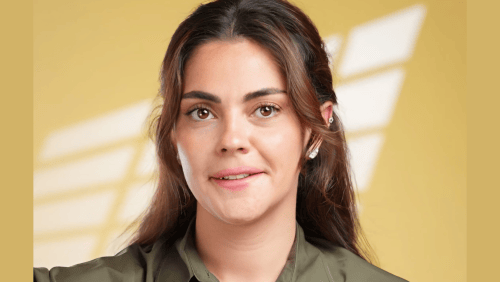
Ghizlan Guenez’s Instagram page (which, at the time of writing this article, has over 308,000 followers) includes a line in its bio that perhaps best encapsulates her approach towards business, and indeed life itself: “Will provoke you into seeing the glass half-full.” Guenez’s optimism shone the brightest when, at the height of the coronavirus pandemic, she announced that her luxury fashion e-commerce platform, The Modist, was closing down. Soon after the news, which sent a ripple of astoundment and sympathy across the region’s entrepreneurial ecosystem, Guenez decided to do something few entrepreneurs may want to do immediately: publicly talk about it.
“Actually, part of my fabric is that I used to have fear of rejection,” Guenez tells me. “But I think the minute you overcome something that is a bit of a challenge in you, it becomes something of a superpower. And so when I first started speaking about closing a business, the intention was not so much to kind of go out there and talk about failure as it were, but it was more around the fact that this was a business that was known, right? So many people were inspired by it and by the work that we did at The Modist, and so many people reached out to kind of connect after we closed. So I went out there and spoke about it because I felt that we had done something incredible through that business. We’d created so much impact: whether it was in the community of modest dressers who felt that they were shown in a beautiful light, or introducing the category of modesty in luxury fashion, or all of these accolades that we got. And I felt that just because we closed because of COVID and certain circumstances, it doesn’t take away from everything that we’d done. So I went out there and spoke about it.”
Here, Guenez makes an acute observation about how failure can sometimes be romanticized, but only long after it can be used as a mere footnote. “Most people speak about failure when they’re writing their biographies and after they have succeeded,” she says. “So then it becomes this scenario of ‘Oh, wow, look at how you overcame all this!’ But when you’re going through it, and you still don’t know what’s next…in that moment, it’s super vulnerable to be able to talk about it. So it became important to me, for people in general, to understand that it’s part of life. Everybody knows failure is a part of life, but we’re kind of so closed about it. I go as far as saying that if you’re not failing —failing small in things that you’re doing in general— it means you’re not challenging yourself enough. And you’re not pushing the envelope and you’re not taking risks. It’s so much more important to know how to deal with failure and treat it as this experience that’s going to give you information and data that you’re going to take and do something with, as opposed to sitting and sulking in it.”
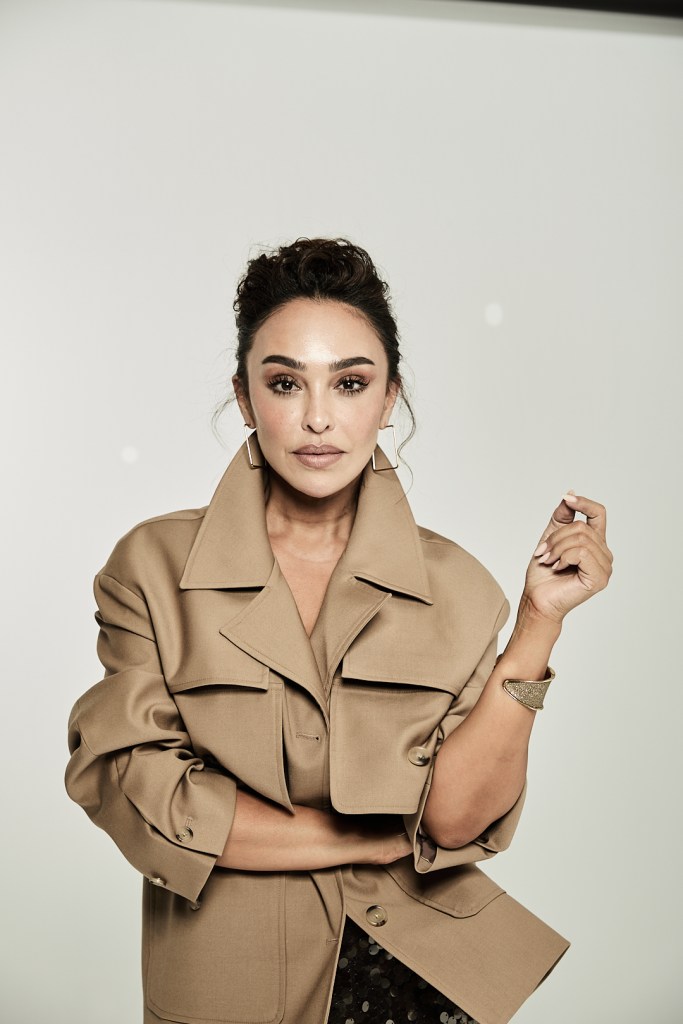
By not allowing herself to fall prey to a victim mindset, Guenez was able to do something quite extraordinary: use the small-scale, community-led work she started after closing her first startup to eventually build her next brand. “
When the news about The Modist came out, so many of the women who are part of my community reached out, scared about their businesses because, to them, if such a large business had to close, then they worried that they too were not going to sustain their businesses through the pandemic. So I started mentoring and advising women for free, just, you know, by getting on Zoom calls. With some I would spend many days over an extended period of time, and with others, it could be just one call. I must have spoken to like 50 or 60 women. I realized then that despite the challenges, there are common knowledge gaps, misconceptions and mindset blocks for female founders at the start of their career. And I figured that, you know, I could actually put a program together that would tackle so many of these challenges.”
A little over a year later, in 2021, F Force was launched as a platform to help women launch and grow businesses by offering them courses and workshops centered on leadership and mindset strategies.
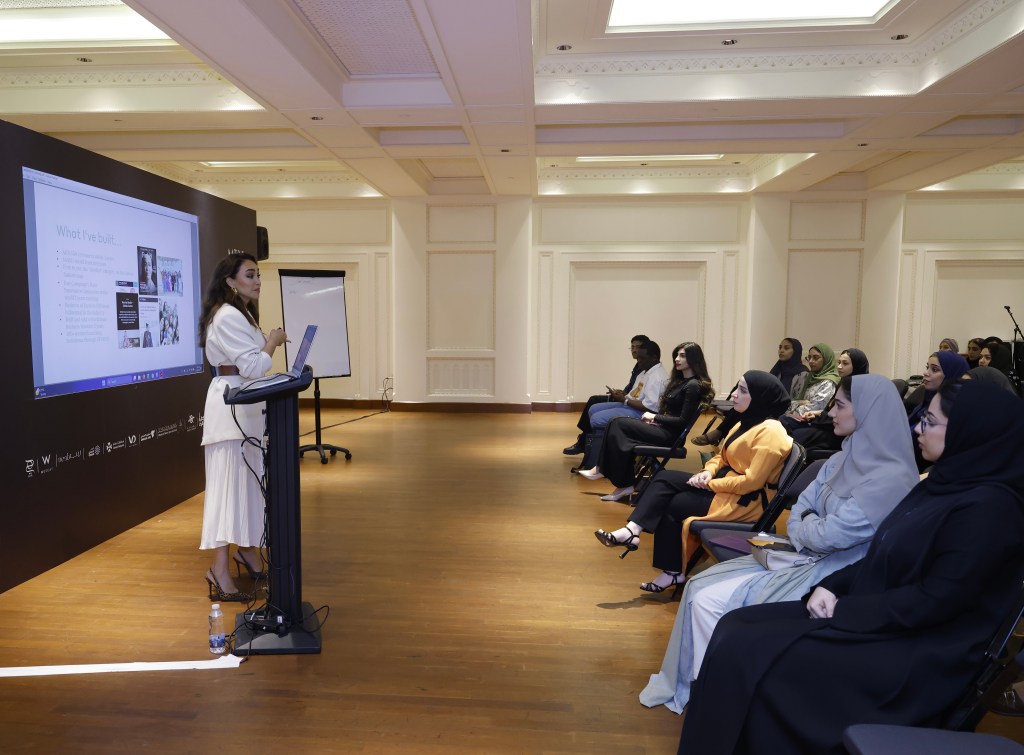
F Force’s offerings span several programs, most of which are delivered online, alongside occasional in-person workshops and activations. At the core sits Riyada, an evergreen flagship entrepreneurship program designed to run continuously, with women joining weekly rather than through fixed cohorts. “It’s got three parts to it,” Guenez explains. “First, there’s recorded material —about six or seven units— focused on entrepreneurship in the real world. In these, I’m not teaching how to launch a campaign with half a million dollars and a full team; I’m teaching how to launch when you have no resources. The second part is mentorship. We do weekly sessions every Wednesday where we deep-dive into different topics, answer questions about their ideas or businesses, and sometimes bring in guest experts. All of this is online and highly interactive. The third part is the community. From the moment they join, they’re part of a shared space where they connect weekly and stay in touch through group chats, creating peer-to-peer learning that’s just as important as the formal teaching. That’s our main program — Riyada. It is evergreen and open, with women joining on a weekly basis. Participants complete an eight-week program but continue beyond it, and there are no cohorts, making the offering fully ongoing.”
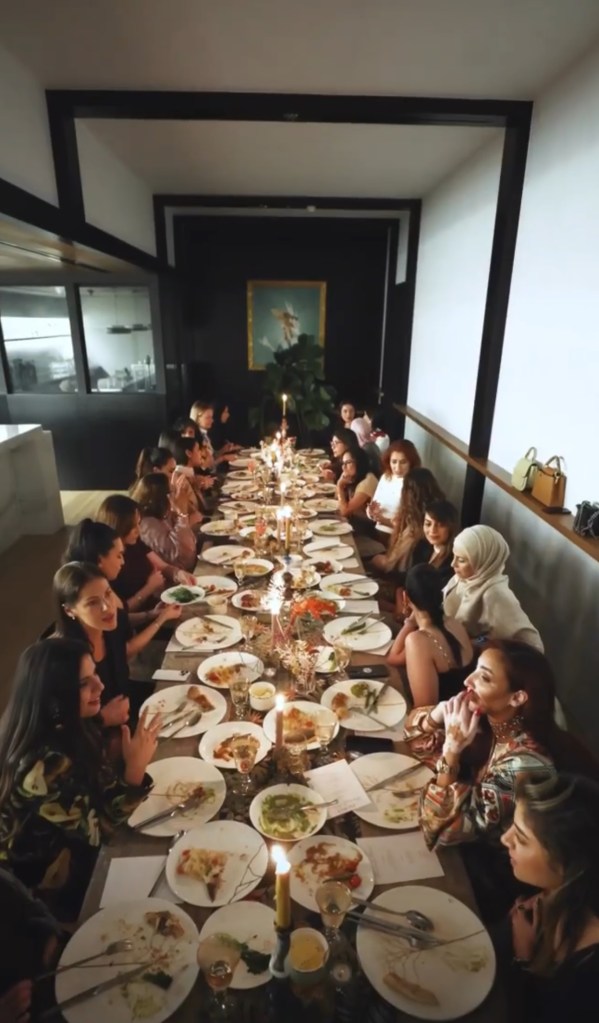
But while F Force may seem, on the face of it, as a simple mentorship platform, it addresses a more deep seated issue within entrepreneurial circles. A 2025 article by the University of Colorado Boulder, cites a study by two assistant professors at the Leeds School of Business and Rice University Business School that highlights a worrying reality: “while both male and female entrepreneurs equally reach out to mentors of both genders, male mentors are disproportionately likely to accept outreaches from male mentees.” A 2025 report by Development Dimensions International, a US-based global leadership development and talent-management consultancy, shows that only 37% of women have access to career mentors, limiting their growth and opportunities. Additionally, a 2025 report by Guider shows that “female mentors receive 28% more endorsements than their male counterparts.”
Female mentors are therefore in demand, now more than ever, by female startup founders.
For Guenez, addressing this need and creating direct tangible impact has been paramount — and so far, F Force has shown promising results. ““When we look at the numbers, our flagship entrepreneurship program alone — among several others — has graduated over 500 women, and 73% of them launch businesses within six to 18 months of completing it,” she reveals. “For me, launching a business isn’t just about commercial success or money. It’s about taking that step, overcoming fear, and unlocking a new mindset. We’ve had women leave abusive relationships and completely change their lives — not simply because they started a business, but because they recognized their own power and ability to take risks. So the impact goes far beyond the numbers. The stories create a ripple effect much bigger than entrepreneurship itself. We also tend to work in isolation as women, but when you’re surrounded by others like you, the energy, support, and empowerment become transformative.”

In the midst of enabling a better quality of life for her F Force community, Guenez surmises that her own definition of success has also altered along the way. “When I started, I didn’t really have a clear definition of success — I thought it was the traditional things: media features, accolades, growth, and making money,” she says. “I achieved all of that with my first business, and it changed my perspective. But today, success is freedom — the ability to spend time with family or friends and do what I truly enjoy. It’s also seeing real impact on the people who engage with my work. At the same time, commercial success still matters to me. I want to make money because it enables greater impact. Impact without commercial success isn’t sustainable, and commercial success without impact is meaningless. For me, success is doing work that is both meaningful and impactful.”
But while Guenez endeavors to make the path easier for other female entrepreneurs, it might be easy to forget that she, too, is one herself. Part of the reason the very first educational unit at F Force is related to self care and strengthening the mindset is because Guenez is all too familiar with the repercussions of letting one’s mental health stale. “I went through real burnout after my first business —it took me a year and a half to recover— so I understand how serious it is,” she says. “Often it’s less about not having time and more about the belief that putting yourself first is selfish. But you can’t pour from an empty cup. When you take time for yourself — as an entrepreneur, a mother, a woman — the energy you gain amplifies into the people around you. The same applies to teams: if you’re depleted, your team will feel it too. So we do a lot of mindset work and share practical tools people can experiment with to find what works for them and build sustainable habits over time.”
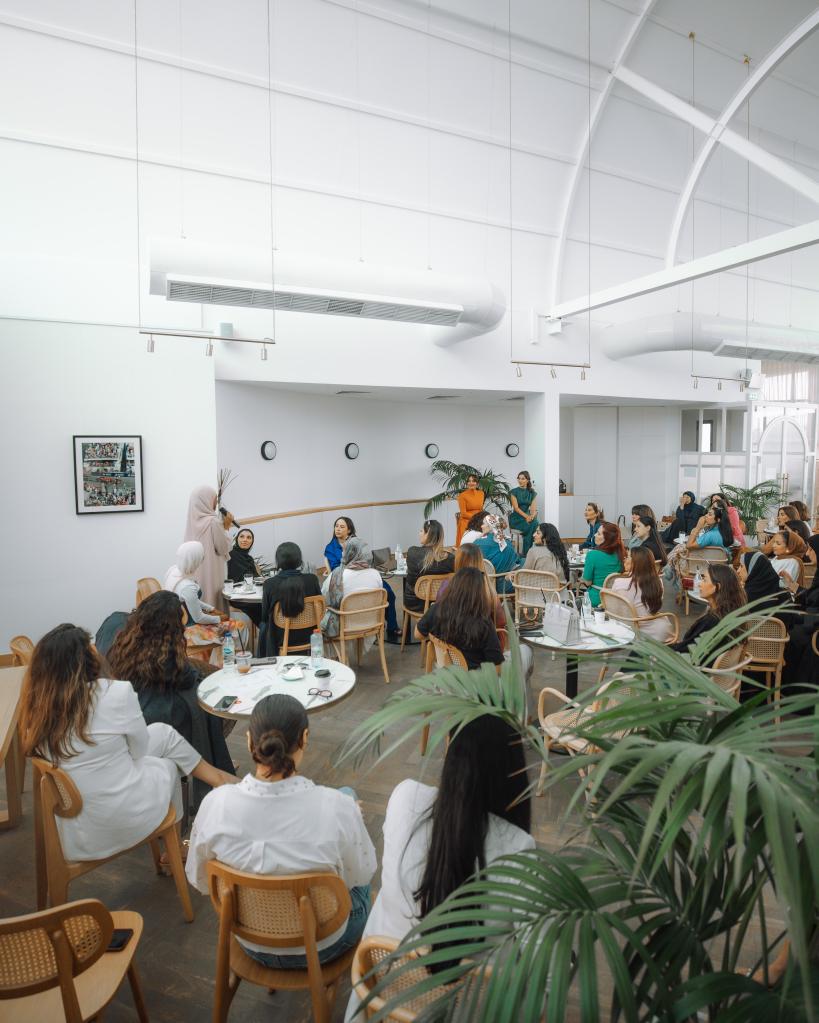
As such, Guenez says she uses a plethora of ways to keep herself balanced amid the peaks and troughs of entrepreneurship. “There are many tools, and every entrepreneur eventually discovers what works for them. For me, faith and prayer are central — they ground me. I believe that everything happens for a reason, even if we don’t understand it at the time, and I try to live by that principle. Alongside that, I exercise mainly for my mindset, meditate, and sometimes journal. And having a strong support system — family and close friends — is just as important in keeping me grounded.”
Guenez adds that the person she turns to, more than most, to seek such inspiration is her mother. “I call her my coach. She’s the person who keeps me grounded through and through.”
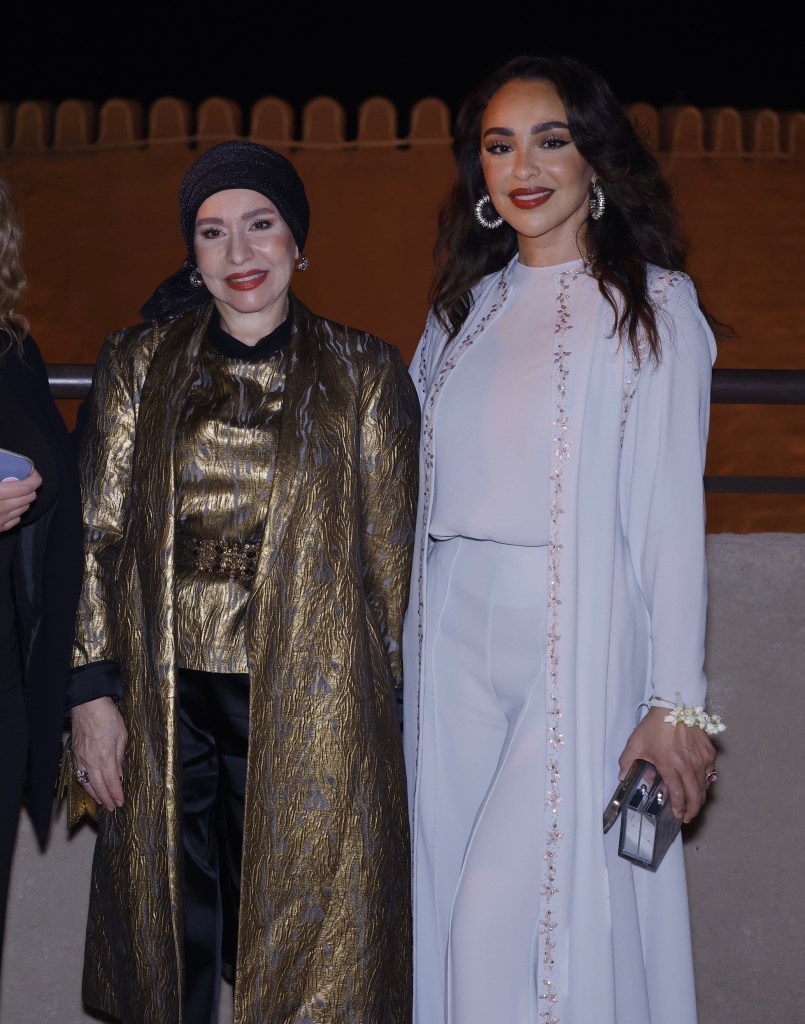
As Guenez now prepares for the rest of 2026, she has a simple goal driving her every move: for the F Force community to keep growing. ““I hope our programs —and even our social media content— help women realize how much potential they already have,” she declares. “It’s about believing in it, then seeking the knowledge, mentorship, and doing the work to unlock it. When someone shifts their mindset, their whole life can change. I truly believe women carry that power within them.”
Ghizlan Guenez’s Instagram page (which, at the time of writing this article, has over 308,000 followers) includes a line in its bio that perhaps best encapsulates her approach towards business, and indeed life itself: “Will provoke you into seeing the glass half-full.” Guenez’s optimism shone the brightest when, at the height of the coronavirus pandemic, she announced that her luxury fashion e-commerce platform, The Modist, was closing down. Soon after the news, which sent a ripple of astoundment and sympathy across the region’s entrepreneurial ecosystem, Guenez decided to do something few entrepreneurs may want to do immediately: publicly talk about it.
“Actually, part of my fabric is that I used to have fear of rejection,” Guenez tells me. “But I think the minute you overcome something that is a bit of a challenge in you, it becomes something of a superpower. And so when I first started speaking about closing a business, the intention was not so much to kind of go out there and talk about failure as it were, but it was more around the fact that this was a business that was known, right? So many people were inspired by it and by the work that we did at The Modist, and so many people reached out to kind of connect after we closed. So I went out there and spoke about it because I felt that we had done something incredible through that business. We’d created so much impact: whether it was in the community of modest dressers who felt that they were shown in a beautiful light, or introducing the category of modesty in luxury fashion, or all of these accolades that we got. And I felt that just because we closed because of COVID and certain circumstances, it doesn’t take away from everything that we’d done. So I went out there and spoke about it.”
Here, Guenez makes an acute observation about how failure can sometimes be romanticized, but only long after it can be used as a mere footnote. “Most people speak about failure when they’re writing their biographies and after they have succeeded,” she says. “So then it becomes this scenario of ‘Oh, wow, look at how you overcame all this!’ But when you’re going through it, and you still don’t know what’s next…in that moment, it’s super vulnerable to be able to talk about it. So it became important to me, for people in general, to understand that it’s part of life. Everybody knows failure is a part of life, but we’re kind of so closed about it. I go as far as saying that if you’re not failing —failing small in things that you’re doing in general— it means you’re not challenging yourself enough. And you’re not pushing the envelope and you’re not taking risks. It’s so much more important to know how to deal with failure and treat it as this experience that’s going to give you information and data that you’re going to take and do something with, as opposed to sitting and sulking in it.”

Aalia Mehreen Ahmed • Senior Features Editor, Entrepreneur Middle East
Entrepreneur Staff
Senior Features Editor at Entrepreneur Middle East and host of Anchored Echoes, with nearly seven... Read more