The Growth Ceiling: Tareq Thalji on Why MENA Businesses Need a New Approach to Talent
Hiring each person permanently can create an organizational structure that exceeds the company’s immediate requirements. A fractional model allows businesses to bring experienced professionals into specific functions while matching the level of expertise to the actual need.

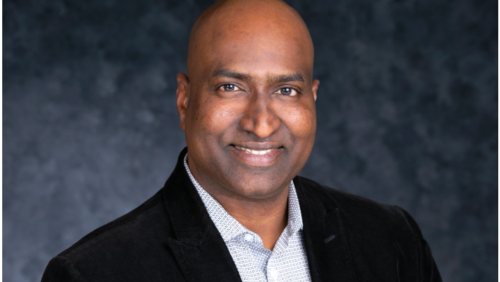
Tareq Thalji, founder and CEO of Hakeema
You're reading Entrepreneur Middle East, an international franchise of Entrepreneur Media.
Growing a business is among the hardest challenges an entrepreneur can undertake. The early stages often reward a founder’s expertise, determination, and ability to solve problems personally. Over time, however, the same approach can become a constraint. As a company expands, the complexity of its financial, operational, legal, technological, and strategic needs can outgrow the capabilities of the original team.
For businesses across the Middle East and North Africa, this challenge is unfolding against an increasingly expensive operating environment. The UAE offers a particularly clear illustration. Small and medium-sized enterprises account for 94 percent of businesses in the country, according to the Ministry of Economy, making their ability to scale central to the wider economy.
As these businesses expand, however, their needs often extend beyond their existing expertise to include financial leadership, project management, legal guidance, technology, and specialized operational knowledge. Building all of those capabilities through permanent hires can place significant pressure on companies that are still working to convert growth into sustainable scale.
Tareq Thalji, founder and CEO of Hakeema and a serial entrepreneur whose career began in the financial sector, believes this is where many businesses encounter a critical plateau. “A company can grow for years on the strength of its own expertise,” Thalji says. “Eventually, however, growth exposes the gaps around that expertise. The question becomes whether the business can access the right knowledge, people and systems at the precise moment they are needed.”
That access is becoming increasingly important as the definition of the workforce changes. Across the Middle East, companies are already turning to independent professionals to secure specialized capabilities. For Thalji, the significance of this shift lies in what it allows businesses to do with their resources. A company may need a CFO capable of developing financial controls, preparing for investment, or improving cash flow management. It may require a project manager to oversee a major implementation for six months. It may need legal, technology, marketing, or operational expertise for a defined period.
Hiring each person permanently can create an organizational structure that exceeds the company’s immediate requirements. A fractional model allows businesses to bring experienced professionals into specific functions while matching the level of expertise to the actual need.
“The objective should be to build capability around the business at the speed the business requires,” Thalji says. “You should be able to bring in a senior specialist when the problem demands senior expertise, without assuming that every requirement needs to become a permanent position.”
This approach also changes the geographic assumptions surrounding recruitment. In high-cost markets, businesses often limit their search to talent located within commuting distance of their offices. For companies operating in Dubai and other major MENA business centers, that can narrow the available talent pool while increasing compensation expectations.
Thalji sees geographic reach as an important part of solving the equation. Hakeema connects businesses with professional expertise across markets such as Jordan, where a strong pool of skilled professionals can provide capabilities at more competitive costs. Jordan has developed a growing technology and outsourcing ecosystem, while its geographic and cultural proximity to Gulf markets makes cross-border collaboration increasingly practical.
This is the thinking behind Hakeema, which Thalji has developed around the principle that businesses should be able to access specialized expertise without carrying the full structural cost of building every capability internally. The model brings together the financial and talent considerations that frequently determine whether a growing company can move beyond its existing limits.
For Thalji, the financial argument is ultimately inseparable from the strategic one. Lower-cost access to talent has limited value if the expertise does not solve a genuine business problem. The objective is to identify capable professionals, place them where their experience can create meaningful impact, and give businesses greater flexibility as their requirements evolve.
“The most expensive person in a business is not necessarily the person with the highest salary,” Thalji says. “It can be the person hired too early, too broadly, or without a clearly defined purpose. Growth requires precision. Businesses need to know exactly which capability they are buying and why.”
The rise of fractional work suggests that this precision is becoming part of a broader transformation in how companies think about expertise. As businesses face tighter margins, faster technological change, and increasingly specialized functions, the traditional assumption that every critical capability must exist inside a permanent organizational chart is becoming less relevant.
For entrepreneurs across the MENA region, that creates an opportunity. Growth no longer has to depend entirely on building a large internal workforce before a company can access sophisticated expertise. Businesses can assemble the capabilities they need around specific objectives, stages, and challenges.
Thalji believes that flexibility will increasingly define the next generation of successful businesses. “A growth plateau is often a signal that the business has reached the limits of what its current structure can provide,” he says. “The answer is to expand the structure intelligently. When businesses can access the right expertise at the right cost and at the right time, the ceiling becomes a point of transition rather than a stopping point.”
Growing a business is among the hardest challenges an entrepreneur can undertake. The early stages often reward a founder’s expertise, determination, and ability to solve problems personally. Over time, however, the same approach can become a constraint. As a company expands, the complexity of its financial, operational, legal, technological, and strategic needs can outgrow the capabilities of the original team.
For businesses across the Middle East and North Africa, this challenge is unfolding against an increasingly expensive operating environment. The UAE offers a particularly clear illustration. Small and medium-sized enterprises account for 94 percent of businesses in the country, according to the Ministry of Economy, making their ability to scale central to the wider economy.
As these businesses expand, however, their needs often extend beyond their existing expertise to include financial leadership, project management, legal guidance, technology, and specialized operational knowledge. Building all of those capabilities through permanent hires can place significant pressure on companies that are still working to convert growth into sustainable scale.

Entrepreneur Middle East Staff
Entrepreneur Staff