Understanding The VC Business Model

Shutterstock
Opinions expressed by Entrepreneur contributors are their own.
You're reading Entrepreneur Middle East, an international franchise of Entrepreneur Media.
Firstly, we need to address the business model of venture capital (VC), and in doing so, dispel the myth that VC is a “gamble,” where we invest and hope for the best. The business model of more traditional investment asset classes such as private equity and asset management is governed by the mathematical concept of outperforming on a normal distribution graph. That means that most investments end up slightly below or ahead of the mean/median, and those investors that outperform an index, end up with a slightly higher weighting of their investments to the right of the mean/median. In VC, our business model is governed by the “power law:” what this means in essence, is that out of every ten early-stage investments, around two will create all the returns and the rest will underperform by generating little to no returns. Once this concept has been understood, it is then easier for our investors to understand our business model.
We are in the business of taking calculated risks investing in strong entrepreneurial teams. The other key mathematical driver to understanding our business model is that we invest in <1% of the deals that we see every year. That means if we see 1000 deals, which we are on track to see this year, we will invest in <10 deals at the early stages.It is worth noting that we have waited four years for the MENA ecosystem to grow and mature to a level whereby we will see 1000 deals this year. The final mathematical concept for investors to understand is that of “discipline,” which is the discipline we have to maintain in only following on with further funds in those teams who demonstrate strong execution amongst other business drivers.
Related: Middle East VCs Give You Three Industry Insider Rules To Note
How the deal flow works
Top quartile VC funds generate strong returns of > 30% internal rate of returns (IRRs). The top one percentile, meaning those that generate better returns than 99% of their peers, generate outstanding returns of 70%, and even 90% in some cases. These top one percentile firms invest in 0.5% of the deals they see, have three or four companies generating multiple times the entire size of the vintage in question, and a small proportion of their dry powder goes to the investments that don’t perform, in some cases as little as 20%, which comes down to a rigorous and disciplined approach to deploying follow-on funds.
These top one percentile firms receive the best deal flow which comes down to having a team of partners who hail from entrepreneurial backgrounds, being ex-founder’s matched by functional experts, who work tirelessly to grow their ecosystem and specifically their portfolio companies. We at BECO have configured ourselves accordingly and are building out a family of mission-driven entrepreneurs and functional experts to make a significant impact in finding and funding the best teams to build large businesses that can make a tremendous impact on our region and make it a better place to live and work.
Related: Making Monetary Sense: How To Understand Your VC Term Sheet

The ‘power law’
Source: BECO Capital
Source: BECO Capital
Why your mission matters
This brings us to the next extremely important matter: mission. We believe that the best entrepreneurs are mission-driven which drives them with the passion required to obsess about solving a big problem, no matter how hard things get.We ourselves at BECO are mission-driven. Our mission is to leapfrog our region to participate in the technological revolution that is upon us and is only going to accelerate over the coming decades.
We believe that investors have bought into our vision, mission and strategy, and once on board, they will support us when they can, but broadly, they give us the freedom to execute. We have a strong fiduciary obligation to our shareholders and with this ensure a very high level of governance around keeping our shareholders updated on our progress. We do this by sending out regular business updates, newsletters, detailed semiannual and annual reports, audited financial statements, and we organize an annual general meeting where we present the past, present and future with detailed updates from the BECO team, portfolio companies and the professional service providers that we work with to produce accurate and high quality reporting. All this is supported by a very high quality board of directors, who meet at least quarterly and work tirelessly to steer, ensure shareholder value creation and accountability through a strong best in class governance framework.
This is no different to what we as investors expect from our portfolio companies and hence, we lead by example, and expect the same excellence.
Related: Swaying A VC In Your Favor: Five Questions That Can Make Or Break The Deal
Firstly, we need to address the business model of venture capital (VC), and in doing so, dispel the myth that VC is a “gamble,” where we invest and hope for the best. The business model of more traditional investment asset classes such as private equity and asset management is governed by the mathematical concept of outperforming on a normal distribution graph. That means that most investments end up slightly below or ahead of the mean/median, and those investors that outperform an index, end up with a slightly higher weighting of their investments to the right of the mean/median. In VC, our business model is governed by the “power law:” what this means in essence, is that out of every ten early-stage investments, around two will create all the returns and the rest will underperform by generating little to no returns. Once this concept has been understood, it is then easier for our investors to understand our business model.
We are in the business of taking calculated risks investing in strong entrepreneurial teams. The other key mathematical driver to understanding our business model is that we invest in <1% of the deals that we see every year. That means if we see 1000 deals, which we are on track to see this year, we will invest in <10 deals at the early stages.It is worth noting that we have waited four years for the MENA ecosystem to grow and mature to a level whereby we will see 1000 deals this year. The final mathematical concept for investors to understand is that of “discipline,” which is the discipline we have to maintain in only following on with further funds in those teams who demonstrate strong execution amongst other business drivers.
Related: Middle East VCs Give You Three Industry Insider Rules To Note

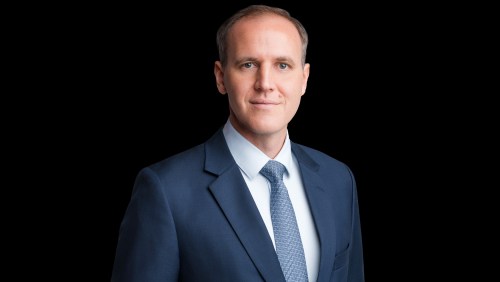
Dany Farha • Co-founder and CEO, BECO Capital
Dany Farha is the co-founder and CEO at BECO Capital, a venture capital firm that... Read more