Building Beyond Borders: Mohamed Adib Hijazi at the Helm of HRE Development’s 30-Year Rise in UAE
As the UAE property market scales heights that would have seemed unimaginable just a decade ago, Mohamed Adib Hijazi — the founding chairman of HRE Development — has been quietly doing what he has always done: building homes, nurturing communities, and refusing to be rattled by the world beyond his construction sites.
You're reading Entrepreneur Middle East, an international franchise of Entrepreneur Media.
The numbers that define Dubai’s real estate market today would have seemed like fantasy at the turn of the millennium. In the first 290 days of 2025 alone, the emirate recorded AED 525.87 billion in property sales — surpassing the entire sales total for 2024 in less than a year. Residential prices have risen 20 per cent in a single year. Average rents are up 19 per cent. In 2024, total residential transactions reached 169,000 — a 42 per cent surge on the year before. The UAE’s real estate market is now valued at nearly US $694 billion, on a trajectory toward US $759 billion by the decade’s end. Dubai has become, by almost any measure, one of the most dynamic property markets on the planet.
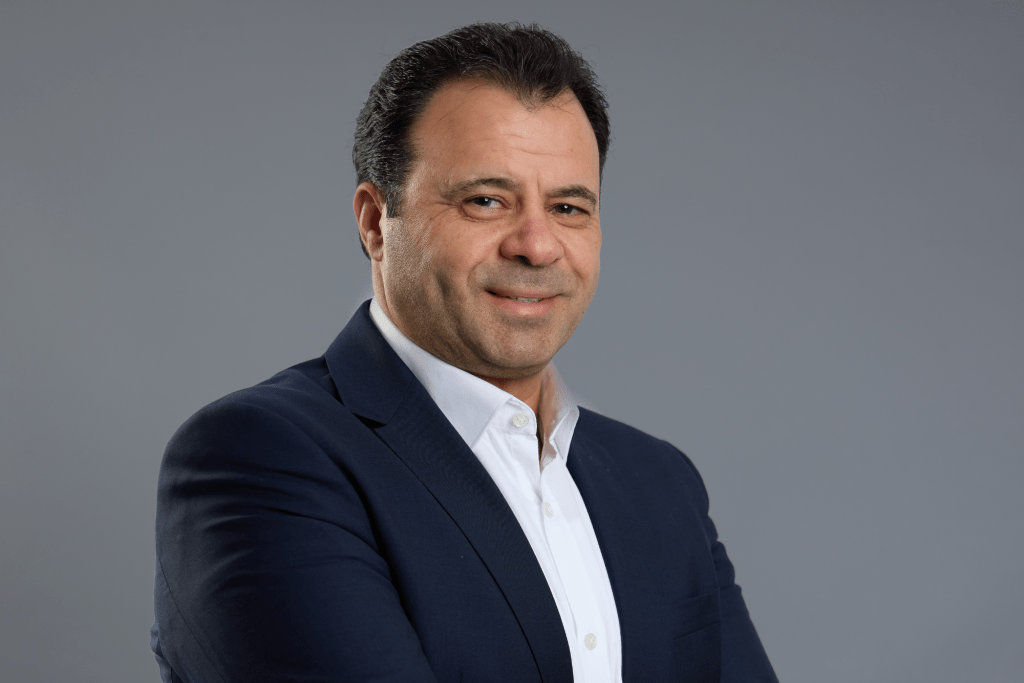
And yet, for all the record-smashing statistics, the story of how that market got here is as much about the individuals who built it, brick by brick, project by project, family by family, as it is about the macro forces that turbocharged demand. Few people better embody that human dimension of Dubai’s property revolution than Mohamed Adib Hijazi — the founding chairman of HRE Development and a man who has been quietly constructing the UAE’s future for more than three decades.
Hijazi established HRE Development from a base in construction, and what has followed is one of the emirate’s more compelling corporate stories: a disciplined, values-led evolution from contractor to developer, guided by a philosophy that has never changed even as the market transformed around it. Today, HRE has delivered over 350 projects and provided homes to more than 12,000 families across the UAE.
“Real estate, at its core, has never been about buildings for me,” he says. “It has always been about the families those buildings shelter, the communities they create, and the futures they make possible. Everything we do at HRE flows from that single conviction.”
Hijazi speaks at a moment of particular resonance. The wider region has navigated a period of significant geopolitical turbulence — the kind of instability that, in lesser markets, sends investors fleeing and developers into suspended animation. Dubai, characteristically, has absorbed the pressure and emerged with its fundamentals not merely intact but reinforced. For Hijazi, the resilience of the market in the face of external headwinds is a validation of everything he has always believed about the UAE’s foundational strength.
“When you have built here for 30 years, you develop a certain faith in this place,” he says, his manner measured and precise in the way of someone who has spent decades translating vision into concrete reality. “The UAE has faced global financial crises, regional conflicts, a pandemic. Each time, the market has found its footing faster than almost anywhere else in the world. That does not happen by accident. It happens because of the quality of governance, the clarity of vision, and the sustained commitment to making this a place where people genuinely want to live and invest.”
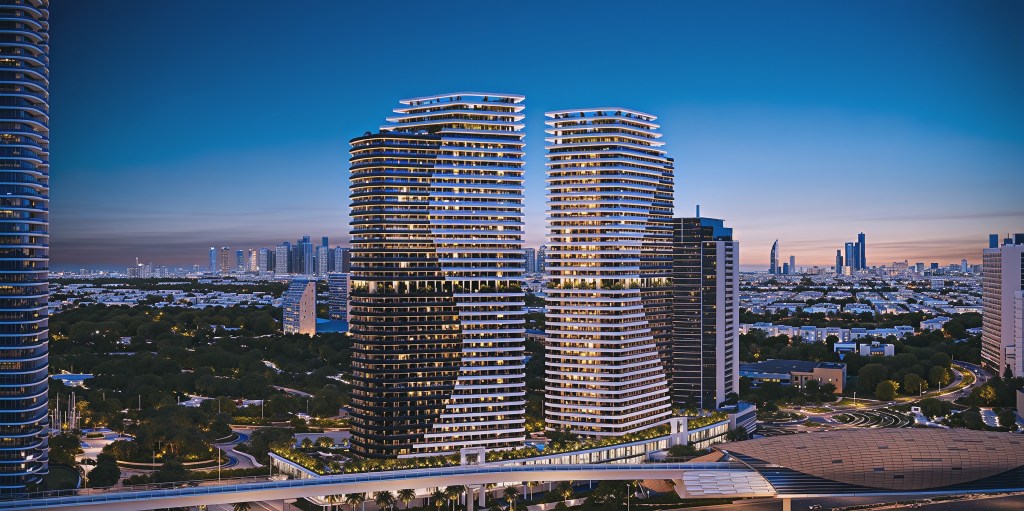
HRE Development’s most recent landmark achievement tells you everything you need to know about how Hijazi runs his company. Skyhills Residences 1 — the company’s flagship residential project in the Jumeirah Village Circle area — was handed over to residents six months ahead of schedule. In an industry where delayed handovers have, historically, been the rule rather than the exception, delivering early is a statement of operational discipline that carries significant weight.
The project, which attracted strong buyer interest from both regional and international investors, exemplifies HRE’s approach to development: high design integrity, exacting construction standards, and a commitment to the long-term value of what is built rather than the short-term economics of what can be sold. It is a philosophy that has made HRE one of the UAE’s most respected mid-sized developers — the kind of company that does not always generate the headlines of its larger peers, but consistently delivers in ways that matter most to the families moving into its buildings.
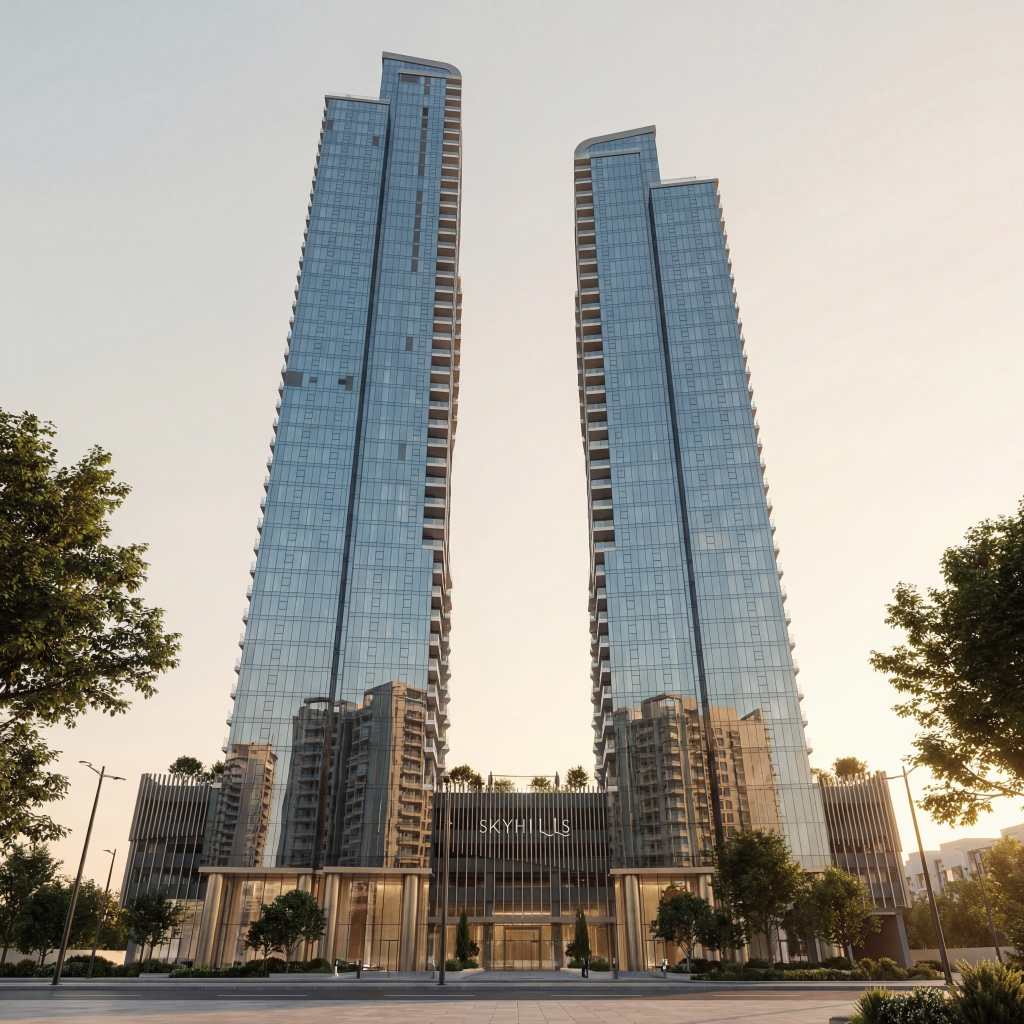
“Delivering Skyhills Residences 1 six months ahead of schedule was not a surprise to our team,” Hijazi says. “It was the result of years of building systems, relationships, and a culture where quality and timeliness are not negotiated. That is what we stand for.”
Beyond Skyhills Residences 1, HRE’s portfolio spans more than 350 completed projects across the UAE — a body of work that, when viewed in aggregate, represents a significant contribution to the physical fabric of the country. Each project, Hijazi insists, has been approached with the same discipline: careful site selection, rigorous design standards, and an uncompromising commitment to handover quality that has generated the kind of repeat business and referral pipeline that sustains a developer through cycles.
The numbers behind HRE’s social footprint are equally telling. The company’s landmark AED 30 million contribution to Dubai Cares supported global education access initiatives — a gesture that speaks to the breadth of Hijazi’s thinking about what a property company’s obligations to the world actually are. But perhaps most striking was HRE’s AED 100 million contribution in 2026 to the Mother of the Nation Endowment for Orphans, directed at supporting education and healthcare access for vulnerable children. The company also dedicated ten residential units within Skyhills Residences to Awqaf Dubai, ensuring that the development would, from the day its doors opened, serve purposes beyond the purely commercial.
Hijazi’s vision of what a property company should be extends well beyond balance sheets and delivery schedules. HRE serves as a strategic partner of the Fazza International Championships — the UAE’s prestigious sporting event celebrating People of Determination — an alignment that reflects Hijazi’s personal conviction that inclusive community building is not a corporate social responsibility line item but a fundamental responsibility of anyone building the places where people live their lives.
The company has also been an active champion of women’s advancement in the real estate sector, participating in the Dubai Land Department’s She Pioneers initiative — a programme designed to elevate the role of women across the property industry at a time when the sector is increasingly recognising that diversity of leadership produces better outcomes for everyone.
“We are not just building homes,” he says. “We are building neighbourhoods, communities, and — I genuinely believe this — a more inclusive society. Every unit we hand over, every initiative we support, every family we house is another thread in that fabric.”
The industry recognition that has followed speaks to a career built on genuine impact. Hijazi was honoured with the prestigious Pioneers of Development Medal by the Arab Parliament — a recognition of leadership and contributions to the property sector that carries significant weight across the region. In 2026, the Arab Union awarded him its Premier Achievement Medal for Real Estate, cementing his position as one of the defining figures in the story of regional development.
These are not the kinds of honours typically bestowed on property people who focus solely on margins and volumes. They reflect something rarer: a developer whose influence on the built environment of his region has been matched by his influence on the way the industry thinks about its purpose.
The backdrop to HRE’s recent successes has been a regional environment that, while ultimately resilient, has tested the nerves of even the most experienced market participants. Political turbulence across the broader Middle East has created moments of genuine uncertainty — the kind that make international investors hesitate, supply chains strain, and project timelines come under pressure. For developers in the UAE, the challenge has been to maintain confidence, protect delivery commitments, and continue offering a compelling proposition to buyers at a moment when the geopolitical noise has been loud.
Hijazi, for his part, has navigated this period with the equanimity of someone who has seen multiple cycles and drawn a consistent lesson from all of them: the fundamentals of the UAE market are structural, not cyclical, and they do not change because of events beyond its borders. “Every period of uncertainty is also a period of opportunity for developers who have been disciplined in how they operate,” he says. “We never overleveraged. We never chased volume at the expense of quality. When the market faces pressure, that discipline becomes your greatest asset.”
The data supports his confidence. Dubai achieved its third successive year as the world’s leading greenfield foreign direct investment destination in 2024, capturing 6.2 per cent of total global investment flows. The city’s population crossed the three million threshold for the first time. Off-plan transaction volumes in 2024 were four times their pre-Covid levels — not the fragile froth of a market in distortion, but the durable expression of sustained structural demand. Knight Frank’s luxury market analysis found 435 transactions above the US $10 million mark in 2024, establishing a new record and cementing Dubai’s position as the world’s leading luxury residential market.
For HRE, these macro tailwinds have been complemented by the company’s own pipeline. With Skyhills Residences already delivered and further projects in development, the company is well positioned for a market that, even as it moderates from the extraordinary highs of 2024 and 2025, remains underpinned by demand that most global cities would envy.
Ask Hijazi about the outlook and his answer is characteristically direct. The UAE has earned its global status as a safe haven for real estate investment — not through marketing, but through governance, infrastructure, and the consistent delivery of what was promised. The period of recent regional instability has, if anything, sharpened the contrast between Dubai’s stability and the volatility that characterises too many alternatives. “I look at the next five years with genuine optimism,” he says. “Not blind optimism — we are serious developers, and we understand cycles. But grounded optimism, based on what this country has built and what the fundamentals of this market tell us. The UAE is not going anywhere but forward.”
The ambition that drives him has not dimmed with the decades. If anything, the combination of a maturing market, a more sophisticated buyer base, and a broader social mandate has given HRE’s mission a sharper definition. More projects are in the pipeline. The Skyhills brand — built on the credentials of that early-handover achievement — carries real weight in the marketplace. The social commitments, from Dubai Cares to the Mother of the Nation Endowment, continue to deepen.
More than 30 years after he first broke ground in the UAE, Mohamed Adib Hijazi remains, at his core, a builder — of homes, of communities, of careers, of the social infrastructure that makes a city worth living in. The Pioneers of Development Medal and the Premier Achievement Medal for Real Estate from the Arab Union recognise a career that has been defined by exactly that: building beyond the immediate, thinking beyond the transaction, and holding, through market cycles and geopolitical turbulence alike, to a vision of what real estate can and should be.
In a city that has always been defined by its ambition, Hijazi has been one of the quiet architects of what that ambition looks like when it is built well.
The numbers that define Dubai’s real estate market today would have seemed like fantasy at the turn of the millennium. In the first 290 days of 2025 alone, the emirate recorded AED 525.87 billion in property sales — surpassing the entire sales total for 2024 in less than a year. Residential prices have risen 20 per cent in a single year. Average rents are up 19 per cent. In 2024, total residential transactions reached 169,000 — a 42 per cent surge on the year before. The UAE’s real estate market is now valued at nearly US $694 billion, on a trajectory toward US $759 billion by the decade’s end. Dubai has become, by almost any measure, one of the most dynamic property markets on the planet.
And yet, for all the record-smashing statistics, the story of how that market got here is as much about the individuals who built it, brick by brick, project by project, family by family, as it is about the macro forces that turbocharged demand. Few people better embody that human dimension of Dubai’s property revolution than Mohamed Adib Hijazi — the founding chairman of HRE Development and a man who has been quietly constructing the UAE’s future for more than three decades.
Hijazi established HRE Development from a base in construction, and what has followed is one of the emirate’s more compelling corporate stories: a disciplined, values-led evolution from contractor to developer, guided by a philosophy that has never changed even as the market transformed around it. Today, HRE has delivered over 350 projects and provided homes to more than 12,000 families across the UAE.

Entrepreneur Middle East Staff
Entrepreneur Staff