IBM’s Juan Jose De La Torre On The Need For MENA Businesses To Embrace Digital Transformation

Image location courtesy of St. Regis Dubai
Opinions expressed by Entrepreneur contributors are their own.
You're reading Entrepreneur Middle East, an international franchise of Entrepreneur Media.
Tech has changed the way we work and live, and with that, more so than ever, the need for enterprises and startups to shift to strategize the digital market is high. Businesses are called to create more efficient and seamless ways to incorporate consumer-centric experiences with digi technologies, and IBM’s Digital Transformation Leader for Middle East and Africa Juan Jose De La Torre focuses on addressing this demand.
According to De La Torre, digital transformation is all about helping clients leverage technology “to actually reinvent their business models to reinvent their operations, to reinvent the processes, and basically to transform.” Enhancing customer experience needs to be the centerpoint of this transformation strategy, which should essentially relate to the consumer’s specific needs and wants. “You need to change how you actually create, and how you actually build the proposition,” he explains.
While De La Torre agrees with the notion that the rate of digital adoption is high in the MENA region, when it comes to “using these digital technologies embedded in us as part of the business or part of our customer journey, we’re still not there.” As for why this is the case, De La Torre feels there’s a misunderstanding of sorts about what digital transformation exactly entails when it comes to a business. “Digital transformation now is a buzzword,” he says. “Everyone is using it, everyone wants it, and everyone wants to have it as part of their strategy, but digital transformation is very difficult, [and] very different to digitalization.”

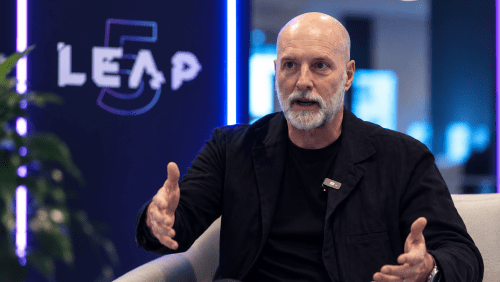
IBM’s Digital Transformation Leader for Middle East and Africa Juan Jose De La Torre
Image location courtesy of St. Regis Dubai
Image location courtesy of St. Regis Dubai
Related: Design Matters: Enabling Experiences For Your Customers
As an example, De La Torre points toward the onslaught of businesses getting on social media channels like Twitter, for instance, and then failing to keep an up-to-date and responsive presence on the platform. Another instance is when a retailer creates an ecommerce side to the existing business- but while it should aim at channeling the same kind of customer experience it already has, it’s often a different operation entirely, with different pricing, strategies, etc.
“Digital transformation is not about digitalization, it’s about transforming your operation,” De La Torre explains. “If I open a new channel, that channel needs to be consistent with experience. It needs to be actually something that elevates the experience. It’s something that requires processes in the company to be re-examined and most of the time to be updated; it requires technologies to be reevaluated. It requires changes to be made in how companies work. In other words, the mistake comes in taking the shortcut. The shortcut is, I want to do digital, I just go and do something without transforming how I operate, without transforming how we do things. So then I start creating these islands, scattered islands of digital components, which are not cohesive and not part of a single experience.”
Keeping that in mind, what is the one thing that businesses, large and small, should keep in mind when thinking about their digital strategies? “What’s the end? What do you want to get out of it? It’s a very simple question, and it’s basic, but an important one- are you going to use technology to communicate to your customers? You want to use it to understand them better? You want to use it to increase your sales? You want to use it as customer care? What is the aim? And that aim should be translated to vision. From aim, we go to vision, from vision we go to customer experience: so what is the customer experience that you want to create? And how that is going to encompass [digital]? Then you take that customer experience and decompose it into KPIs, objectives, etc. This [might look a bit] disconnected, but this is the way to do it and be successful. When you design, you design with an intention of a behavior, and by having that, you achieve your business goals. It’s exactly the same. When I open a digital channel, I need to understand why I’m opening it, or if I’m going to digitize, why I’m going to digitize.” Once the operating model has been put in place, then the focus, De La Torre says, needs to be on the people putting this into action. “You need the right talent to drive this- people are the key component for transformation,” he says.

IBM’s Digital Transformation Leader for Middle East and Africa Juan Jose De La Torre
Image location courtesy of St. Regis Dubai
Image location courtesy of St. Regis Dubai
“At the end, when we’re talking about evolutions, this reinvention, we need to focus on people. It needs to be not only about the vision, the customer experience, what’s going to generate profit, or how we’re going to do it, but also, we need to have a focus on how we’re going [to] transit our organization from today to that future state, and how we’re going to transit people. Don’t underestimate the impact on people- the people that are inside the organization that need to embrace this, and the people that you need to bring in to help you to actually conduct this.”
Related: The How-To: Managing Change For Your Company’s Digital Transformation
EXECUTIVE SPEAK
J. J. De la Torre’s Impressions On The MENA Startup Ecosystem
“What we see in the region when it comes to startups, are regional replicas of global trends. There’s a global startup that is becoming successful, then we have our own local version, which then comes down to a matter of execution and a matter of time to market, like, local vs. global, who will win- the one that is able to grab the most traction in the market in the short time. What I would like to see is more unique value propositions that were born out of the region, based in the region, and basically that solve a particular situation from the region, that we can scale then to the globe. Again, IBM is helping startups, not only in the region but across the world, by putting a number of tools at their disposal by supporting the ecosystem. It’s not about pushing technology, per se, it’s about identifying a need that then can be solved for a value proposition, that is fueled by digital technology.”
Related: Democratic Design Doctrine: Business Outcomes Through Experience Co-Creation
Tech has changed the way we work and live, and with that, more so than ever, the need for enterprises and startups to shift to strategize the digital market is high. Businesses are called to create more efficient and seamless ways to incorporate consumer-centric experiences with digi technologies, and IBM’s Digital Transformation Leader for Middle East and Africa Juan Jose De La Torre focuses on addressing this demand.
According to De La Torre, digital transformation is all about helping clients leverage technology “to actually reinvent their business models to reinvent their operations, to reinvent the processes, and basically to transform.” Enhancing customer experience needs to be the centerpoint of this transformation strategy, which should essentially relate to the consumer’s specific needs and wants. “You need to change how you actually create, and how you actually build the proposition,” he explains.
While De La Torre agrees with the notion that the rate of digital adoption is high in the MENA region, when it comes to “using these digital technologies embedded in us as part of the business or part of our customer journey, we’re still not there.” As for why this is the case, De La Torre feels there’s a misunderstanding of sorts about what digital transformation exactly entails when it comes to a business. “Digital transformation now is a buzzword,” he says. “Everyone is using it, everyone wants it, and everyone wants to have it as part of their strategy, but digital transformation is very difficult, [and] very different to digitalization.”

Pamella de Leon • Former Startup Section Editor, Entrepreneur Middle East
Pamella de Leon is a former Startup Section Editor at Entrepreneur Middle East.Now based in... Read more