Inside Kem: The Fintech Platform Bringing Permissionless Finance to the Global South
Ryan Nebreja
You're reading Entrepreneur Middle East, an international franchise of Entrepreneur Media.
Kem is working on a financial model that reflects broader shifts underway in the sector. Founded in January 2023 by three young operators who grew up between Kuwait, California, and Georgia, the platform has gone from an “impossible” idea to a notable development in the region: a permissionless finance app built for the global south, now on track to become one of the more prominent digital gold distributors in the Middle East. Backed by Tether, the world’s largest stablecoin issuer, Kem is increasingly positioned by some users as a regional financial app.
The name Kem comes from the Arabic word “كم”, meaning “how much.” It’s a simple but powerful question—one that sits at the core of every financial interaction. Whether you’re checking your balance, sending money, or buying gold, you’re always asking: how much? Kem is built around that mindset—bringing clarity, transparency, and control to modern money.
What Kem delivers is designed to simplify access that has not always been widely available in the region: seamless access to the U.S. dollar, Bitcoin, tokenized gold, and a stablecoin-powered crypto debit card that allows users to spend globally. For many users across Kuwait, Saudi Arabia, the UAE, Egypt, and beyond—including Indian, Filipino, and African migrant workers—the Kem card represented their first experience with a debit card, a moment that has contributed to meaningful changes in their relationship with money.
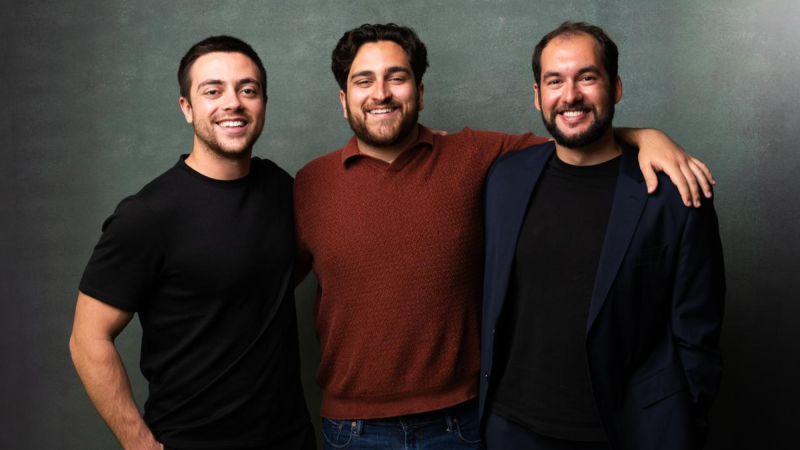
The founders’ journey started long before Kem. CEO Seth Abal, a patent-holding operator, witnessed firsthand how broken financial systems suffocated opportunity across the global south. His brother, Zane Abal, President and an early student of blockchain, understood that the future of finance couldn’t be built on legacy rails. George Chichua, COO with roots in Georgia and experience in venture capital, brought the final piece—global operational rigor.
The trio’s advantage wasn’t luck; it was geography, grit, and ground truth. “We got on the ground—Kuwait, Riyadh, Dubai, Cairo—onboarding people one by one,” the founders say. This grassroots approach, paired with consistent execution, caught the attention of Tether’s investment team after a chance introduction in Tbilisi—an endorsement that would change everything.
Kem’s rise mirrors a broader financial realignment. For Kem, this momentum aligns with a broader global interest in permissionless finance—money that moves without borders, banks, or bureaucratic friction. Bitcoin’s strong historical performance compared with many traditional asset classes only reinforces the importance of giving emerging markets access to tools that protect wealth rather than erode it.
Despite its rapid growth, the team remembers the resistance: entrenched banking lobbies, regulatory skepticism, and constant doubt. But the product spoke louder than any pitch deck. Instant access to dollars, Bitcoin, and gold—combined with the ability to spend globally using a single card—became increasingly difficult to overlook.
Today, Kem stands not just as a fintech success story, but as a potential model for future development of open, borderless money. Its trajectory signals a new era for the global south—one where financial freedom is not a privilege, but a standard. With disciplined execution, deep regional insight, and the backing of major global players, Kem is positioning itself to influence how people earn, save, and move money across the world.
Kem is working on a financial model that reflects broader shifts underway in the sector. Founded in January 2023 by three young operators who grew up between Kuwait, California, and Georgia, the platform has gone from an “impossible” idea to a notable development in the region: a permissionless finance app built for the global south, now on track to become one of the more prominent digital gold distributors in the Middle East. Backed by Tether, the world’s largest stablecoin issuer, Kem is increasingly positioned by some users as a regional financial app.
The name Kem comes from the Arabic word “كم”, meaning “how much.” It’s a simple but powerful question—one that sits at the core of every financial interaction. Whether you’re checking your balance, sending money, or buying gold, you’re always asking: how much? Kem is built around that mindset—bringing clarity, transparency, and control to modern money.
What Kem delivers is designed to simplify access that has not always been widely available in the region: seamless access to the U.S. dollar, Bitcoin, tokenized gold, and a stablecoin-powered crypto debit card that allows users to spend globally. For many users across Kuwait, Saudi Arabia, the UAE, Egypt, and beyond—including Indian, Filipino, and African migrant workers—the Kem card represented their first experience with a debit card, a moment that has contributed to meaningful changes in their relationship with money.

Entrepreneur Middle East Staff
Entrepreneur Staff