The Beauty Sector’s Next Big Bang
Why beauty tech collaboration holds the key to a US$590 billion future.
Shutterstock
Opinions expressed by Entrepreneur contributors are their own.
You're reading Entrepreneur Middle East, an international franchise of Entrepreneur Media.
The beauty industry is experiencing a seismic shift, not just in size but in substance. Projected to reach a staggering US$590 billion globally by 2028, with an annual growth rate of 6%, as per a study by McKinsey, the beauty market’s growth, particularly within the dynamic region of South Asia Pacific, Middle East, and North Africa (SAPMENA), signals a profound transformation.
But this isn’t simply about market expansion; it’s about a fundamental change in consumer expectations, driven by a digitally native generation demanding personalized, sustainable, and technologically advanced beauty experiences.
This presents a unique opportunity for startups in the Middle East with disruptive innovation to drive the next big bang for the future of beauty. The convergence of beauty and technology has created a compelling investment opportunity– why?
There is immense growth potential in pushing beauty boundaries, with innovations in this industry serving as a springboard to other consumer sectors. In fact, the beauty and personal care market in the Middle East is expected to reach around $60 billion this year, up from $46 billion in 2024.
Nowhere is this more evident than in the rise of hyper-personalization.
No longer a niche trend, it’s becoming the new norm, reshaping every facet of the consumer experience. Consider the power of social commerce, where product discovery and purchase seamlessly integrate within platforms like TikTok and Instagram, driven by influencer recommendations and peer reviews.
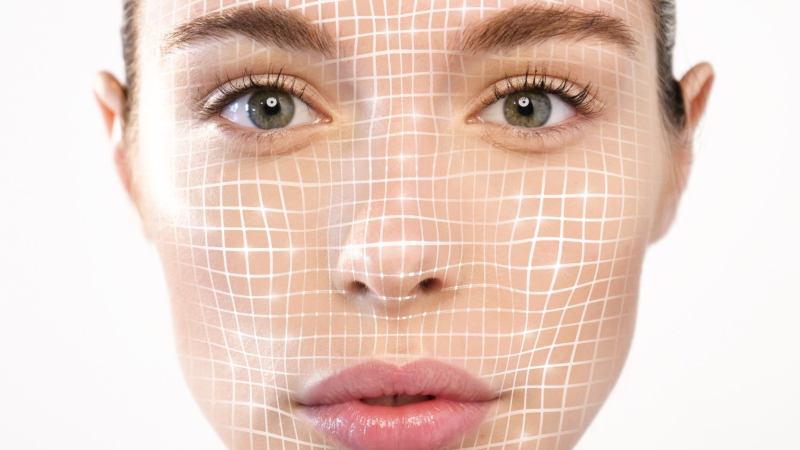
Imagine effortlessly trying on makeup and hair colour virtually, eliminating the guesswork with augmented reality (AR) technology. Picture personalized skincare routines optimized by artificial intelligence (AI), analyzing your unique skin profile and health factors. This vision is now a reality thanks to strategic partnerships.
Take L’Oréal’s collaboration and subsequent acquisition of ModiFace for example. ModiFace’s AR-powered virtual try-on technology lets consumers explore countless makeup looks in minutes. Similarly, L’Oréal ‘s collaboration with Korean startup NanoEnTek led to Cell BioPrint, an innovative beauty tech that provides a personalized skin assessment in minutes, analyzing biological age, aging signs, and responsiveness to ingredients.
As personalized, tech-driven experiences become standard, consumers are quick to abandon brands that fall short of expectations. In fact, 74% would abandon a beauty purchase due to a subpar shopping experience.
The number of connected consumers is also projected to rise substantially, from 5.3 billion in 2023 to 7.5 billion in 2030, representing a significant opportunity for startups to capitalize on evolving digital needs and habits through beauty tech innovation.
Many people look to Silicon Valley for disruptive innovation, but there is a vibrant and rapidly expanding startup ecosystem in SAPMENA with over 40,000 startups. Hubs like the Middle East are perfectly positioned to unlock this golden opportunity. Investors too, are recognizing the potential for innovation across the broad retail sector.
In fact, funding for the retail sector in the Middle East was up by 98% while other sectors saw declines of up to 67% in the same period. SAPMENA is where the future of beauty can be written, and startups here hold the pen.
Collaborations fueling innovation to shape the future of beauty
The SAPMENA beauty market offers immense potential, but scaling across its diverse landscape presents a formidable challenge for startups. Even with a viable concept or product-market fit, the most promising startups may still struggle to successfully navigate the commercial routes.
Deloitte estimates that over 80% of startups fail to transition from emergent to mainstream products or services. Cultural nuances, regulatory complexities, and infrastructural scale are just a handful of examples that hinder broader market penetration, highlighting the crucial role of strategic partnerships.
Partnering with established industry leaders can help startups overcome these barriers, while creating a powerful value exchange. On one hand, industry leaders have the footprint that provides market access, industry expertise, and resources, and on the other, startups offer disruptive thinking, agility, cutting-edge technologies, and emerging niche expertise. This collaboration unlocks mutual growth and can fuel the beauty tech revolution.
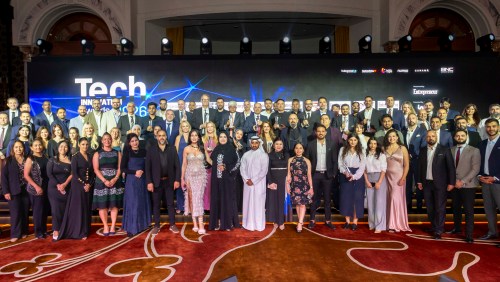
This presents significant opportunities and there are multiple avenues for startups in the Middle East to tap into innovation partnerships. Incubators, accelerators, and corporate venture investments are some ways to access the ecosystem. L’Oréal’s Big Bang Beauty Tech Innovation Program is a prime example of this collaborative approach.
Last year, our inaugural SAPMENA edition saw over 1,000 startups from across South Asia Pacific, the Middle East, and North Africa compete for the chance to secure pilot collaborations, mentorship from senior leadership, and the opportunity to unlock L’Oréal’s extensive network and resources, including exposure to our 37 international brands.
The beauty industry is in a constant state of evolution. Consumer preferences are shifting, technology is advancing at an unprecedented pace, and sustainability concerns are coming to the forefront. Startups, with their agility, innovative spirit, and eye on emerging trends, are uniquely positioned to navigate this dynamic landscape and shape the future of beauty.
If you’re a startup ready to disrupt a US$590 billion industry and make your mark, then join the next wave of innovators.
The beauty industry is experiencing a seismic shift, not just in size but in substance. Projected to reach a staggering US$590 billion globally by 2028, with an annual growth rate of 6%, as per a study by McKinsey, the beauty market’s growth, particularly within the dynamic region of South Asia Pacific, Middle East, and North Africa (SAPMENA), signals a profound transformation.
But this isn’t simply about market expansion; it’s about a fundamental change in consumer expectations, driven by a digitally native generation demanding personalized, sustainable, and technologically advanced beauty experiences.
This presents a unique opportunity for startups in the Middle East with disruptive innovation to drive the next big bang for the future of beauty. The convergence of beauty and technology has created a compelling investment opportunity– why?

Vismay Sharma • President of L’Oréal South Asia Pacific, Middle East and North Africa
Vismay Sharma is the President of L'Oréal South Asia Pacific, Middle East and North Africa.... Read more