The Leadership Playbook for the Agentic Era
The question has shifted to how AI will redefine our people, our culture, and our leadership.
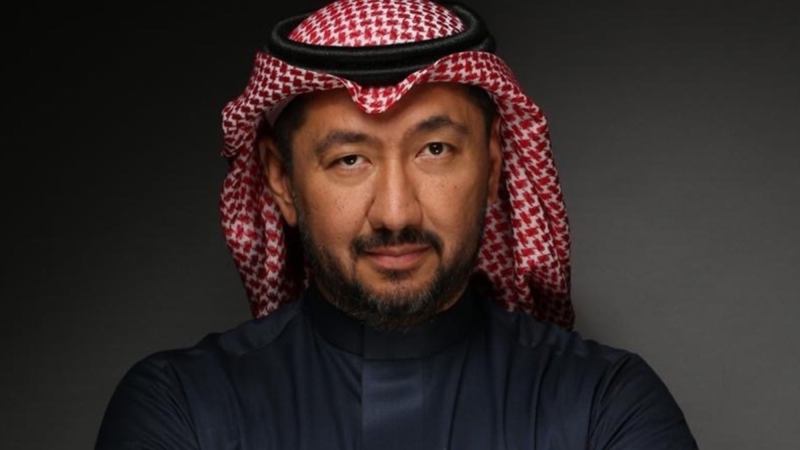
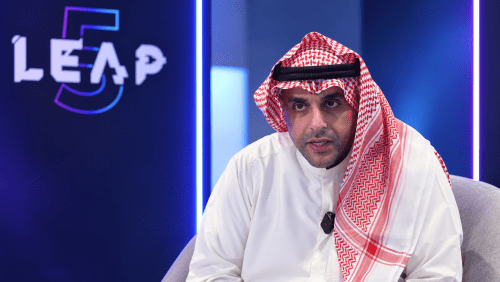
Mohammed Alkhotani, SVP and GM, Salesforce Middle East.
Opinions expressed by Entrepreneur contributors are their own.
You're reading Entrepreneur Middle East, an international franchise of Entrepreneur Media.
As we begin 2026, I’m reflecting on how fast the conversation around AI has evolved. Just a year ago, most boardrooms were asking what AI could do. Today, the question has shifted to how it will redefine our people, our culture, and our leadership.
Across the Middle East, that shift is accelerating. IDC estimates that AI investment in the region will exceed US$6 billion by 2026 (IDC (International Data Corporation), “AI Spending in the Middle East and Africa Set to Top US$6.4 Billion by 2026”, published March 2024), yet fewer than half of organisations say they have a clear workforce or governance strategy in place. Yet, in the UAE, only 42% of organisations are fully confident they can deploy AI agents in compliance with regulations and standards, while 90% say they haven’t fully automated their compliance processes. That gap, between ambition and readiness, is where the real leadership challenge lies.
The leaders I meet share the same duality: optimism and unease. They see the promise of agentic AI, systems capable of acting, deciding, and collaborating independently, but they’re still figuring out how to turn that promise into a trusted transformation. Employees feel it too. They’re watching as AI quietly takes over low-return, repetitive tasks, but few understand how it will change the value they bring.
That uncertainty is the test of leadership in this decade. The adoption curve of AI is no longer linear; it’s exponential. The question for business leaders and owners isn’t if their organisations will transform, but how deliberately they’ll lead that change.
Agentic AI marks the shift from automation to orchestration. These systems aren’t replacing humans; they’re reassigning value, removing friction, accelerating decisions, and uncovering insights faster than teams ever could alone. The opportunity isn’t doing more with less; it’s redeploying human potential toward creativity, customer connection, and innovation. The most forward-thinking companies are already doing this, freeing people from administrative gravity to focus on work that truly moves the business. In my view, agentic AI won’t replace people, but it will replace leaders who fail to reimagine what people can do.
Ask yourself: how many hours in your organisation are still spent on tasks that don’t move strategy forward? How much creativity sits trapped inside old workflows and silos? AI won’t solve that on its own, but leaders who redesign work around purpose will.
Readiness across the region remains uneven. A PwC Middle East study found that while 80% of companies plan to scale AI within two years, fewer than half feel prepared to manage the organisational and ethical implications. Many still lack clear strategies for reskilling, accountability, or how to measure trust.
The next era of competitiveness will belong to those who build adaptive workforces. Winners won’t think in job titles, but in skills, understanding their people well enough to move them where they create the most value. AI can already help identify hidden strengths inside an organisation. Leaders who use those insights to reskill and redeploy will unlock not just productivity, but loyalty.
There’s also a cultural dimension. Agentic AI demands a new kind of trust, earned through transparency and communication. Employees need to know when to rely on an agent’s judgment and when to challenge it. Customers need confidence that human accountability still sits at the centre. The leaders who treat trust as a strategic asset, not a compliance exercise, will guide this transition best.
As the UAE moves closer to its vision of becoming an agentic city, where intelligent systems anticipate citizen needs and industries interconnect in real time, the private sector must keep pace. The line between enterprise and ecosystem is disappearing. It’s on business leaders now to make sure the same intelligence transforming cities also transforms workplaces, responsibly and with purpose.
The truth is, technology alone won’t define the next decade of growth. The best technology won’t be the one that shouts the loudest, it’ll be the one that quietly makes life easier, decisions faster, and work more human.
Personally I’ve learned something watching this region move so fast: AI isn’t waiting for us to be ready. It’s already here, reshaping how we work and lead. Every leader I know is asking the same question, “What do we want this technology to stand for in our organisations?”
Because in the end, it’s not about AI replacing people. It’s about how we, as leaders, help people grow with it. That’s the real test of leadership at this moment.
As we begin 2026, I’m reflecting on how fast the conversation around AI has evolved. Just a year ago, most boardrooms were asking what AI could do. Today, the question has shifted to how it will redefine our people, our culture, and our leadership.
Across the Middle East, that shift is accelerating. IDC estimates that AI investment in the region will exceed US$6 billion by 2026 (IDC (International Data Corporation), “AI Spending in the Middle East and Africa Set to Top US$6.4 Billion by 2026”, published March 2024), yet fewer than half of organisations say they have a clear workforce or governance strategy in place. Yet, in the UAE, only 42% of organisations are fully confident they can deploy AI agents in compliance with regulations and standards, while 90% say they haven’t fully automated their compliance processes. That gap, between ambition and readiness, is where the real leadership challenge lies.
The leaders I meet share the same duality: optimism and unease. They see the promise of agentic AI, systems capable of acting, deciding, and collaborating independently, but they’re still figuring out how to turn that promise into a trusted transformation. Employees feel it too. They’re watching as AI quietly takes over low-return, repetitive tasks, but few understand how it will change the value they bring.

Mohammed Alkhotani • Senior Vice President and General Manager, Salesforce Middle East
Mohammed Alkhotani is the Senior Vice President and General Manager, Salesforce Middle East.