The Open Letter Asking To Pause Artificial Intelligence Development Misses The Mark. Here’s Why.
The question is: are we at the edge of a cliff, about to fall into a techno-dystopia? Or setting out on our first step towards AI heaven?
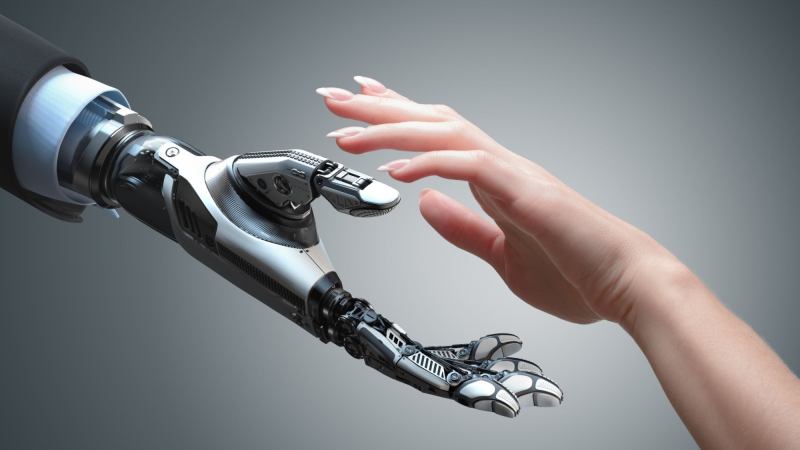
Shutterstock
Opinions expressed by Entrepreneur contributors are their own.
You're reading Entrepreneur Middle East, an international franchise of Entrepreneur Media.
In 1950, Alan Turing proposed what became known as the Turing test, aka the imitation game. Turing proposed that a machine has achieved human-level intelligence when its human counterpart cannot tell that it is a machine by the nature of its answers.
With the autumn 2022 release of OpenAI’s ChatGPT large language model (LLM), many people consider the Turing Test conquered. Now, just six months and a generation of GPT later, strong voices also say we have crossed the Rubicon in artificial intelligence (AI)– and that we need to stop. Immediately.
These voices aren’t at the fringe. They include disruptor Elon Musk, Apple co-founder Steve Wozniak, and various renowned figures in AI research. They demand, in an open letter, “to immediately pause for at least six months the training of AI systems more powerful than GPT-4.”
Other prominent figures, such as OpenAI CEO Sam Altman and billionaire philanthropist Bill Gates, express less concern about the rapid advancements in AI. They highlight the impressive benefits already being achieved, and the potential for ground-breaking AI applications, aligning with the tech sector’s overall optimism.
The question, therefore, is: are we at the edge of a cliff, about to fall into a techno-dystopia? Or setting out on our first step towards AI heaven?
Culture depends on technology
Looking back through history, we can learn a great deal about the profound effects emerging technologies have on society. From sparking economic changes like increased productivity or job displacement, to altering our culture, and reshaping the way we perceive the world– it’s a fascinating journey to explore.
The latter may be most important, politically speaking. The famous Luddite uprising in England (1811-1816) was directed against weaving machines. Its machine-smashing protagonists were textile workers who feared for their livelihoods. But the rioters were also motivated by a fear their old and honorable craft may be lost amid technical modernization.
And they were right! Technological progress fundamentally transforms how we interact as humans with our environment and with each other. By shaping our everyday work, technology decides whether we are farmers or city-dwellers, factory workers, or office commuters- or work from the confines of our own home.
Technology can also be paradoxical and diminish human ingenuity. Progress in video and computer technology has been argued to have decreased human memory, attention spans, and even overall intellect. But do the downsides outweigh the benefits?
Technological progress is centrist
No one disputes that technological advancements over the past 300 years have enhanced living standards and wealth. However, the externalities of such progress are becoming increasingly prominent in our minds.
This mindset can become fatalistic if we consider our civilization has never yet de-innovated and stopped a technological revolution. Once a new technology has been unleashed, we will have to deal with it- for better or worse.
The open letter marks such a moment- vertigo caused by rapid progress, and an uneasy feeling of losing control while accelerating. The concern expressed is honest. Nevertheless, it should be seen as part of the inevitable pendulum swing to pessimism and panic, as new technologies send waves of consciousness through society as they start to impact our lives.
History, and the poor track-record of utopians and dystopians alike, tells us that technological progress, in the long-term, is ambiguous, moderate, and centrist.
The way ahead: deliberation, adaptation, regulation
Even if there is a tangible chance AI could have a profound negative impact on human society, slamming the brakes on and freezing current research is not viable. The powerful forces of curiosity, incentives, and ambitions won’t allow it. It is not how people, industries, and markets function.
However, the open letter is right to demand that AI experts, industry players, and governments join forces and develop frameworks. In so far as the initiative has created awareness around the need for a conscious, responsible, and democratic approach to this technology’s implications, it has served a positive purpose.
But adapting society to AI cannot take place amid a chorus of “machines are coming to outnumber, outsmart, obsolete, and replace us.” AI technology has already arrived, and it will not be expunged or reversed.
Governments need to move quickly: to regulate disclosure levels and ethical standards, and ensure independent reviews of AI projects. The industry should formulate best practices and ethical codes to optimize its own self-regulation. And individual workers as well as business owners/entrepreneurs should reflect on the opportunities and challenges AI may pose to their lives and businesses.
AI is a significant step forward for civilization. We should approach this new age with rational thinking, caution, but also clear-sighted optimism.
In 1950, Alan Turing proposed what became known as the Turing test, aka the imitation game. Turing proposed that a machine has achieved human-level intelligence when its human counterpart cannot tell that it is a machine by the nature of its answers.
With the autumn 2022 release of OpenAI’s ChatGPT large language model (LLM), many people consider the Turing Test conquered. Now, just six months and a generation of GPT later, strong voices also say we have crossed the Rubicon in artificial intelligence (AI)– and that we need to stop. Immediately.
These voices aren’t at the fringe. They include disruptor Elon Musk, Apple co-founder Steve Wozniak, and various renowned figures in AI research. They demand, in an open letter, “to immediately pause for at least six months the training of AI systems more powerful than GPT-4.”

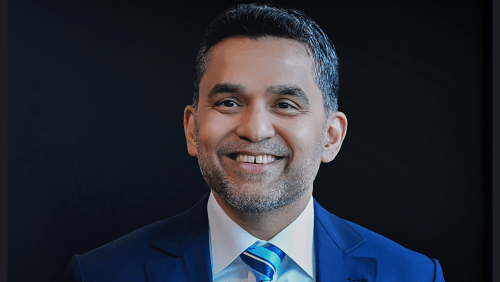
Abdulla Almoayed • Founder and CEO, Tarabut Gateway
Abdulla Almoayed is a serial entrepreneur and the founder and CEO of Tarabut Gateway, the... Read more