Policy–Tech Nexus: Pulsar Group’s Alyazi Al Khattal
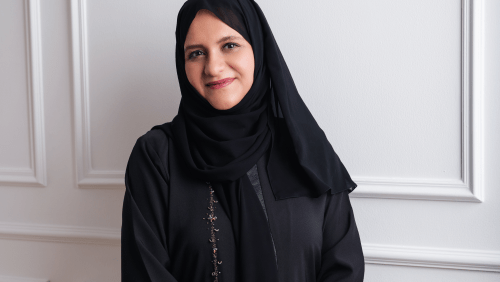
Alyazi Al Khattal, co-founder and CEO of Pulsar Group—a female leader shaping the region’s engagement with cutting-edge technologies.
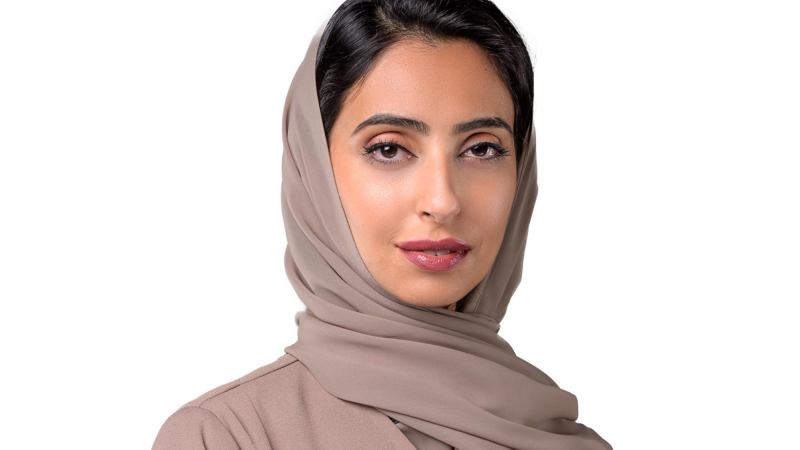
Alyazi Al Khattal, co-founder and CEO, Pulsar Group
You're reading Entrepreneur Middle East, an international franchise of Entrepreneur Media.
Pulsar Group has quietly positioned itself at the center of the UAE’s fast-evolving Web3 and blockchain landscape. Based in Abu Dhabi, the advisory firm works behind the scenes to help international companies navigate market entry—from regulatory strategy and local partnerships to go-to-market execution and post-entry scaling.
In recent months, its role in high-profile initiatives, including advising on a US$300 million private investment in public equity (PIPE) transaction into the Abu Dhabi-based Solana infrastructure company Solmate and supporting the launch of the UAE’s Machine Economy Free Zone, has brought the firm into sharper focus.
At the helm is Alyazi Al Khattal, co-founder and CEO of Pulsar Group, who —while the sector is still widely perceived as male-dominated – offers a different perspective as she describes Web3 as notably more balanced than many industries she has worked in before. “In terms of gender representation,” she says, “Inequality has not been my experience in this sector—at least not within the circles and organizations we have engaged with.”
Abu Dhabi–based Emirati Al Khattal says Pulsar Group emerged from a clear opportunity—both within its founding team and in the wider market. “One of our founders has a strong ability to identify high-quality companies and founders seeking to scale into the region, another brings a deep technical interest in Web3 and a genuine belief in its transformative potential, and the third is a serial investor with extensive experience in startups and early-stage ventures,” she says. “I come from a background in policy planning and the adoption of large-scale, complex initiatives.”
Pulsar Group’s journey began with a single client, but the founding team quickly identified a clear market gap: many international technology firms are eager to enter the region, yet often lack the clarity, networks, and local understanding required to navigate the market and scale effectively. “We are intentionally selective in the partnerships we pursue,” Al Khattal says. “We turn down the majority of opportunities because our objective is not volume, but impact. We partner only with credible companies and individuals who are capable of delivering tangible value and contributing to meaningful, long-term change in the region.”
Here, Al Khattal emphasizes that Pulsar Group is not exclusively focused on blockchain. “While Web3 is an important area of interest, we work more broadly with technology companies that align with our vision and values,” she says.
Alongside the Solana Foundation, RockawayX, and ARK Invest, Pulsar Group supported Solmate, a newly launched Solana-based digital asset treasury (DAT), that Al Khattal describes as “a DAT infrastructure company with a UAE focused strategy.”
“The idea of Solmate was mainly driven by our love for Solana and our love for the region,” she says. “Myself and a group of other investors decided to launch a digital asset treasury that would be focused on Solana because we believe that Solana has the best digital infrastructure (it’s cheap, it’s fast and it’s the most used blockchain for internet capital markets). We also wanted to run the first Solana validator in the region and continue building that bridge connecting the UAE to the world.”
Following the Machine Economy Days in the UAE in April 2025, which showcased decentralized physical infrastructure (DePIN) applications built on peaq, peaq and Pulsar Group have announced the launch of the Machine Economy Free Zone (MEFZ), set to operate across Dubai and Abu Dhabi. “What’s interesting about the project is that it flips the script on the “rise of the machines” to making it more human centric,” says Al Khattal. “In other words, robots and machines are already doing a lot of work, with real economic outcomes.This allows the co-ownership of that machine rather than keeping people out of any kind of opportunity.”
MEFZ is structured around four pillars—regulation, deployment, investment, and innovation—with plans to introduce regulatory sandboxes, physical and virtual testing environments, investment matchmaking, and a regional innovation hub for DePIN development. “This form of economy (Machine Economy) is a human-centric model where where AI- powered machines can deliver goods and services, earn income, and interact directly with people, businesses, and each other,” says Al Khattal.
Early initiatives include pilots for machine tokenization, enabling fractional investment in robots and machines, and a Universal Basic Ownership (UBO) model linked to machine-generated revenues.”I personally love this project because it democratizes investments enabling almost everyone to benefit from this change that is coming,” Al Khattal adds.
Al Khattal believes these projects find fertile ground in the UAE, which offers an environment few global markets can match—driven by regulatory clarity, credibility, and flexibility; early, purpose-built frameworks for digital assets; a strong execution mindset across government institutions; and a geographic position at the centre of global markets, making it a strategic base for Web3 companies building global protocols.
“The UAE is always hungry for the next wave that makes the country and its economy exceptional,” she says.
However, she notes that this ambition poses both an opportunity and a risk.
“Stagnation will not help you, and competition is high,” she says. “Our population also isn’t as large, so whatever you introduce needs to have a strong differentiating element. Another opportunity and risk is that the UAE’s geographic location, safety, and lifestyle attract talent from abroad. Additionally, our educational system is breeding a new generation that is extremely talented and curious. That being said, for some companies, talent retention can be challenging, as competition is intense.”
Looking ahead, Al Khattal points to several areas where blockchain adoption in the UAE is moving from concept to execution. These include the growing intersection of the creator economy and blockchain, and the increasing institutional adoption of decentralized finance by sovereign and large investment entities. “We’re seeing blockchain move beyond experimentation in the UAE—from creator-led ecosystems and gaming to institutional DeFi and the tokenization of machines. What’s happening now is about real deployment, not theory.”
‘TREP TALK: Alyazi Al Khattal’s Advice for Entering the UAE
Plan for scale – It’s very important to show stakeholders that you don’t view the region only as a source of capital, but that you are also here to participate in its transformation.
Be ready for enterprise-wide adoption – The market here is very aggressive. While regulators are keen to sandbox, you need to be ready to deploy at large scale.
The GCC is not one market or one culture.
Develop your local network – You need to spend time in the region meeting key stakeholders and regulators. You must be willing to invest your time and remain persistent.
‘TREP TALK: Alyazi Al Khattal’s Advice for Women in Tech
Competence is confidence – Stay up to date with market trends and regulations, or whatever your area of focus is. Confidence born out of competence is not arrogance.
Develop your network – I understand that women are less likely to network than men, as we tend to carry a broader set of responsibilities, face societal biases, and, in some cases, internal barriers.
Focus on your team – You won’t get anywhere alone; you need to be a team player.
Take extreme ownership – No job is too menial. You are responsible for every failure, and your team deserves credit for every success.
Pulsar Group has quietly positioned itself at the center of the UAE’s fast-evolving Web3 and blockchain landscape. Based in Abu Dhabi, the advisory firm works behind the scenes to help international companies navigate market entry—from regulatory strategy and local partnerships to go-to-market execution and post-entry scaling.
In recent months, its role in high-profile initiatives, including advising on a US$300 million private investment in public equity (PIPE) transaction into the Abu Dhabi-based Solana infrastructure company Solmate and supporting the launch of the UAE’s Machine Economy Free Zone, has brought the firm into sharper focus.
At the helm is Alyazi Al Khattal, co-founder and CEO of Pulsar Group, who —while the sector is still widely perceived as male-dominated – offers a different perspective as she describes Web3 as notably more balanced than many industries she has worked in before. “In terms of gender representation,” she says, “Inequality has not been my experience in this sector—at least not within the circles and organizations we have engaged with.”

Tamara Pupic • Editor in Chief, Entrepreneur Middle East
Entrepreneur Staff
Tamara Pupic is the Editor in Chief of Entrepreneur Middle East.