The Big Picture: Utopia Capital Management’s and QVenture Capital Association’s Alina Truhina on Qatar’s VC Ecosystem
“I look for businesses that can take advantage of our expansive geographic and technical capacity!”
You're reading Entrepreneur Middle East, an international franchise of Entrepreneur Media.
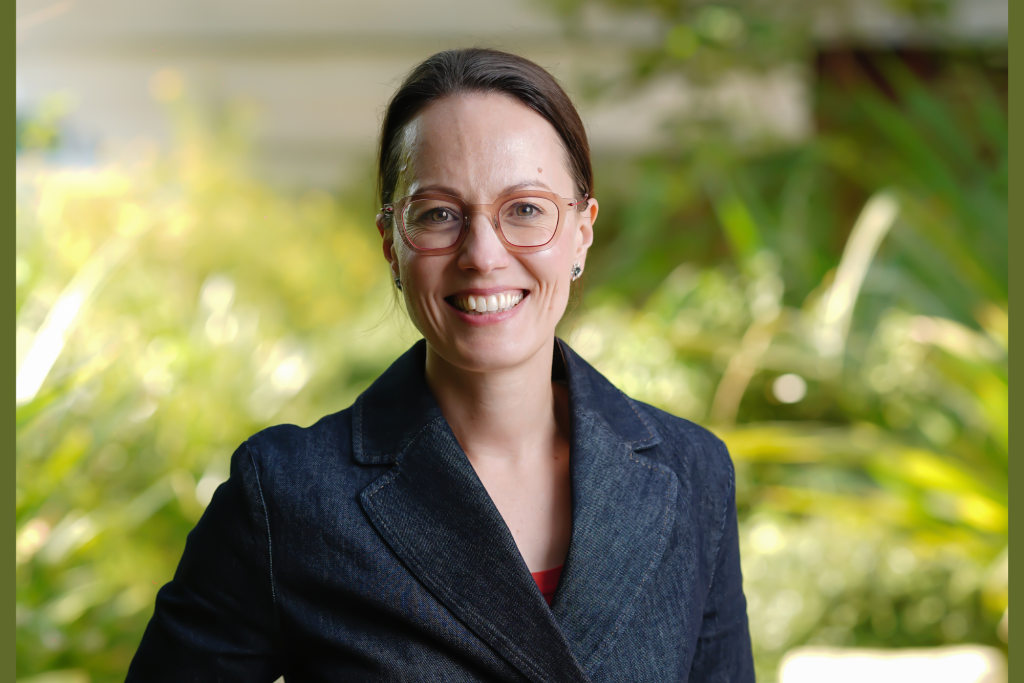
Alina Truhina is today the Founding Partner at Utopia Capital Management, a UK-headquartered global investment management company that operates across Southeast Asia, the GCC, Levant, Türkiye, and Pakistan, and co-Chair and Board Director of the QVenture Capital Association (QVCA), a Qatar-based emerging industry body committed to strengthening the venture capital (VC) and private equity (PE) ecosystem in the country.
But even before Truhina had delved deep into these roles, she’d amassed a wealth of VC experience as the co-founder of Founders Factory Africa which invested in early-stage startups across Africa. It was a tenure during which she invested in over 100 ventures across fintech, healthtech, and agritech. As such, she doesn’t mince her words when asked what startup founders —particularly those in Qatar— should avoid while trying to raise funds.
“Too many founders try to sound fundable instead of building something exceptional and scalable,” she says. “Artificial intelligence (AI) means anyone can write a business plan or have a fundable concept. But do you have an unfair advantage, a unique experience, network, or technical niche? What real world leverage sets you apart? My advice: Don’t copy the playbook. Define your edge, and build your moat from day one.”
To ensure her work offers better support to entrepreneurs across the Global South, Truhina offers her expertise across all three branches of Utopia Capital Management: A-typical Ventures, an early-stage Middle East fund; The Radical Fund, a Southeast Asia–focused climate-tech venture fund; and The UTOPIA Studio, a venture builder creating AI-native, AI-optimized companies designed to scale.
“A-typical Ventures is the Middle East arm of UTOPIA Capital, a fund that backs regionally rooted, globally relevant ventures in sectors that don’t fit traditional playbooks but hold systemic potential,” Truhina explains. “Our name is intentional: we look for “atypical” opportunities in sovereign infrastructure, industrial resilience, vertical AI, or cross-border systems, and we invest early, often as the first institutional check. Our capital strategy spans Pre-Seed to Series A and leverages the broader UTOPIA platform: from technical and go-to-market support via the Studio, to downstream risk capital via follow-on investment. Many of our deals emerge directly from problem-oriented deep dives (PODs), where we align capital, infrastructure, and ecosystem partners around a defined opportunity space. We look for domain experts and we aim to turn regional complexity into commercial advantage.”
On how this translates into UTOPIA Capital’s investment focus, Truhina explains: “UTOPIA is purpose-built for the early stage because that’s where structural gaps are most visible, and where long-term value is developed. Across A-typical Ventures in the Middle East, The Radical Fund in Southeast Asia, and The UTOPIA Studio, we invest from Pre-Seed to Series A. Our Studio co-builds companies from the idea stage, often before incorporation, while our funds deploy capital. We back domain experts sourced through curated networks or our Fellowship, and focus on high-leverage, underbuilt sectors such as infrastructure intelligence, sovereign systems, industrial decarbonisation, financial rails for cross-border economies, and vertical AI ventures in health, education, and food security. Each of these sits within a POD — a focused, pre-researched venture cluster with pre-aligned partnerships and technical infrastructure designed to accelerate execution.”
With Utopia Capital Management offering such a wide-ranging suite of services and support, Truhina has but one underlying criteria when it comes to choosing startups to invest in: “I look for businesses that can take advantage of our expansive geographic and technical capacity!”
This condition is particularly applicable to her work within Qatar, she notes. “I believe that Qatar is not the “middle;” but the center of an emerging unified venture economy across the Global South,” Truhina continues. “Our model seeks out entrepreneurs that can break through verticals and borders to build a new generation of infrastructure and innovation. By investing early we can work hand-in-hand to broaden and accelerate the entrepreneurs vision and by providing frictionless capital, tech stack, and local-global network we significantly derisk and accelerate the time to market.”
For Truhina, that conviction is reflected most clearly in the entrepreneurs she backs. “As a passionate embracer of fearlessness in the face of complexity, we seek out entrepreneurs that have hyper technical or jurisdictional knowledge,” she says. “This is executed through technical thematics that we call ‘PODs’, as mentioned earlier. Each POD is a cluster of five to seven Global South entrepreneurial technical experts looking to solve problems that are often unseen, overlooked, or discarded. Today, we are looking for entrepreneurs interested infra intelligence, decarbonising industry, sovereign systems, flow rails, and vertical AI companies”
Moving into 2026, Truhina advises founders and entrepreneurs to focus on long-term impact instead of quick wins. “Founders should focus on solving structurally hard problems with patience and depth, rather than optimizing for speed or short-term traction,” she adds. “Value is created by building real defensibility early, through domain expertise, proprietary data, infrastructure, and close proximity to customers. In emerging markets, success comes from platforms and partnerships that lower the cost of building, scaling, and learning, and not just access to capital.”
INVESTORS INSIGHTS: Alina Truhina on the trends or technologies that will define the next wave of investable startups across Qatar and the broader Global South
“The next generation of Global South ventures will embrace complexity to scale across verticals and geographies. At the moment, we are excited about the following:
1. Infra Intelligence: Ventures enabling energy grid optimisation, VPPs, digital twins for data centres, and intelligent retrofits for industrial performance.
2. Decarbonising Industry: Platforms optimising cross-border logistics, low-carbon materials, and manufacturing efficiency through agentic AI.
3. Sovereign Systems: Technologies enabling sovereign data, disaster risk infrastructure, national energy stacks, and domestic control layers.
4. Flow Rails: Infrastructure for programmable settlements, cross-border money flows, tokenisation, and SME finance layers.
5. Vertical AI Companies: Domain-specific AI for health productivity, education infrastructure, and food security resilience.
Each of these categories represents a POD within UTOPIA, and each is an investable thesis grounded in the real needs of the regions we operate in.”
Alina Truhina is today the Founding Partner at Utopia Capital Management, a UK-headquartered global investment management company that operates across Southeast Asia, the GCC, Levant, Türkiye, and Pakistan, and co-Chair and Board Director of the QVenture Capital Association (QVCA), a Qatar-based emerging industry body committed to strengthening the venture capital (VC) and private equity (PE) ecosystem in the country.
But even before Truhina had delved deep into these roles, she’d amassed a wealth of VC experience as the co-founder of Founders Factory Africa which invested in early-stage startups across Africa. It was a tenure during which she invested in over 100 ventures across fintech, healthtech, and agritech. As such, she doesn’t mince her words when asked what startup founders —particularly those in Qatar— should avoid while trying to raise funds.
“Too many founders try to sound fundable instead of building something exceptional and scalable,” she says. “Artificial intelligence (AI) means anyone can write a business plan or have a fundable concept. But do you have an unfair advantage, a unique experience, network, or technical niche? What real world leverage sets you apart? My advice: Don’t copy the playbook. Define your edge, and build your moat from day one.”

Aalia Mehreen Ahmed • Senior Features Editor, Entrepreneur Middle East
Entrepreneur Staff
Senior Features Editor at Entrepreneur Middle East and host of Anchored Echoes, with nearly seven... Read more