The Courage Of Conviction: Asam Khan, Founder And CEO, AstraUTM
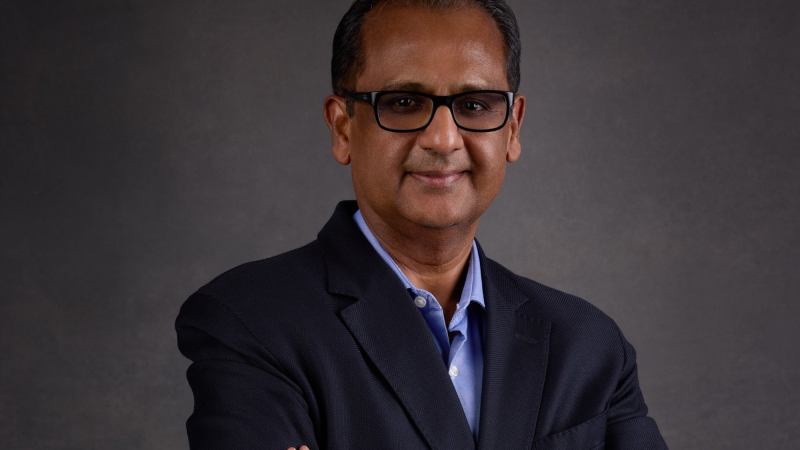
Asam Khan, founder and CEO of UAE-based drone traffic management platform AstraUTM, tells the story of how he built a venture that was acquired by Paris-based multinational Thales in May this year.
AstraUTM
You're reading Entrepreneur Middle East, an international franchise of Entrepreneur Media.
One particular statement from our interview with Asam Khan, the founder and CEO of UAE-based drone traffic management platform AstraUTM, lends color to a pivotal moment in his entrepreneurial journey, which was the acquisition of his startup in May this year by Thales, a global leader in advanced technologies for the aerospace, defense, and security sectors. “One lives by the strength of one’s convictions, and if you cannot convince yourself of the viability of your dreams, you will never convince anyone else,” he declares. “The journey begins in your own mind.”
Khan’s journey with AstraUTM began in 2020 when he founded it as a spinoff of his previous startup, Exponent Technology Services (Exponent). Established in 2012, Exponent aimed to help enterprises integrate unmanned aerial vehicles (UAVs) and unmanned aircraft systems (UASs) -more commonly referred to as drones- as a useful data acquisition model within their existing information architecture. “I quickly discerned a gaping need in the local drone market in 2013– there were a lot of drone platform providers, but no drone solution providers,” Khan recalls. “By drone solution, I looked at the drone as only a single part of a chain that is another data acquisition channel for an enterprise. Acquiring data, transforming it into actionable information, informing better decisions that results in better outcomes– that should be the ultimate objective. Without this holistic information supply chain, the drone is simply a toy made into an interesting curiosity– good for a fleeting public relations boost, but nothing else.”
As it often happens when working at the bleeding edge of technology, Exponent soon found itself hitting a wall thanks to government regulations in its realm of operation. “Aviation is highly risk-adverse, and the regulators have shared decades of experience in making it the safest form of transportation available today,” Khan notes. “Now, along come all these disruptive drones demanding to share the airspace, as if it is some fundamental human right- it is definitely not. So, naturally, the authorities want to ensure that the airspace is at least as safe, if not safer, after the introduction of drones.”
But instead of shutting down the company, Khan saw a silver lining in developing a means to track and monitor drones in near real-time by utilizing existing cellular infrastructure. “This led to us fielding the world’s first metropolitan wide unmanned traffic management (UTM) system with the Dubai Civil Aviation Authority in 2017, UTMosphere [a modular cloud-based, scalable software-as-a-solution service],” he says. “We quickly realized that a fully functional UTM providing a minimum level of services was a mandatory precursor to the growth of the drone industry as a whole. We then made a strategic decision to spin-off our UTM-based intellectual property into AstraUTM that was fatefully founded in January 2020.”
This decision might have appeared as a disastrous one given that, at the time, the whole world was set to find itself enveloped by the COVID-19 lockdown. And although his nascent business faced a period of no new customers nor funding, Khan once again remained loyal to his vision, and decided to look inward. “Without any distractions, working remotely from home, over the course of nine months in 2020, we re-emerged with a wholly new product that was far ahead of our competitors, and far ahead of its time,” he says. “We pivoted to a micro-services, cloud-based architecture that allowed for a highly coherent and loosely coupled solution, enabling us to rapidly extend capabilities, without having laborious rounds of unit and integration testing. We were literally able to move at the speed of thought, from rapid prototyping and lightning development cycles, to fast testing and optimized deployments. We could deploy an as-is solution within seven days, which was unheard of in aviation software at the time.”

Source: AstraUTM
With these cards up his sleeve, Khan was ready to harness the growing potential of the global drone traffic management market, which, according to market intelligence platform Markets and Markets, is expected to reach US$1,098 million in 2030, growing at a compound annual growth rate (CAGR) of 33.9% from 2022 to 2030. It should therefore not come as a surprise that AstraUTM soon attracted the attention of larger global players- Khan recalls that he expected it to be either a major air traffic management (ATM) solution provider, or an air navigation service provider (ANSP). “The ANSPs were somewhat hesitant, as they operated under a mandate from their local civil aviation authorities (CAAs), and would need a clear direction before investing in UTM, whereas the ATM providers see UTM as a natural extension to their portfolio- and somewhat of a threat,” he explains.
Related: Inside The MENA High Tech Boom
Having thus been engaged in discussions with multiple potential enquirers, Khan eventually realized that AstraUTM and the Paris-headquartered Thales made for natural partners in the field, especially given the latter’s global expertise and experience in UTM solutions”When they proposed an acquisition transaction, it was accepted by all of AstraUTM’s internal stakeholders,” he reveals. “They went a step further, and opted for a full 100% acquisition, as opposed to an initial minority stake– which was an outcome we greatly welcomed.”
When asked about the lessons he captured from the process of selling his company, Khan starts by highlighting the importance of diversifying and expanding his options in order to find the right fit for the company. “Understanding buyer motivations was also key, as each potential acquirer had different motivations and strategic objectives driving their interest to acquire AstraUTM,” he continues. “These objectives must align with your own strategic goals to ensure a successful acquisition.” Thirdly, Khan considers seeking advice as being key to successfully navigating complex negotiations, structuring the deal, and ensuring that the company’s interests are best protected. He adds, “The last and the most obvious learning, is to maintain confidentiality through- out the sale process in order to protect sensitive information– this becomes even more important when forming acquisitions within industries like UTM.”
Looking ahead, Khan believes that the UTM industry is at a crucial inflection point, ready to take off. “If you consider that there are only tens of thousands of commercial aircraft worldwide (not including general aviation and military aircraft), and that globally it is estimated there are anywhere between two to five million drones currently operating, one can begin to understand the scale of the industry once it is fully regulated,” he explains. “It will be two orders of magnitude -100 times- the current aviation footprint. This will call for bold new solutions and techniques as we scale up to meet the challenge.”

Source: AstraUTM
Khan also mentions the current push for advanced air mobility (AAM), or commonly known as autonomous air taxis, to become an integrated mode of inner-city transportation to further describe how AstraUTM solutions fit perfectly to respond to new demands in the sector. “Different elements for AAM are going to be fully dependent upon an underlying infrastructure that can support their operations, and the underlying foundation to this is UTM,” he says. “The ability for airspace to be allocated to these vehicles, flights to be planned and approved in their respective corridors (strategic deconfliction), tracking in near real-time during flight, potential conflicts resolution (tactical deconfliction), are some of the core services that a UTM must provide, and AstraUTM has been providing it since 2021. Our ‘win’ has been to foresee this a good half decade in advance and to invest in this potential future.”
Related: How GCC Countries Can Build A Talent Model For The Digital Age
One particular statement from our interview with Asam Khan, the founder and CEO of UAE-based drone traffic management platform AstraUTM, lends color to a pivotal moment in his entrepreneurial journey, which was the acquisition of his startup in May this year by Thales, a global leader in advanced technologies for the aerospace, defense, and security sectors. “One lives by the strength of one’s convictions, and if you cannot convince yourself of the viability of your dreams, you will never convince anyone else,” he declares. “The journey begins in your own mind.”
Khan’s journey with AstraUTM began in 2020 when he founded it as a spinoff of his previous startup, Exponent Technology Services (Exponent). Established in 2012, Exponent aimed to help enterprises integrate unmanned aerial vehicles (UAVs) and unmanned aircraft systems (UASs) -more commonly referred to as drones- as a useful data acquisition model within their existing information architecture. “I quickly discerned a gaping need in the local drone market in 2013– there were a lot of drone platform providers, but no drone solution providers,” Khan recalls. “By drone solution, I looked at the drone as only a single part of a chain that is another data acquisition channel for an enterprise. Acquiring data, transforming it into actionable information, informing better decisions that results in better outcomes– that should be the ultimate objective. Without this holistic information supply chain, the drone is simply a toy made into an interesting curiosity– good for a fleeting public relations boost, but nothing else.”
As it often happens when working at the bleeding edge of technology, Exponent soon found itself hitting a wall thanks to government regulations in its realm of operation. “Aviation is highly risk-adverse, and the regulators have shared decades of experience in making it the safest form of transportation available today,” Khan notes. “Now, along come all these disruptive drones demanding to share the airspace, as if it is some fundamental human right- it is definitely not. So, naturally, the authorities want to ensure that the airspace is at least as safe, if not safer, after the introduction of drones.”

Tamara Pupic • Editor in Chief, Entrepreneur Middle East
Entrepreneur Staff
Tamara Pupic is the Editor in Chief of Entrepreneur Middle East.