Navigating the New Normal: BlackRock’s 2026 Global Outlook
You're reading Entrepreneur Middle East, an international franchise of Entrepreneur Media.
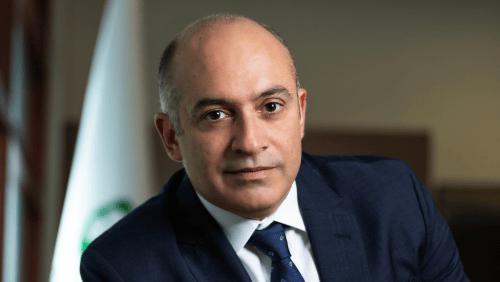
In an interview with Entrepreneur Middle East, Ben Powell, Chief Middle East and APAC Investment Strategist, BlackRock Investment Institute, breaks down the firm’s newly released Full-Year Global Outlook 2026 and what shifting economic forces mean for investors.
As global markets stand at the cusp of significant structural change, the BlackRock Investment Institute’s Full-Year Global Outlook 2026 offers a roadmap for investors navigating uncertainty. In this conversation, Ben Powell, Chief Middle East and APAC Investment Strategist, discusses the key themes shaping the year ahead.
In 2026, which core assumptions do investors most need to revisit?
Investors should rethink three dated assumptions. First, AI is not a sector story: its capital intensity and scale make it a macro driver that alters growth, capex, inflation and real constraints such as power and land — micro is now macro. Second, policy is not an assured backstop: stretched public finances and smaller central bank room increase the chance of policy-driven shocks. Third, classic diversification no longer works as presumed: government bonds offer less ballast, correlations have shifted, and broad indexes can hide large, directional bets.
What investment principles should remain non-negotiable for portfolios in 2026?
Maintaining exposure to structural growth drivers is non-negotiable, particularly AI and the sectors enabling its build-out. At this stage, the greater risk is being structurally under-exposed rather than early. Selectivity and granularity are also essential. Dispersion across countries, sectors and factors is rising, and broad-brush allocations are increasingly ineffective. And importantly, being selective about private markets matters more than ever.
In a more volatile environment, how much pressure are investors facing for short-term performance and liquidity—and how should that be managed?
Short-term pressure on performance and liquidity is higher given market concentration, front-loaded AI capex and tighter public-sector financing. We favor a scenario-based for portfolio construction and see private markets and hedge funds as sources of idiosyncratic return in an environment where long Treasuries no longer provide the same ballast. The way to manage heightened volatility is not by avoiding risk but taking it more deliberately. That means segmenting liquidity needs across different time horizons, pacing private market allocations realistically, and reinforcing portfolios with high-quality income as a stabiliser. Clear communication around long-term objectives is also critical, helping stakeholders remain anchored through inevitable short-term volatility.
Despite better data and analytics, which risks do investors still underestimate?
One persistent blind spot is the physical reality of the AI build-out. Energy, grid capacity, land, labour and permitting constraints are becoming binding, creating bottlenecks that can introduce price instability and reshape return paths. Investors also tend to underestimate fiscal sustainability risks. With public balance sheets already stretched, government bond markets themselves could become a source of shock rather than protection. Finally, many still assume that bonds will reliably diversify equities. In reality, correlations are shifting and policy-driven shocks remain under-recognized.
How has the role of Gulf markets in global asset allocation changed over the past decade—and what do global investors still misunderstand?
A common misunderstanding is that the region remains primarily a petro-economy. In reality, it is rapidly diversifying into AI infrastructure, clean energy, logistics and financial market development — supported by ambitious policy frameworks and modernised market infrastructure. Sovereign and institutional investors from the region are now shaping flows into private markets, infrastructure and transition finance globally. At the same time, reforms to deepen domestic markets and bolster access for global investors are underway.
How are structural forces—AI, geopolitics, energy transition and demographics—reshaping long-term portfolio construction globally and in the Middle East?
AI is driving a new macro cycle characterised by massive, front-loaded capital expenditure in data centres, power and compute. This shifts emphasis towards enabling sectors such as semiconductors, utilities and energy infrastructure in portfolios. At the same time, geopolitics is accelerating fragmentation and supply-chain rewiring, making regional specificity more important than broad emerging-market exposure. The energy transition is reinforcing the role of real assets, infrastructure and transition-aligned credit, with the Gulf emerging as a central hub for transition finance. Demographics add another layer. Ageing populations globally are increasing demand for income-generating and healthcare assets, while youthful GCC populations support long-term themes around job creation, housing and digital infrastructure.
In an interview with Entrepreneur Middle East, Ben Powell, Chief Middle East and APAC Investment Strategist, BlackRock Investment Institute, breaks down the firm’s newly released Full-Year Global Outlook 2026 and what shifting economic forces mean for investors.
As global markets stand at the cusp of significant structural change, the BlackRock Investment Institute’s Full-Year Global Outlook 2026 offers a roadmap for investors navigating uncertainty. In this conversation, Ben Powell, Chief Middle East and APAC Investment Strategist, discusses the key themes shaping the year ahead.
In 2026, which core assumptions do investors most need to revisit?
Investors should rethink three dated assumptions. First, AI is not a sector story: its capital intensity and scale make it a macro driver that alters growth, capex, inflation and real constraints such as power and land — micro is now macro. Second, policy is not an assured backstop: stretched public finances and smaller central bank room increase the chance of policy-driven shocks. Third, classic diversification no longer works as presumed: government bonds offer less ballast, correlations have shifted, and broad indexes can hide large, directional bets.
What investment principles should remain non-negotiable for portfolios in 2026?
Maintaining exposure to structural growth drivers is non-negotiable, particularly AI and the sectors enabling its build-out. At this stage, the greater risk is being structurally under-exposed rather than early. Selectivity and granularity are also essential. Dispersion across countries, sectors and factors is rising, and broad-brush allocations are increasingly ineffective. And importantly, being selective about private markets matters more than ever.
In a more volatile environment, how much pressure are investors facing for short-term performance and liquidity—and how should that be managed?
Short-term pressure on performance and liquidity is higher given market concentration, front-loaded AI capex and tighter public-sector financing. We favor a scenario-based for portfolio construction and see private markets and hedge funds as sources of idiosyncratic return in an environment where long Treasuries no longer provide the same ballast. The way to manage heightened volatility is not by avoiding risk but taking it more deliberately. That means segmenting liquidity needs across different time horizons, pacing private market allocations realistically, and reinforcing portfolios with high-quality income as a stabiliser. Clear communication around long-term objectives is also critical, helping stakeholders remain anchored through inevitable short-term volatility.
Despite better data and analytics, which risks do investors still underestimate?
One persistent blind spot is the physical reality of the AI build-out. Energy, grid capacity, land, labour and permitting constraints are becoming binding, creating bottlenecks that can introduce price instability and reshape return paths. Investors also tend to underestimate fiscal sustainability risks. With public balance sheets already stretched, government bond markets themselves could become a source of shock rather than protection. Finally, many still assume that bonds will reliably diversify equities. In reality, correlations are shifting and policy-driven shocks remain under-recognized.
How has the role of Gulf markets in global asset allocation changed over the past decade—and what do global investors still misunderstand?
A common misunderstanding is that the region remains primarily a petro-economy. In reality, it is rapidly diversifying into AI infrastructure, clean energy, logistics and financial market development — supported by ambitious policy frameworks and modernised market infrastructure. Sovereign and institutional investors from the region are now shaping flows into private markets, infrastructure and transition finance globally. At the same time, reforms to deepen domestic markets and bolster access for global investors are underway.
How are structural forces—AI, geopolitics, energy transition and demographics—reshaping long-term portfolio construction globally and in the Middle East?
AI is driving a new macro cycle characterised by massive, front-loaded capital expenditure in data centres, power and compute. This shifts emphasis towards enabling sectors such as semiconductors, utilities and energy infrastructure in portfolios. At the same time, geopolitics is accelerating fragmentation and supply-chain rewiring, making regional specificity more important than broad emerging-market exposure. The energy transition is reinforcing the role of real assets, infrastructure and transition-aligned credit, with the Gulf emerging as a central hub for transition finance. Demographics add another layer. Ageing populations globally are increasing demand for income-generating and healthcare assets, while youthful GCC populations support long-term themes around job creation, housing and digital infrastructure.