Amazon’s Ronaldo Mouchawar and Global Ventures’ Noor Sweid Declare Human Talent Must Be Supported More Amid AI-Driven Shifts
The session was moderated by Tamara Pupic, Managing Editor of Entrepreneur Middle East.
You're reading Entrepreneur Middle East, an international franchise of Entrepreneur Media.
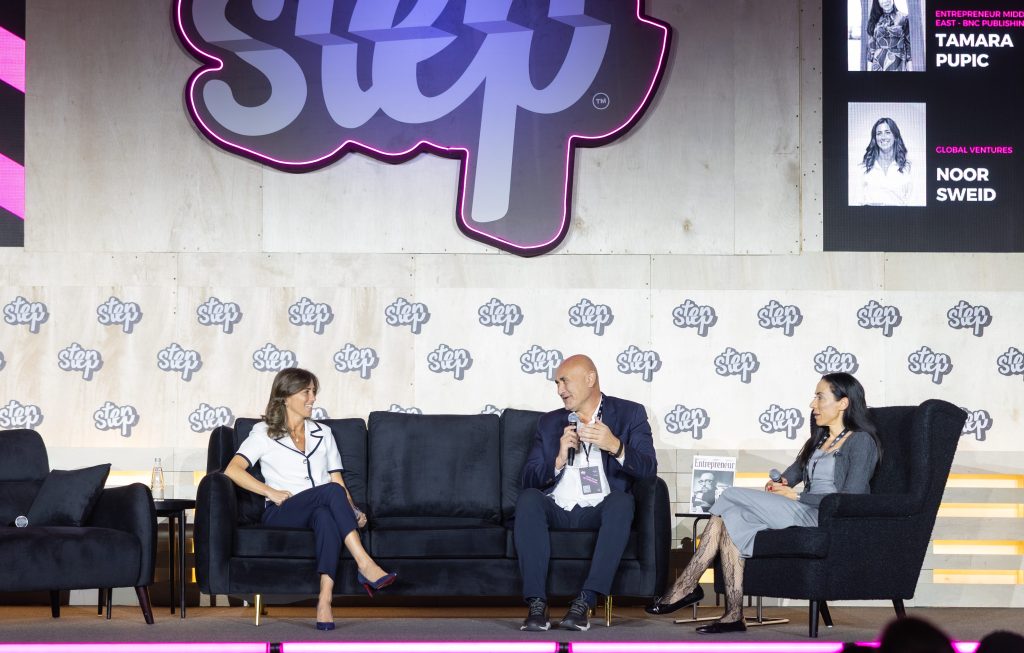
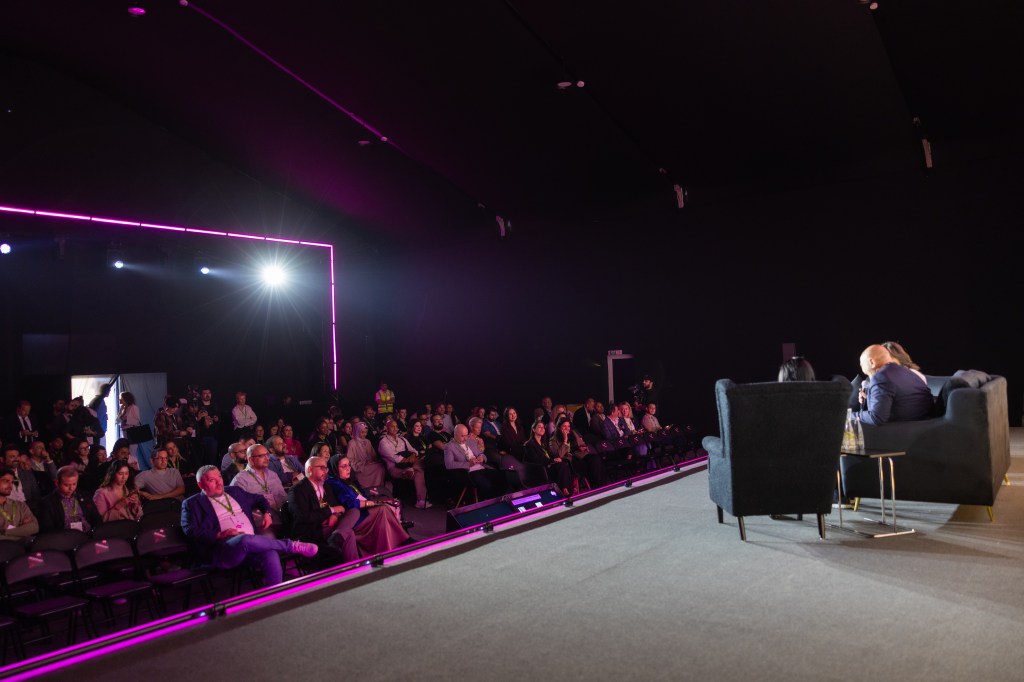
On February 11, 2026, a panel at Step Dubai 2026 saw Noor Sweid, founder and Managing Partner of Global Ventures, and Ronaldo Mouchawar, Vice President – Middle East, Africa and Turkey of Amazon, share insights on how the UAE’s entrepreneurial ecosystem has changed over the past two decades.
Titled “20 Years of MENA Startups: Lessons, AI Horizons, and the Next Chapter,” the session was moderated by Tamara Pupic, Managing Editor of Entrepreneur Middle East.
Very early into the panel, both panelists surmised that even as artificial intelligence (AI) continues to permeate through different factions of business operations, it is human-centricity that will create sustainable companies.
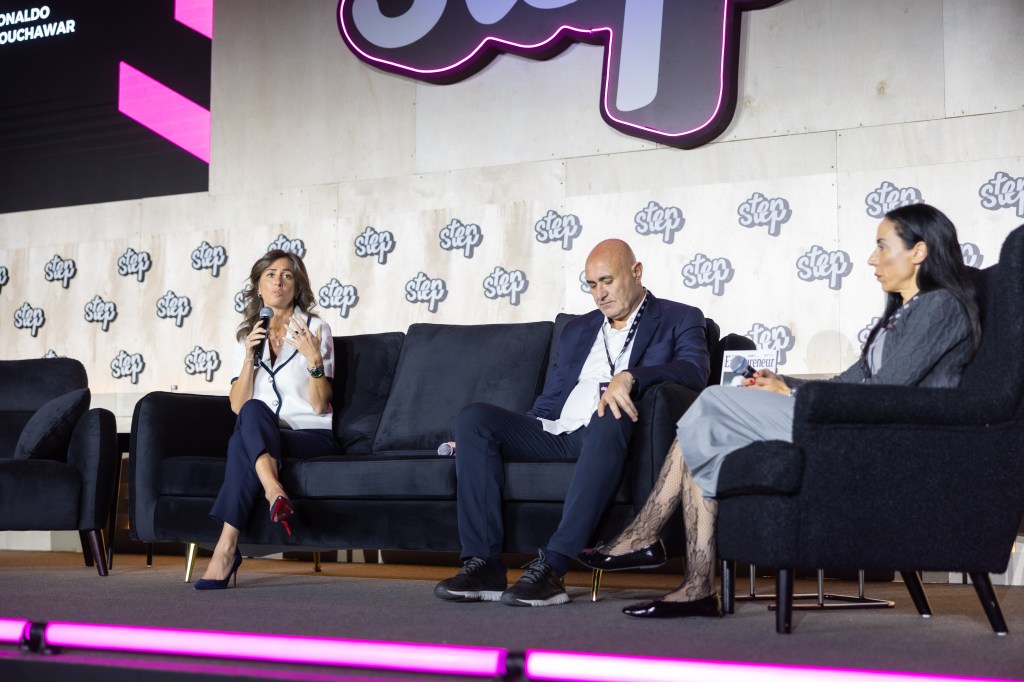
“When I look at AI, I see another revolution,” said Sweid. “Think about the industrial revolution 100-plus years ago. It shifted us from using our bodies as our main source of output and income to using our minds. Our minds became our most powerful tool. Today, AI may render the computational use of our minds obsolete — similar to how the industrial revolution rendered physical labor obsolete. So what happens if our minds can’t generate income because AI can do that better? Where are we going? I want to be hopeful and say the answer is spirit. How do we move from mind to spirit, the same way we once moved from body to mind? At the beginning of the industrial revolution, if you told someone they wouldn’t use their body to be productive anymore but their mind instead, they would ask, what could my mind possibly do? Today we ask: isn’t spirit just something aspirational? Probably not. It’s something we need to uncover and learn.”
When asked how she would approach launching an AI business in today’s landscape, Sweid replied: “If I were starting in AI today — not 20 years from now when this is obvious — I’d begin with what all of us fundamentally are: human. Human connectedness. Spiritual connectedness. What makes us human — our mind, body, being. How can AI encourage people to become more human, more connected, more in community, and more in touch with their spirit? That’s a company that, over the next 20 years, would have real tailwinds and benefit society as we move from mind to spirit.”
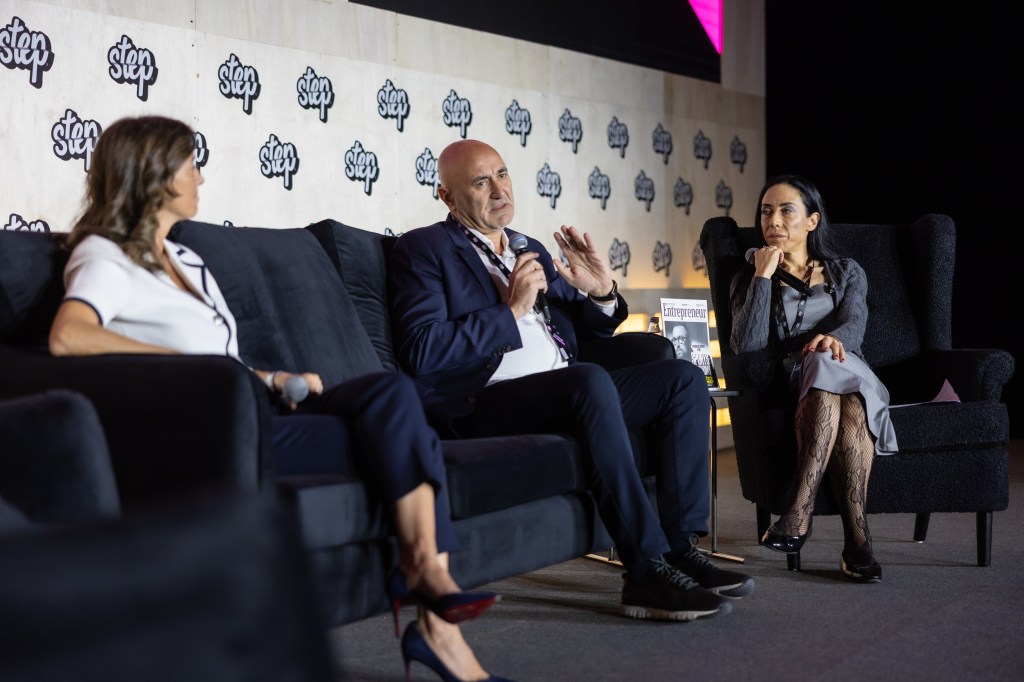
When posed with a similar question Mouchawar noted that his approach would’ve been more operational. “When I started my first company, we hired engineers first and built an MVP,” he recalled. “I remember here, actually. I think this building or the building next door. I had a desk this way. My developers were in Amman, but the customer service people were sharing a round table. So if I’m going to start that journey again, I think I would keep my customer service people next to me because I feel they would give me daily feedback on how our customers were using our product and what was working and not working. I was hearing some of that as I was managing the product life cycle. So I think that’s non-negotiable — staying close to customers. Building the core early-on customer base of any product is super important. They’re usually early adopters. They’re very loud in terms of their needs. And because the number is small, you can really get the pulse of your product and how you’re doing. AI can help accelerate product development through prompting and automation, but I would still prioritize human interaction early on. You can’t outsource understanding your customer’s psychology to a chatbot.”
“And I wouldn’t raise money too early,” Mouchawar added. “Today you can build cheaply. Go to your seed round with a working product and real users. That changes everything.”
The conversation, while still rooted in addressing customer needs and human talent, then moved towards what constitutes a viable business idea. “When building products, build something people want to use — not something you personally think is cool,” Sweid advised. “It’s easy to build what you’d use and discover no one else cares. Be attached to the problem and the customer, not the product. Use AI for what it does best: repetitive, menial tasks. Draft emails. Automate workflows. Create first versions. But you still need human quality control. AI can give you a strong first draft in half the time, freeing you to focus on the things only you can do.”
As such, Sweid pointed out that there are two trends she believes will determine the business landscape for the next 10-20 years. “First is energy,” she shared. “Not just moving to solar — but energy creation and consumption. Hundreds of millions of people still lack reliable power, particularly in fast-growing regions across the Middle East and Africa. Historically, civilizations rose on the back of cheap energy. The next era may belong to those who can democratize access to energy, through software, hardware, and new infrastructure. Second is the future of work. For most of human history, people had multiple jobs. The fixed 9-to-5 model is relatively recent. Over the next decade, work will likely fragment again. People will hold multiple roles. They won’t be attached to one title or one company. Platforms that enable skill development and multiple income streams represent significant opportunity — especially in a region where half the population is under 30.”
As the panel came to a close, Mouchawar offered his insights on what resilience truly means for founders in the region. “There’s a lot going on globally; you just have to be resilient,” he said. “Trends are developing faster than ever, and the ability to spot them early is critical. In this region, one of the biggest challenges is fragmentation — many countries, many currencies, many regulations. We talk about a 700-million-person market, but it’s fragmented. Unlike China, India, Europe, or the U.S., we don’t have unified scale. That’s still a major issue for founders. Another challenge is the limited collaboration between government, private sector, and academia. In some countries it works well. Here, it’s improving, but it’s not seamless. Talent mobility is harder. Internship pipelines are less fluid. There’s room to improve. In India, for example, payments are democratized through UPI. Regulatory barriers are being lowered. That creates scale. These are things within our control — regulators, businesses, ecosystem players — to bring together.”
On February 11, 2026, a panel at Step Dubai 2026 saw Noor Sweid, founder and Managing Partner of Global Ventures, and Ronaldo Mouchawar, Vice President – Middle East, Africa and Turkey of Amazon, share insights on how the UAE’s entrepreneurial ecosystem has changed over the past two decades.
Titled “20 Years of MENA Startups: Lessons, AI Horizons, and the Next Chapter,” the session was moderated by Tamara Pupic, Managing Editor of Entrepreneur Middle East.

Entrepreneur Middle East Staff
Entrepreneur Staff