Old Bags Luncheon™ Eyes London and Dubai as Global Demand Grows for Experience-Driven Philanthropy
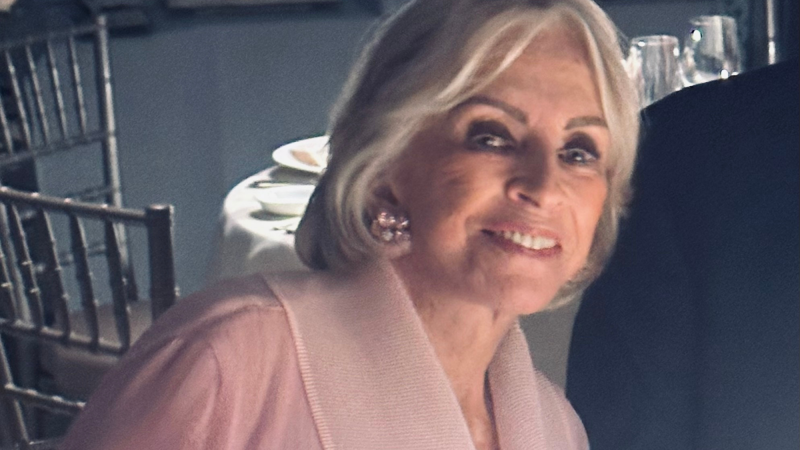
Eileen Cornacchia
You're reading Entrepreneur Middle East, an international franchise of Entrepreneur Media.
Luxury handbags may anchor the visual identity of Old Bags Luncheon™ , though Eileen Cornacchia has always viewed the concept through a far wider lens. Philanthropy, in her belief, succeeds most effectively when generosity feels social and deeply communal all at once.
“People return to experiences that make them feel good,” Cornacchia says. “If somebody leaves saying, ‘That was wonderful, I can’t wait to go again next year,’ then you’ve created something sustainable for the charity.” It’s this philosophy that has carried Old Bags Luncheon™ from a Palm Beach fundraiser into an internationally trademarked fundraising platform now operating across multiple countries and philanthropic markets.
Built around curated auctions of designer, vintage, and collectible handbags, the model has generated substantial charitable funding through single-event daytime luncheons. Current trademark activity spans the United States, Canada, Australia, and New Zealand, while Japan is nearing formal completion. Cornacchia notes that attention has increasingly shifted toward London and Dubai, two cities she believes possess the exact cultural and philanthropic infrastructure required for the concept’s next phase.
“London understands charity at a very sophisticated level, while Dubai understands hospitality and luxury at an extraordinary level. Old Bags Luncheon™ fits naturally into both environments,” she says.
The timing aligns with broader philanthropic growth across both markets. Charitable giving in the United Kingdom surpassed £15.4 billion annually in recent years, with the charities industry in the United Kingdom reaching £87.3 billion in 2026. Dubai and the wider UAE have similarly positioned philanthropy as a central social priority, with total donations in 2025 exceeding AED 4.36 billion. The city is also supported by large-scale charitable initiatives, international donor communities, and a luxury events sector valued in the billions.
Cornacchia believes those dynamics create ideal conditions for the luncheon’s expansion. “Both cities appreciate a beautiful event,” she says. “Both cities also understand the responsibility of giving back.”
Operationally, Old Bags Luncheon™ functions through a licensing structure that allows established charities to host independently branded events under the company’s internationally protected trademark. Participating organizations receive detailed frameworks covering event production, donor cultivation, sponsorship strategy, handbag procurement, auction logistics, and pacing. Cornacchia remains closely involved throughout the launch process, advising organizers directly during the first year of operation.
“I guide them through everything,” she says. “Telephone calls, planning, timing, the energy of the room. Every little detail matters.”
Scalability has become one of the company’s strongest commercial advantages. Expansion has historically emerged through personal exposure rather than traditional advertising campaigns. Guests attend an event, recognize its viability, and bring the structure back to their own communities.“Almost every event I ever signed came from somebody who attended one somewhere else,” Cornacchia says.
That organic replication has allowed Old Bags Luncheon™ to sustain relevance across very different geographic and cultural settings. Palm Beach remains the company’s flagship market and will celebrate its 28th year next season. Visibility has expanded considerably over time through celebrity participation and growing donor demand.
Demand itself has become part of the brand’s identity. Some luncheons, she notes, often sell out before invitations formally circulate. Cornacchia attributes much of that retention to emotional pacing. “I never want people to leave with sadness,” she says. “We want them to enjoy the experience of giving.” Organizers are encouraged to avoid emotionally heavy presentations during events, maintaining a celebratory atmosphere.
Women’s charities, children’s organizations, hospitals, and medical research institutions continue to represent the company’s preferred partnerships. Cornacchia believes the ideal collaborators already possess strong donor ecosystems, recognizable public trust, and large community footprints capable of supporting long-term event sustainability.
Future expansion now carries an additional layer of consideration. After nearly three decades of building the trademark internationally, Cornacchia has increasingly focused on long-term stewardship and broader institutional growth opportunities. Regional licensing agreements remain available, though conversations have also expanded toward larger strategic partnerships capable of scaling the concept internationally across multiple territories.
“This can exist anywhere,” she says. “Every major city has organizations that need support and communities that want to participate.” Palm Beach may have provided the original stage, though Old Bags Luncheon™ now operates with a distinctly international ambition. London and Dubai, now, represent the markets where philanthropy, social experience, and global visibility can come together cohesively and produce something meaningful and exuberant at the same time.
She remarks, “The format works because people genuinely enjoy being part of it. And charities need something people want to come back to year after year.”
Luxury handbags may anchor the visual identity of Old Bags Luncheon™ , though Eileen Cornacchia has always viewed the concept through a far wider lens. Philanthropy, in her belief, succeeds most effectively when generosity feels social and deeply communal all at once.
“People return to experiences that make them feel good,” Cornacchia says. “If somebody leaves saying, ‘That was wonderful, I can’t wait to go again next year,’ then you’ve created something sustainable for the charity.” It’s this philosophy that has carried Old Bags Luncheon™ from a Palm Beach fundraiser into an internationally trademarked fundraising platform now operating across multiple countries and philanthropic markets.
Built around curated auctions of designer, vintage, and collectible handbags, the model has generated substantial charitable funding through single-event daytime luncheons. Current trademark activity spans the United States, Canada, Australia, and New Zealand, while Japan is nearing formal completion. Cornacchia notes that attention has increasingly shifted toward London and Dubai, two cities she believes possess the exact cultural and philanthropic infrastructure required for the concept’s next phase.

Entrepreneur Middle East Staff
Entrepreneur Staff