When the Playbook Holds: Why the UAE’s Institutional Discipline Keeps Earning Long-Term Bets
This article presents the perspective of Phil Sham, Co-Founder and CEO of Aquanow.

Stock
You're reading Entrepreneur Middle East, an international franchise of Entrepreneur Media.
Since early 2026, the Gulf has been navigating active regional conflict, disrupted shipping lanes, adjusted flight schedules, and a security environment that would test the resolve of any business hub. By any traditional risk model, that kind of sustained uncertainty should trigger capital flight and corporate withdrawals.
It did not. The UAE entered the crisis on a foundation that most countries cannot replicate: $48.3 billion in foreign direct investment in 2025 alone, a fourth consecutive year of records, ranking the country ninth globally for inbound FDI and second worldwide for greenfield project count for the third year running. And even as the conflict unfolded, construction on the Stargate UAE AI infrastructure campus, the largest deployment of its kind outside the United States, continued advancing in Abu Dhabi. Institutional capital kept arriving. Deal activity held.
The instinct is to call this defiance. I think it is something more structural.
The fundamentals behind the resilience
The UAE’s GDP grew 6.2 percent in 2025 to $517 billion. The more telling number: non-oil GDP grew even faster, at 6.8 percent, reaching $408 billion. Non-oil activity now accounts for roughly 78 percent of output, and has done so consistently enough that the claim of diversification is no longer aspirational. It is observable.
Construction expanded 11.1 percent. Finance and insurance grew 10.4 percent. Non-oil foreign trade surpassed $1 trillion for the first time. FDI inflows have compounded at 24 percent annually between 2021 and 2025, a growth rate that reflects not a single windfall year, but a pattern that international capital has priced in.
Even amid the regional conflict, the UAE’s response was institutional rather than improvisational. The Central Bank launched a five-pillar resilience package within weeks. Dubai authorities deferred government fees and customs deadlines. Regulators granted temporary compliance flexibility. This wasn’t crisis management, it was a pre-built playbook being executed, drawing on reserves, infrastructure capacity, and policy flexibility accumulated over years of preparation.
M&A activity in the Middle East totaled $45.4 billion across 516 transactions in the first half of 2026. At a country level, the UAE’s $16.2 billion in deal value was its fourth-highest half-yearly total since 2020, with inbound investment up more than 167 percent versus the prior six months. Conflict delayed deals in some sectors, tourism, hospitality, FMCG, but strategic buyer activity and sovereign-backed investment continued almost without pause.
The digital infrastructure signal
When businesses evaluate jurisdictions for long-term commitment, regulatory seriousness in emerging technology is one of the clearest signals of institutional maturity.
In digital assets, the UAE has built five coordinated regulatory regimes, VARA in Dubai, the FSRA in Abu Dhabi’s ADGM, the Central Bank, the Capital Markets Authority (which replaced the Securities and Commodities Authority on 1 January 2026), and the DFSA in the DIFC, and kept all of them moving in step. VARA reached its 50th licensed virtual asset service provider in mid-2026, with regulated transaction volumes across its licensed entities reaching approximately AED 2.5 trillion (around $680 billion) in 2025 alone. The Central Bank’s Payment Token Services Regulation, effective since mid-2024, requires full reserve backing on dirham-denominated tokens and bans algorithmic and privacy tokens outright. Under that framework, AE Coin received the first full license for an AED-backed stablecoin in December 2024. One year later, USDU, issued by Universal Digital, became the first CBUAE-registered Foreign Payment Token, creating the UAE’s first compliant USD settlement rail for regulated digital asset transactions. Aquanow was appointed USDU’s global distribution partner for institutional markets outside the UAE.
This is not sandbox infrastructure. These are live frameworks with real volume, real capital requirements, and real enforcement. It is worth saying clearly: other major jurisdictions are building thoughtful frameworks of their own, and the global financial system benefits when multiple regions move with purpose. The EU’s MiCA regime, Singapore’s evolving stablecoin legislation, Hong Kong’s new ordinance, and the GENIUS Act in the United States all represent important progress. But in terms of sequencing, having a functional, enforced rulebook producing real market activity, the UAE finished earlier. For businesses deciding where to allocate operational infrastructure, that sequencing difference is material.
The AI consolidation: same instincts, new frontier
What convinced me this is a durable institutional pattern, not a single-sector story, is watching the UAE apply the same approach to artificial intelligence.
On 14 June 2026, the UAE established the Federal Authority for Artificial Intelligence and Data, consolidating three existing bodies, the AI Office, the digital government sector within the TDRA, and the Emirates Data Office, into a single entity reporting directly to Cabinet. Led by Omar Sultan Al Olama, it carries a mandate spanning national AI strategy, data governance standards, digital government transformation, and international AI partnerships.
Weeks earlier, the Cabinet set a public target: 50 percent of federal government operations delivered through Agentic AI within two years, with AI-agent training planned for 80,000 federal employees. The broader National AI Strategy targets AED 335 billion, roughly $91 billion, in additional economic contribution by 2031.
Then there is Stargate UAE: a 1-gigawatt AI compute cluster in Abu Dhabi being developed by G42 with OpenAI, Oracle, NVIDIA, Cisco, and SoftBank. The first 200-megawatt phase is targeting completion in Q3 2026. It sits within a larger 5-gigawatt campus spanning 10 square miles, the largest AI infrastructure deployment outside the United States, and OpenAI’s first international project under its “OpenAI for Countries” initiative.
I have seen jurisdictions announce technology ambitions and leave them at the press release stage. What the UAE does differently is consolidate oversight into an accountable body, set a public number, and then execute against it, fast. It did this with digital assets starting in 2022. It is doing it again with AI. That consistency of institutional behavior is what makes the difference between a technology strategy and a technology bet.
Why businesses keep showing up
When I talk to institutional clients and partners about the UAE, the conversation has changed over the past two years. It is no longer about low friction or friendly headlines. It is about three things.
First, regulatory seriousness. Businesses that need to operate under clear rules, whether in digital assets, financial services, or emerging technology, need jurisdictions where the framework is not only written but implemented. The UAE has earned credibility not by making things easy, but by making things clear.
Second, operational infrastructure. The UAE’s investment in logistics, connectivity, energy, and data infrastructure makes it a viable base for serving markets across Europe, the Middle East, Africa, and Asia. The country’s $1.4 trillion, ten-year investment commitment to the United States in 2025, spanning AI, frontier technologies, energy, and manufacturing, signals a government that thinks about infrastructure as a tool for global strategic partnership, not just domestic development.
Third, institutional speed. From crisis response to regulatory creation to infrastructure deployment, the UAE’s government moves at a pace that makes it a reliable partner for businesses operating on commercial timelines. It does not always mean the answer is “yes”, but it does mean the answer comes within a timeframe that business planning can account for.
Building deeper, not wider
At Aquanow, the UAE has been central to our growth, not as a regional office, but as a regulatory and operational foundation for expanding into global markets.
We hold one of the most comprehensive VARA licenses issued to date, covering broker-dealer, lending and borrowing, and management and investment activities. We operate from Dubai World Trade Centre, where our team has grown from 10 to more than 30 in just over a year. Our partnerships here, from Visa’s stablecoin settlement expansion across Central and Eastern Europe, the Middle East and Africa, to our appointment as global distribution partner for USDU, have carried institutional-grade infrastructure from the UAE into international markets. Each of these was built on the UAE’s regulatory credibility, not in spite of it.
The decision to deepen our presence here was not made in a single moment. It was reinforced every time the regulatory framework proved consistent, every time the institutional response to disruption proved disciplined, and every time the market validated that a license earned in the UAE travels well.
The forward case
Regional instability tests infrastructure. It does not create it from scratch. The UAE built its regulatory seriousness, its digital infrastructure, and its institutional speed long before either was needed to prove itself under pressure.
That is the real lesson for any business deciding where to commit for the next decade. It is not about which jurisdiction makes the boldest announcement today. It is about which one has built the institutional habit of following through, across digital assets, AI, trade, and economic diversification, and done so with enough consistency that you can reasonably bet the pattern will hold.
In the UAE, we believe it does. And we are building accordingly.
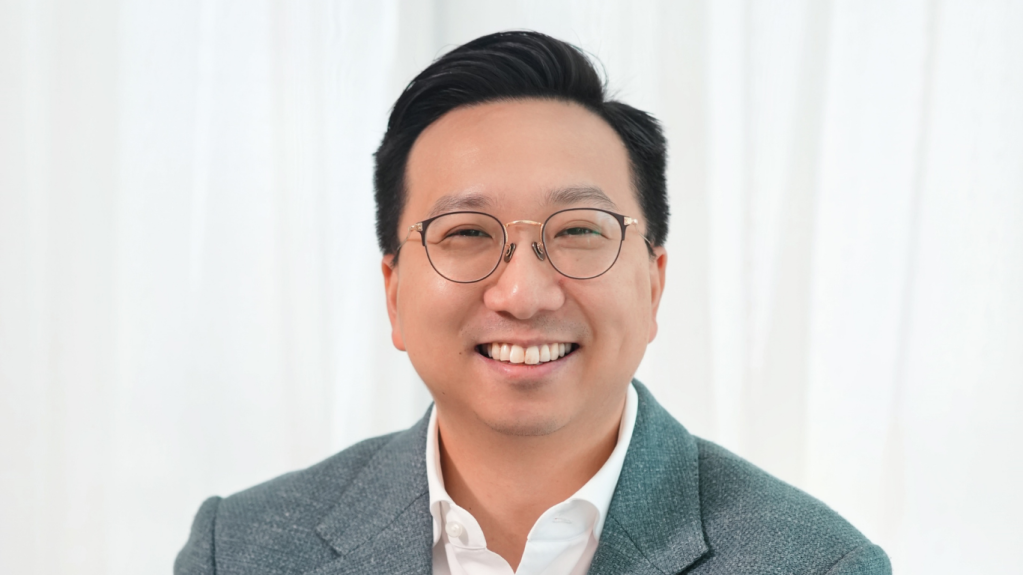
Phil Sham, CEO and Co-Founder Aquanow
Phil Sham is Co-Founder and CEO of Aquanow, an institutional digital asset infrastructure and liquidity provider. Aquanow operates globally, in the UAE, it operates via Aquanow ME FZE, a VARA-regulated broker-dealer and partnerships spanning trading infrastructure, stablecoin settlement & distribution, and liquidity.
Since early 2026, the Gulf has been navigating active regional conflict, disrupted shipping lanes, adjusted flight schedules, and a security environment that would test the resolve of any business hub. By any traditional risk model, that kind of sustained uncertainty should trigger capital flight and corporate withdrawals.
It did not. The UAE entered the crisis on a foundation that most countries cannot replicate: $48.3 billion in foreign direct investment in 2025 alone, a fourth consecutive year of records, ranking the country ninth globally for inbound FDI and second worldwide for greenfield project count for the third year running. And even as the conflict unfolded, construction on the Stargate UAE AI infrastructure campus, the largest deployment of its kind outside the United States, continued advancing in Abu Dhabi. Institutional capital kept arriving. Deal activity held.
The instinct is to call this defiance. I think it is something more structural.

Entrepreneur Middle East Staff
Entrepreneur Staff