Dubai Continues to Attract International Wealth
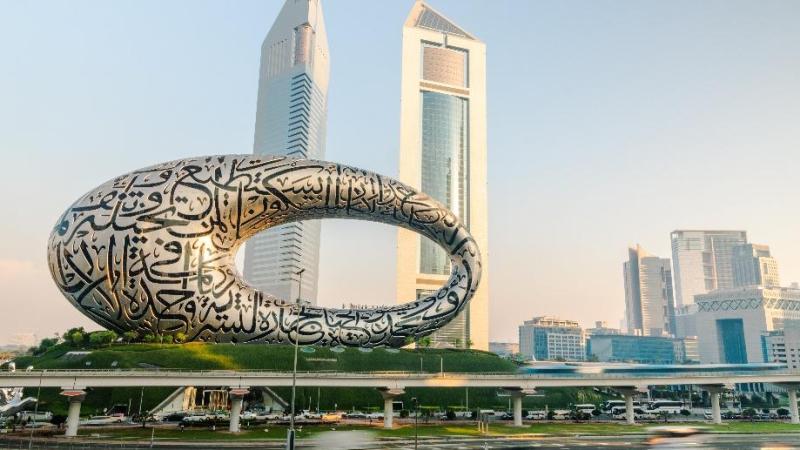
Dubai’s expanding financial infrastructure continues to attract international families and investors.
Shutterstock
You're reading Entrepreneur Middle East, an international franchise of Entrepreneur Media.
Dubai has long been a leading destination for foreign capital, but the nature of wealth arriving in the emirate is changing. International families are increasingly looking beyond where they can hold or invest their assets to where they can establish businesses and build a long-term base.
That shift is taking place alongside the continued expansion of Dubai’s financial infrastructure. In the Dubai International Finance Centre (DIFC), family business entities increased to 1,408 in the first half of this year, up 36% year-on-year. Family foundations have likewise grown 67 percent from 2025.
The trend comes as the UAE continues to attract significant international wealth. For the second consecutive year, it has been the world’s leading destination for migrating millionaires. In June, Henley & Partners’ Private Wealth Migration Report gave the UAE a wealth-mobility competitiveness score of 85.3, one of the highest of any jurisdiction globally.
For some families, establishing a presence in the UAE also involves creating structures through which wealth can be managed, governed and transferred across generations.
For Yann Mrazek, Founder and Managing Partner of M/HQ, one of the UAE’s leading private wealth structuring firms, the figures reflect a broader shift in how internationally mobile families assess a financial centre. Having advised high and ultra-high net worth individuals and their families for two decades, he has watched the shifting nature of those conversations.
“Dubai has a reputation as a safe haven for foreign capital,” he says. Mrazek says many of these families are considering more than simply where to hold their assets, including where to locate decision-makers, consolidate international holdings and establish foundations or family offices with genuine governance and operating substance.
For Mrazek, the explanation for Dubai’s appeal lies partly in its established financial and legal infrastructure rather than incentives alone. He says tax incentives can change, while established legal and regulatory frameworks may play a longer-term role in how families assess a jurisdiction.
DIFC operates under an English-language common law framework and has its own courts and legal structures, providing an established framework for investors. In addition, the UAE has developed dedicated regulatory frameworks for digital assets, including newer sectors like AI and cryptocurrency.
That regulatory architecture has been built as part of economic diversification efforts. More than 95 percent of the emirate’s GDP is now non-oil, reflecting decades of investment in trade, logistics, tourism, real estate and financial services. For wealth owners, that creates an economy in which capital can be deployed across multiple sectors and businesses, rather than managed separately from the wider economy.
In 2023, the UAE introduced a nine percent corporate tax while qualifying income for eligible businesses within the DIFC may remain subject to a zero percent corporate tax rate. The continued expansion of Dubai’s private wealth ecosystem since then suggests that tax is one consideration among many, rather than the sole basis for choosing Dubai.
Two trends may be contributing to that appeal. The first is that families are relocating people as well as capital.
“They are rebuilding their lives around Dubai and the UAE, redomiciling companies and enrolling their children in top-rated local and international schools,” Mrazek notes. He says that even as some wealthy families explore alternative residences, many continue to view the UAE as a potential long-term base rather than solely a temporary destination.
The second force is generational. According to Mrazek, generational wealth transfer is also taking place as founder-generation businesses pass to a second, often Western-educated next generation. “This is a multi-generational transition,” Mrazek says. He believes the UAE is one of the places where that transition is increasingly taking shape.
As competition between global wealth centres evolves, international families have more jurisdictions to choose from than ever. Their decisions, however, increasingly involve more than tax. Legal certainty, professional expertise, access to markets and the ability to establish a genuine long-term base all form part of the calculation.
For Dubai, the challenge is now less about attracting global wealth than ensuring the infrastructure around it continues to develop at the same pace.
As family offices expand and international capital becomes increasingly mobile, the strength of a financial centre will depend not only on what it offers today, but on whether its institutions can continue to support increasingly complex forms of wealth and investment no matter the external environment.
The jurisdictions that have already built that depth of enduring infrastructure, rather than promising to build it, may be better positioned to compete for internationally mobile wealth.
The information provided in this article is for general informational and educational purposes only. It is not intended as financial or professional advice. Readers should not rely solely on the content of this article and are encouraged to seek professional advice tailored to their specific circumstances. We disclaim any liability for any loss or damage arising directly or indirectly from the use of, or reliance on, the information presented.
Dubai has long been a leading destination for foreign capital, but the nature of wealth arriving in the emirate is changing. International families are increasingly looking beyond where they can hold or invest their assets to where they can establish businesses and build a long-term base.
That shift is taking place alongside the continued expansion of Dubai’s financial infrastructure. In the Dubai International Finance Centre (DIFC), family business entities increased to 1,408 in the first half of this year, up 36% year-on-year. Family foundations have likewise grown 67 percent from 2025.
The trend comes as the UAE continues to attract significant international wealth. For the second consecutive year, it has been the world’s leading destination for migrating millionaires. In June, Henley & Partners’ Private Wealth Migration Report gave the UAE a wealth-mobility competitiveness score of 85.3, one of the highest of any jurisdiction globally.

Entrepreneur Middle East Staff
Entrepreneur Staff