1004 Gourmet’s Changsup Shin and Lamise Beauty’s Kate Park on the Responsibility of Representing South Korea Through Business
The husband-and-wife duo have built two well-established, UAE-born Korean brands. But as they operate in a world increasingly influenced by K-culture trends, they reflect on the added weight that comes with being flagbearers of their homeland across two major industries (and why simply branding something as “Korean” can sometimes do more harm than good).
You're reading Entrepreneur Middle East, an international franchise of Entrepreneur Media.
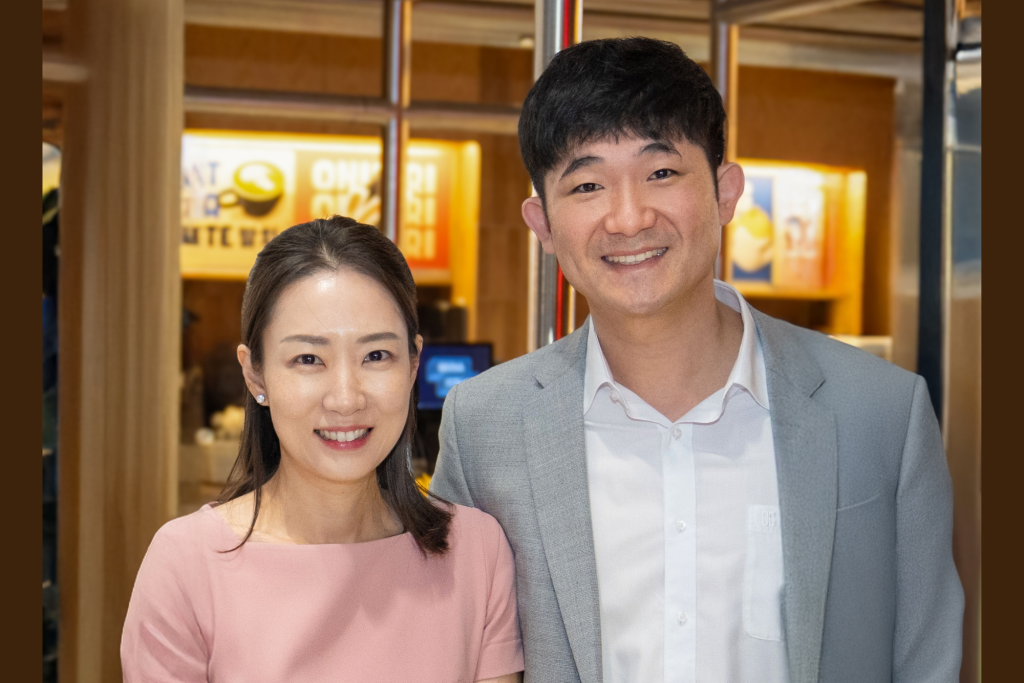
Shin and Park have also been featured on Anchored Echoes, a video series by Entrepreneur Middle East- watch the full episode HERE.
On the ground floor of Dubai’s Al Ghurair Centre—built in the 1980s and easily one of the oldest shopping complexes in the UAE—sit two Korean brands that seem, at first glance, like separate shops, but reveal seamlessly interconnected interiors upon entry: 1004 Gourmet, an Asian food and grocery products store; and Lamise Beauty, a K-beauty skincare and cosmetics shop. The two brands—separated by inner glass walls and distinctly different lighting—were both born in the UAE, but a decade apart.
1004 Gourmet, launched in 2008 by its CEO Changsup Shin’s father Dongchul Shin, offers a tale of how the UAE has been a bedrock of entrepreneurship long before the startup boom began in the nation. Shin, who first moved to the UAE with his family in 1992 when he was only seven years old, started his journey with 1004 Gourmet just after graduating from university. “My father first opened a Korean supermarket in Al Barsha, at a time when many Koreans living in Dubai were actually clustered around the Al Ghurair area—where our newest shop is today,” Shin says. “But as the diaspora gradually moved towards areas like Dubai Marina and The Greens, he found a good location in Al Barsha before the area was fully developed. We started purely as a Korean supermarket, before branching out into Japanese and Thai imports, and eventually supplying new sales channels such as hotels and restaurants. That growth later led us to our flagship store at Onyx Tower. But opening our branch in Al Ghurair Centre last year, in the same area where I grew up, was a very nice ‘full circle’ moment. It’s something that I’m very proud of.”
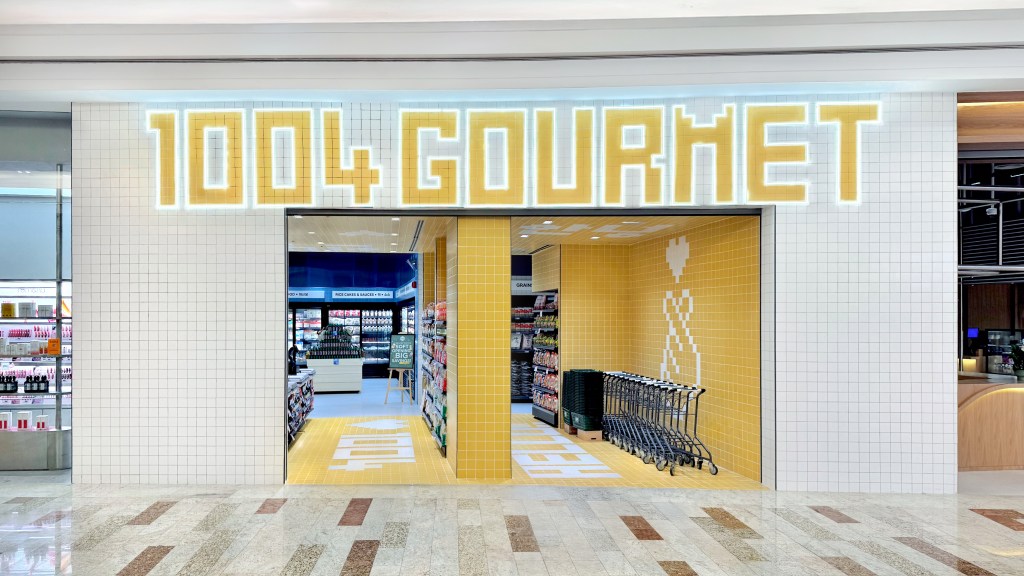
Apart from the branches at Onyx Tower 1 and Al Ghurair Centre, the brand is also located at Dubai’s Nakheel Mall and Alserkal Avenue, as well as the Sky Tower in Abu Dhabi’s Reem Island. These stores also house Seoul Street Cafe, a cozy dining space with Korean street-style bites and drinks. While Shin reflects on this growth, his wife, Park, chimes in with a warm anecdote. “There’s a back story to why 1004 Gourmet was named the way it was, actually,” she says. “My father-in-law once visited a small supermarket where the products were expired, and when he raised it, the storekeepers simply asked, ‘You want to take it or not?’ He was upset, and wondered why the supermarket wasn’t being kind to its customers. He told me, ‘I really wanted to have a very kind place for people to visit and buy from—like an angel.’ In Korean, 1004 is pronounced Cheonsa (천사), which also means ‘angel’. That’s why he named it 1004 Gourmet.”
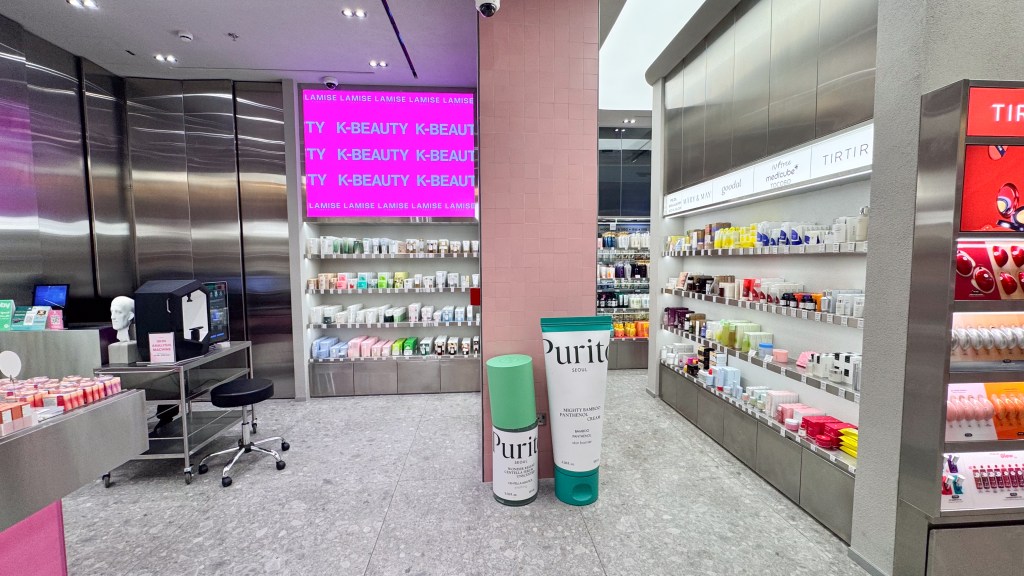
Park’s brand, Lamise Beauty, has a naming story of its own. Park moved to the UAE in 2013 after marrying Shin (here, almost as if on cue, the radio at 1004 Gourmet –where this interview was held– starts playing an OST from the popular romantic Korean drama ‘Crash Landing on You’) and initially spent her days settling into her new life as a homemaker. “I actually began my career in Korea as an account manager, where I worked on the launch of the Samsung Galaxy mobile phone and led several campaigns over seven years. A couple of years after my move to Dubai, in 2015, the Korean beauty industry was growing rapidly, but almost all the attention was on China—very few brands were interested in the Middle East. So I started bringing Korean beauty products back for my friends, and they kept asking for more. That’s when I realised these brands weren’t just for Korean consumers—they could be used by everyone. Because Changsup was already importing products from Korea and Japan, I thought, okay, let’s do this properly. I knocked on the doors of many brands, with one clear rule: we would bring everything directly from the source, so the products were 100% genuine. I also knew one brand alone wouldn’t last, so I wanted to build a group of Korean brands under one name. At the time, I was studying Arabic and asked my teacher how to say ‘soft touch’ or ‘gentle touch’. She told me the word was Lamise (لميس) . That’s how Lamise Beauty began.”

What started as a shop-in-shop venture for Park, with the first Lamise Beauty store located within the 1004 Gourmet store at Onyx Tower, later saw the opening of a second location in Abu Dhabi, while also securing wider placement within stores across Saudi Arabia and Qatar. The brand has also grown from an online-first platform into an omnichannel business, now offering over 40 Korean beauty brands and 1,300+ stock keeping units (SKUs) across skincare, makeup and targeted treatments. For Park, however, opening Lamise Beauty’s first standalone location at Al Ghurair Centre in July last year has been her “proudest moment so far”- and it has bolstered her vision to grow her business into a trusted name in the beauty industry.
“I want us to be more than just a place to buy products; I want Lamise Beauty to be a place that gives people real information—not just sell to them,” she says. “So we installed a skin analysis machine and invested heavily in educating our beauty advisors. There are so many Korean products in the market, and everyone says everything is good—but that’s not fully true. If a product isn’t suitable for your skin, we won’t recommend it. Based on the skin analysis results, we guide customers towards what actually works for them. We also do a lot of events with influencers and directly with the brands themselves, who support us by coming in for educational sessions that are also engaging and fun. Most recently, we collaborated with Kitopi’s SushiDo [a UAE-based food brand that offers a variety of fusion sushi rolls], where customers received two VT face mask packs with their order. The idea was simple: you take care of your skin while enjoying a healthy meal at home. Healthy food, healthy skincare. The response was really good, and it’s helped us communicate what Lamise Beauty stands for—and what our best-selling products are all about.”
At a later point in the interview, Park quietly adds a determined, “I want Lamise Beauty to grow into the region’s Olive Young—that’s my dream.” For the uninitiated, Olive Young is South Korea’s leading health, beauty, and cosmetics retailer, widely regarded by beauty enthusiasts as a trusted authority through its curated offerings, awards, and reviews.
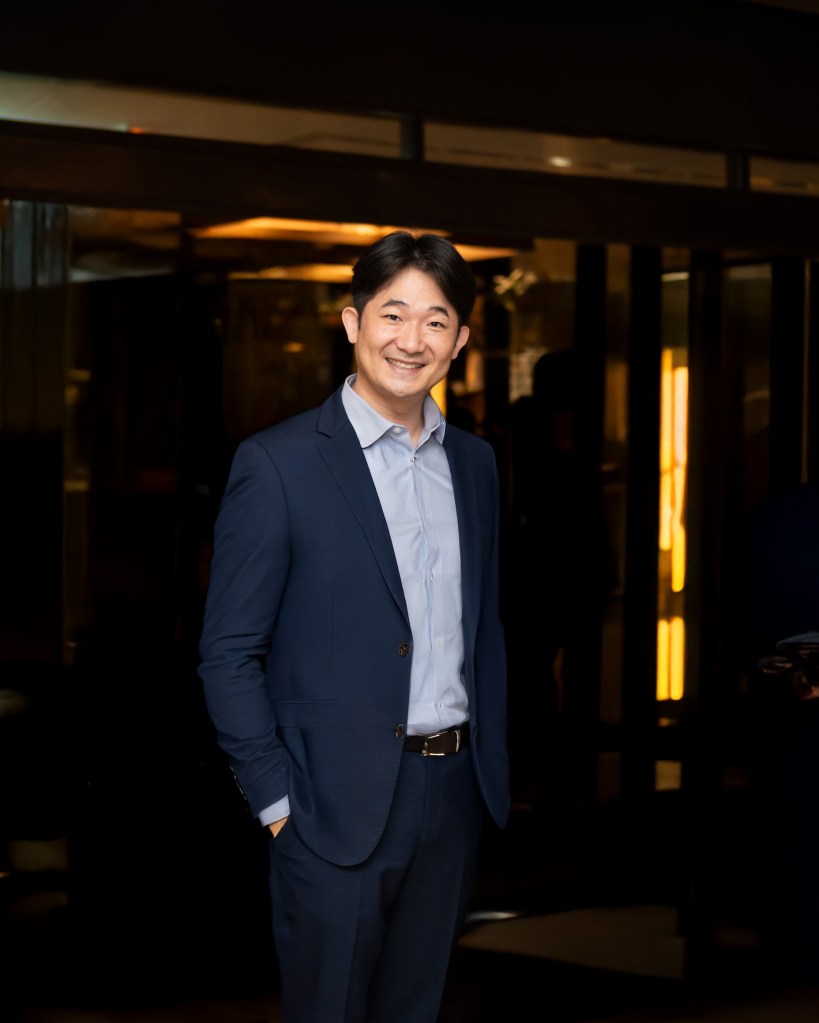
Taken together, the couple’s wider portfolio has recorded steady momentum in recent years. Since 2020, the business has grown at a compound annual growth rate (CAGR) of around 20%, with retail outlets accounting for roughly 40% of operations, followed by beauty at 25% and hotels, restaurants, and cafes (HORECA) supply at 20%. Smaller lifestyle ventures—including concepts such as Seoul Street Café—make up the remainder. The mix reflects a deliberately diversified approach — one that has allowed steady scaling without becoming overly dependent on any single channel or trend.
But while Park and Shin have continued to grow their brands over the years, a euphoric cultural shift has unfolded in parallel: the rise of the Korean Wave, known as Hallyu (한류). What began in the late 1990s as a growing regional interest in Korean television dramas and pop music has since evolved into a global cultural force—shaping everything from food, fashion, and beauty to language, cinema, and consumer behaviour.
K-culture’s influence —one that has quietly shifted beyond entertainment to the realms of purchasing decisions and brand marketing— has especially been felt in the region. According to the 2025 Overseas Hallyu Survey, “more than two-thirds of Hallyu experiencers across Saudi Arabia, the UAE, and Egypt engage with Korean cultural content.” The same report also showed that regional K-beauty spending had increased by 62% YoY in 2025, with Saudi Arabia and the UAE ranking among the top three global markets for average monthly spend. Globally, as per Market Research Insights, the K-beauty industry is “projected to increase from US$11.2 billion in 2025 to an incredible $20.4 billion by 2035,” with the major demand drivers being innovative skincare solutions and natural ingredients.
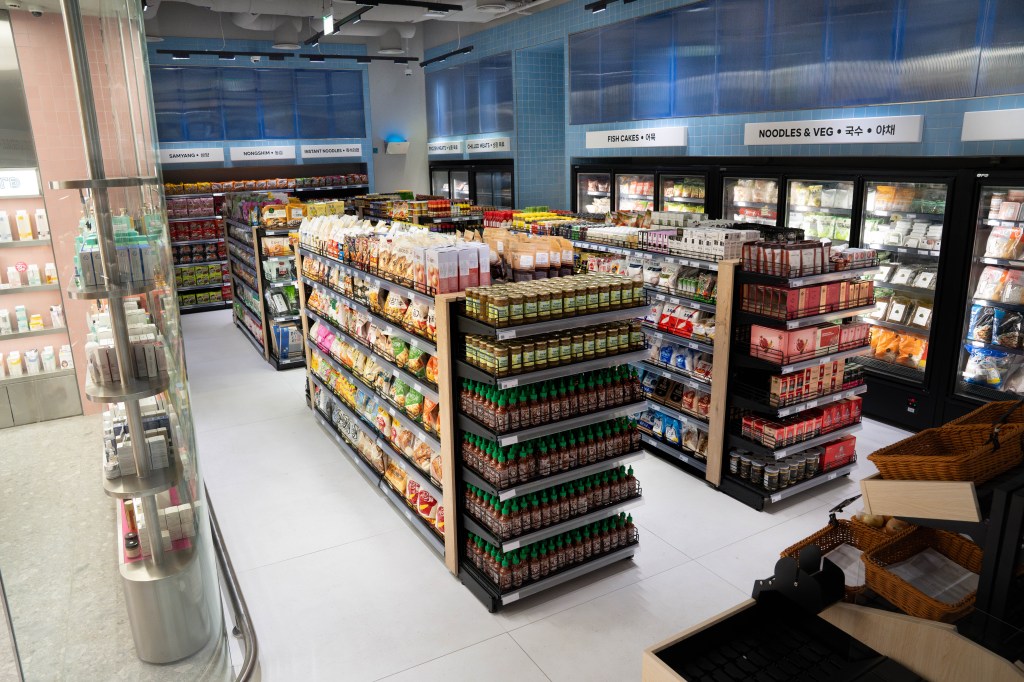
But with such a pace of growth, comes the inevitable pitfalls of businesses simply wanting to hop on a trend. “Right now, everyone is jumping into the Korean beauty space because it’s easy to enter,” Park says. “What I’m seeing instead is a price battle—products being pushed cheaper and cheaper. As a Korean, that worries me, because it starts to position K-beauty as ‘cheap’, rather than considered or trustworthy. Reputation matters—not just here, but back in Korea too. We work directly with the brands, we agree on set retail prices, and we’re clear about how often promotions happen. Many channels ask for constant discounts, but we don’t do that. I’m building this business for the long term. That also means doing the harder work—educating customers, explaining differences between products, and recommending only what actually works for their skin. Simply calling something ‘Korean’ isn’t enough.”
A similar surge in consumer demand is now being seen across the K-food landscape as well. According to South Korea’s Ministry of Agriculture, Food and Rural Affairs, the country’s agricultural and food exports reached a record high of US$9.98 billion in 2024, marking a 9% year-on-year increase and extending a nine-year streak of consistent growth since 2015. Another article in The Global Korea Post notes that 2026 is widely cited by European food-service trend agencies as the year K-Food fully enters the global culinary mainstream, shifting from niche or ethnic cuisine to everyday consumption.
For Shin, this is a shift he has been able to observe firsthand. “There’s definitely been a noticeable shift in how people engage with Korean food,” he says. “Of course, products like Samyang’s Buldak noodles helped open the door, but now the interest goes much deeper. People are curious about Korean drinks, ingredients, and even small rituals they see on TikTok—like mixing banana milk with coffee. What’s been especially interesting is seeing this extend beyond consumers to chefs. As Korean restaurants gained recognition globally—particularly in North America—chefs around the world started paying closer attention to Korean ingredients. I’ve had chefs ask me about products they discovered through shows like Culinary Food Wars on Netflix, or dishes they’ve seen online. From a B2B perspective, that’s a real shift. These are ingredients that were barely on anyone’s radar just a few years ago, and now they’re actively being sought out.”
Having built 1004 Gourmet from the ground up with a strong Korean foundation, Shin is understandably upset when asked about brands jumping on the K-trends bandwagon without much thought. “Look, in many ways, it’s a privilege for Korea to be in a position where its culture is so visible globally,” Shin says. “When people who may not fully understand the culture still want to engage with it, that’s a sign of soft power—and that’s a blessing. But it also comes with responsibility. There’s a difference between appreciation and appropriation, and often it comes down to intention and effort. If a brand is simply putting Korean characters on packaging, or misusing symbols like the Korean flag without understanding what they mean, that doesn’t feel respectful. In some cases, it’s outright misleading. Consumers are getting smarter, but at the same time, brands are also becoming more sophisticated in how they present themselves.”
“What matters is transparency and education,” he continues. “If something looks Korean but isn’t actually Korean, people deserve to know that. And at the same time, there are non-Korean brands—here in Dubai as well—that execute Korean concepts thoughtfully and respectfully, sometimes even better than Korean businesses themselves. Those are the brands that should be supported. Korea isn’t a single ‘flavour’, and calling something ‘Korean’ doesn’t automatically make it authentic. But when brands take the time to learn, to understand nuance, and to execute things properly, that sets a standard. And as people working within Korean industries, I think it’s our responsibility to help guide that conversation, to educate consumers, and to protect the meaning behind what’s being shared.”
Park adds a similar perspective to the discourse when she says that operating in a multicultural nation like the UAE offers a golden opportunity to educate the masses about the intricacies of the Korean culture. “We’re honoured to be seen as representatives of Korean culture,” Park says. “But for us, it goes beyond simply selling products. Through events and experiences that introduce our philosophy—and the culture around skincare—we meet customers from so many nationalities and backgrounds. Those interactions teach us a lot. They help us understand what people are truly looking for, and how we should curate the right products for them. One of the biggest advantages of running a business in the UAE is the diversity of the customer base, and the consistent demand for authentic Korean culture and products. People ask us directly, ‘Is this real? Is this Korean?’ That creates a genuine opportunity to grow while also sharing Korean culture. Building trust and brand awareness takes time and effort. But those challenges are what allow us to form deeper, long-term relationships with customers, and to apply our philosophy more meaningfully. Ultimately, our experience in the UAE has been invaluable—it’s helped us introduce Korean culture while also running the brand with a global perspective.”
Perhaps the clearest affirmation of Park and Shin’s insistence on authenticity—at a time when Korean culture is increasingly commodified—came unexpectedly late last year. In November 2025, during South Korean President Jaemyung Lee’s official visit to the UAE, the First Lady Hyekyung Kim visited a ‘Halal-Certified K-Food Promotion Event’ at the Korean Cultural Center in Abu Dhabi. “It was amazing,” Shin says. “Anytime your country’s leader visits, it’s meaningful—especially for Koreans, because we’re very patriotic. And for me personally, having grown up in the UAE, it’s always fulfilling to see our country’s leader meet our [other] country, the UAE’s, leadership as well. What made it even more memorable was how last-minute it all was. A Korean government entity that supports the food sector reached out to us just five days before and said the First Lady would be visiting, and we needed to organise everything. In four days, our team pulled it off—huge credit to them. We set up the full station and welcomed her just months after the President took office, so it felt genuinely significant.”
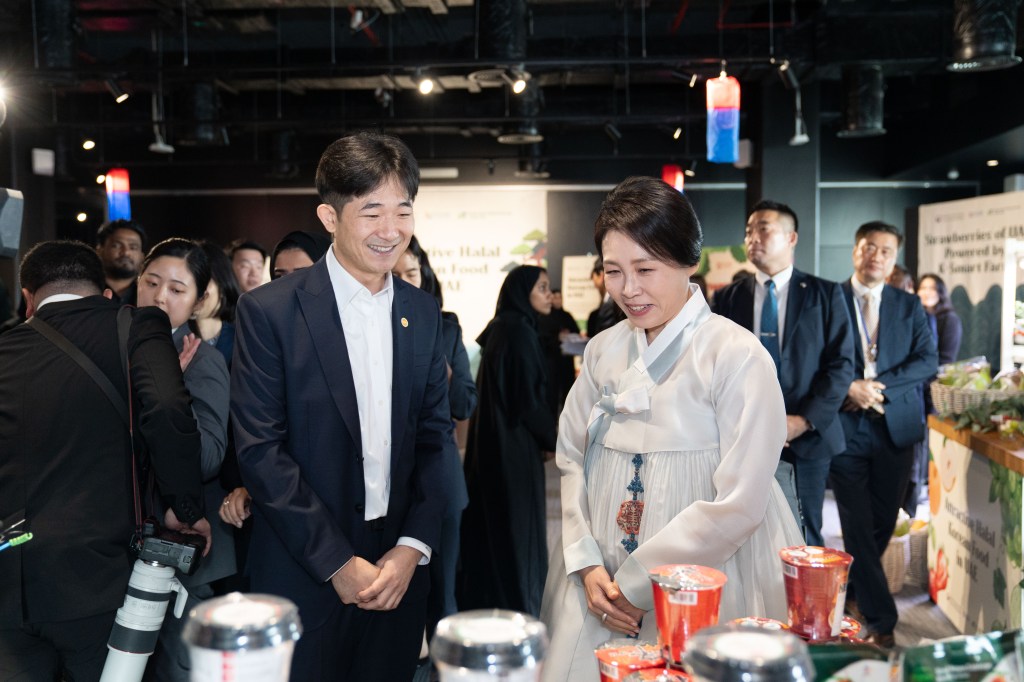
“And then it aired on TV, which made it even funnier,” Shin quips with a laugh. “My mother-in-law’s friends started messaging her, asking, ‘Is that your son-in-law?’ So she ended up having to buy them dinner. But honestly—it was a really special experience.”
While 1004 Gourmet and Lamise Beauty remain the couple’s flagship brands, they’ve also quietly worked on other projects that carry the same purpose of celebrating culture and community. One of these was Ugly Burger, a pop-up burger joint that was launched in the midst of the COVID-19 pandemic by Shin and his friends Eric Lee and Youngrak Jung. While Ugly Burger was eventually closed down, it paved the way for a new brand, Ugly Noodles. “We realised we wanted to build an Asian concept—not just a burger brand—something that felt cool, rustic, and genuinely authentic” Shin says. “We began with pop-ups and collaborations, and a couple of years ago, after pitching on Shark Tank Middle East, we secured funding. We’re now preparing to open our first standalone Ugly Noodles location this year.”
Shin then reveals that the evolution of all the brands he and his wife oversee prompted another business idea. “We’ve also spun off our marketing division into its own entity,” he explains . “Originally, it handled all our brands internally, but today it also works on government-led initiatives—particularly projects that promote Korean food and culture. We now operate it as a standalone company called Kimchi Studio,” he says with a laugh. “Simple, easy… though my wife still doesn’t like the name.” (“Anything is better than Kimchi Studio,” Park tells me when I ask her what she would’ve named it instead.)
As Shin and Park now embark into what promises to be another ambitious year —including plans to open more Lamise Beauty branches and make it “the ultimate K-beauty destination”— the two of them iterate that they will carry the responsibility of representing their homeland with pride and sensitivity. “As a family that has been in the UAE for over 33 years—and with my father having served as chairman of the Korean Association for several years—we’ve always been very conscious of the responsibility that comes with visibility,” Shin says. “The Korean community is close-knit and deeply patriotic, and because of that, we believe we have to lead by example. It’s important to us that our brands are perceived positively, and that we never make ethical or moral compromises that could reflect poorly on Koreans more broadly. I genuinely believe that this mindset is one of the reasons for our longevity. We think long term. We don’t take shortcuts, even when it costs more or requires extra effort. We go the extra mile so that our country and our people are represented with integrity. That principle is one of the foundations of our business—and it’s something we take very seriously.”
Watch Shin and Park’s Anchored Echoes episode by clicking the link below:
Shin and Park have also been featured on Anchored Echoes, a video series by Entrepreneur Middle East- watch the full episode HERE.
On the ground floor of Dubai’s Al Ghurair Centre—built in the 1980s and easily one of the oldest shopping complexes in the UAE—sit two Korean brands that seem, at first glance, like separate shops, but reveal seamlessly interconnected interiors upon entry: 1004 Gourmet, an Asian food and grocery products store; and Lamise Beauty, a K-beauty skincare and cosmetics shop. The two brands—separated by inner glass walls and distinctly different lighting—were both born in the UAE, but a decade apart.
1004 Gourmet, launched in 2008 by its CEO Changsup Shin’s father Dongchul Shin, offers a tale of how the UAE has been a bedrock of entrepreneurship long before the startup boom began in the nation. Shin, who first moved to the UAE with his family in 1992 when he was only seven years old, started his journey with 1004 Gourmet just after graduating from university. “My father first opened a Korean supermarket in Al Barsha, at a time when many Koreans living in Dubai were actually clustered around the Al Ghurair area—where our newest shop is today,” Shin says. “But as the diaspora gradually moved towards areas like Dubai Marina and The Greens, he found a good location in Al Barsha before the area was fully developed. We started purely as a Korean supermarket, before branching out into Japanese and Thai imports, and eventually supplying new sales channels such as hotels and restaurants. That growth later led us to our flagship store at Onyx Tower. But opening our branch in Al Ghurair Centre last year, in the same area where I grew up, was a very nice ‘full circle’ moment. It’s something that I’m very proud of.”

Aalia Mehreen Ahmed • Senior Features Editor, Entrepreneur Middle East
Entrepreneur Staff
Senior Features Editor at Entrepreneur Middle East and host of Anchored Echoes, with nearly seven... Read more