Beyond the Ban: How the UAE’s 2026 Plastics Policy Enforces a Circular Reset Across Packaging and Retail
The UAE’s 2026 plastics ban is ultimately not about eliminating a material. It is about redesigning an entire economic flow.
Opinions expressed by Entrepreneur contributors are their own.
You're reading Entrepreneur Middle East, an international franchise of Entrepreneur Media.
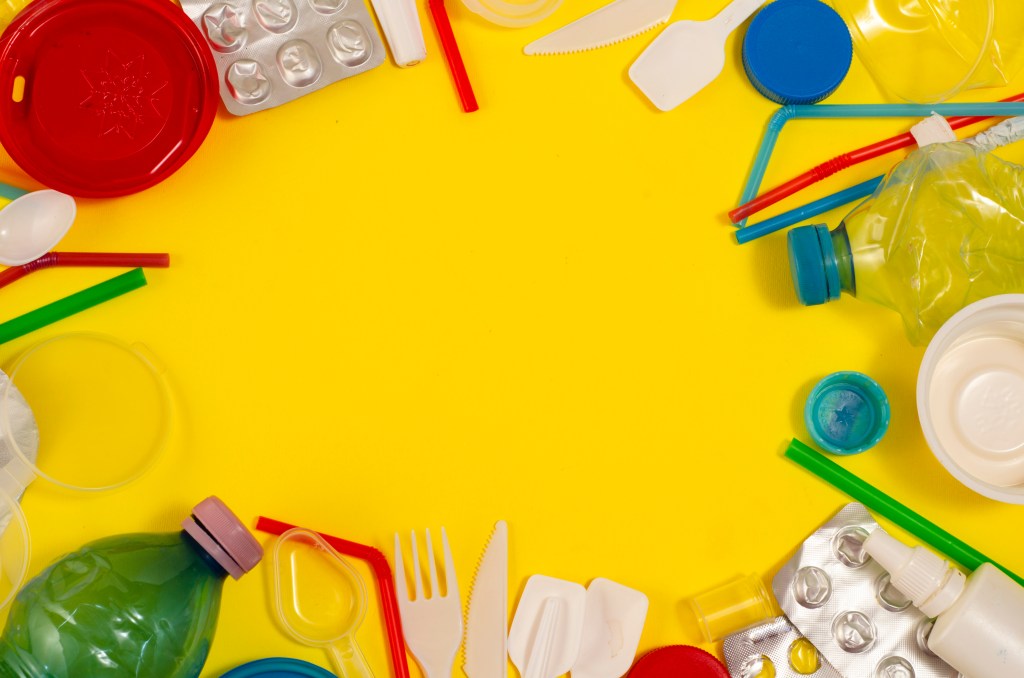
Regulations are not challenges; rather, they are opportunities to lead in the economy. This is what I believed when the UAE enforced its nationwide ban on single-use plastics effective January 1, 2026. The announcement was widely framed as an environmental milestone.
But for businesses operating across packaging, hotels, retail, and food service, this is not regulation as restriction. It is regulation as a roadmap. The policy signals something far more consequential than a list of restricted items. It represents a structural shift in how materials will be designed, consumed, recovered, and reintegrated into the economy.
The UAE’s phased approach, introduced gradually from 2024 and expanding through 2026, reflects a deliberate transition toward a fully circular economy, one where waste is designed out of the system and materials retain value beyond a single use. In doing so, the country is aligning environmental ambition with industrial transformation, offering manufacturers and retailers clarity, time, and incentive to innovate with purpose.
As the nation accelerates toward its Net Zero 2050 goals, the plastics ban reinforces a powerful message increasingly echoed across global markets: sustainability is no longer a compliance exercise. It is fast becoming a core business strategy.
Moving beyond the illusion
For years, much of the sustainability conversation around packaging has revolved around material replacement, swapping plastic for paper, wood, or compostable alternatives. While these changes often look positive on the surface, they don’t always deliver better environmental outcomes.
Paper-based food packaging, for example, relies on intensive forestry, water consumption, and energy-heavy processing. Many products also contain plastic or chemical coatings to prevent leakage, complicating recycling and limiting true circularity. In several life cycle assessments, some paper alternatives have shown higher carbon footprints than recyclable plastics when end-of-life recovery is taken into account.
The lesson is increasingly clear: sustainability cannot be judged by material alone. What matters is the full lifecycle. How resources are sourced, how products are used, and critically, whether they can be reliably recovered and re-enter production systems at scale.
This systems-thinking approach sits at the heart of the UAE’s evolving environmental framework.
From waste to resource: Closing the materials loop
Central to circular economy thinking is a simple but powerful principle: materials should remain in productive use for as long as possible. When properly collected and recycled, certain plastics can deliver lower net emissions than many single-use alternatives that end up in landfill or incineration.
In markets with strong recovery infrastructure, recycled plastics displace virgin materials, reduce energy consumption, and ease pressure on natural ecosystems. This is why the UAE is increasingly complementing product bans with broader structural reforms with the development of Extended Producer Responsibility (EPR) frameworks.
Under EPR models, manufacturers are accountable for the full lifecycle of their products, including post-consumer recovery and recycling. Early pilots in the UAE already target packaging alongside electronics and batteries, signalling a future where product design and waste management are inseparable.
The direction is unmistakable: environmental responsibility is shifting upstream, embedding circularity directly into manufacturing decisions.
A policy playbook mirroring global trends
While the UAE’s plastics strategy is ambitious, it is far from isolated. Globally, advanced economies are moving rapidly toward circular regulation.
The European Union’s Packaging and Packaging Waste Regulation (PPWR), implemented in 2025, now mandates recyclability, waste reduction, and recycled content targets (some as high as 65% recycled content) across all member states. Packaging must be designed for recovery by default, not as an afterthought. Older EU goals already aim for 70 per cent recycling rates for packaging by 2030, with stricter enforcement mechanisms now in place.
In the US, although policy remains fragmented, several states have introduced recycled content mandates and producer responsibility schemes that place similar pressures on manufacturers.
What this global convergence demonstrates is that the UAE is not experimenting. It is aligning with the direction of mature sustainability markets. For businesses integrated into international supply chains, preparing for circular compliance is no longer optional. It is becoming a baseline expectation.
Innovation as the competitive advantage
Well-designed regulation doesn’t stifle business. It forces reinvention.
Clear timelines such as the UAE’s 2024–2026 rollout allow companies to rethink materials, redesign packaging formats, restructure supply chains, and invest in technologies that reduce waste while maintaining performance.
One area seeing rapid progress is high-recyclability polymer solutions such as advanced PET variants. These materials are compatible with existing recycling streams, lightweight, and capable of meeting food-grade and durability standards while supporting true circular recovery.
Rather than scrambling for short-term fixes, many manufacturers are now engineering products for recyclability from inception, simplifying material mixes, improving sortability, and increasing recycled content.
At the same time, technology is reshaping how sustainability is delivered at scale. Across the UAE’s manufacturing sector, AI, automation, and robotics are being deployed to optimise material usage, minimise production waste, reduce energy consumption, and improve quality control. These advanced systems are not only boosting efficiency but also strengthening environmental performance, directly supporting the country’s Net Zero ambitions.
Compliance the new normal
Perhaps most telling is how rapidly the market has adapted. Across the UAE, manufacturers now offer compliant alternatives for virtually every restricted category: thicker reusable and paper-based bags, fibre-based plates and cups, wooden cutlery, plant-based straws, and recyclable polymer packaging. These options are increasingly supported by renewable materials such as PLA, alongside investments in solar-powered manufacturing, upgraded waste management infrastructure, and lower-emission logistics.
This evolution highlights an important shift. Sustainability is no longer confined to isolated product lines. It is being embedded across operations, supply chains, and corporate strategy.
The UAE’s broader economic vision has played a critical role in enabling this transition. By prioritizing advanced manufacturing, clean energy, and innovation-driven growth, national policy has given businesses the confidence to invest locally, scale sustainably, and compete globally.
What businesses must do next
As circular regulation accelerates, retailers, foodservice operators, and packaging users can no longer remain passive participants. Several practical steps are becoming essential:
- Audit material flows across supply chains to understand usage, recyclability, and waste destinations.
- Demand verified recyclability and recycled content from suppliers — sustainability claims must be measurable and certified.
- Design for simplicity, reducing unnecessary components and improving compatibility with recycling systems.
- Use monomaterials wherever possible, to ease single waste stream recycling.
- Build recovery partnerships with waste management and recycling providers to close the loop.
- Educate consumers, because even the best packaging fails if it is not correctly disposed of.
- Consumer participation remains the missing link in many circular systems. Clear labelling, awareness campaigns, and return incentives will be crucial in translating policy intent into real environmental outcomes.
Regulation as a catalyst for long-term growth
The UAE’s 2026 plastics ban is ultimately not about eliminating a material. It is about redesigning an entire economic flow. It reflects a future where sustainability, technology, and competitiveness move in parallel. It boosts environmental policy to drive innovation rather than constrain it, and where businesses that adapt early gain strategic advantage.
As the country continues its journey toward a fully circular economy and Net Zero 2050, one reality is becoming increasingly clear: when strong policy direction meets genuine corporate commitment, the outcome is not just compliance.
It is transformation. For packaging, retail, and manufacturing industries across the UAE and beyond, the era of linear production is closing. The circular economy is no longer an aspiration. It is fast becoming the operating system of modern business.
Regulations are not challenges; rather, they are opportunities to lead in the economy. This is what I believed when the UAE enforced its nationwide ban on single-use plastics effective January 1, 2026. The announcement was widely framed as an environmental milestone.
But for businesses operating across packaging, hotels, retail, and food service, this is not regulation as restriction. It is regulation as a roadmap. The policy signals something far more consequential than a list of restricted items. It represents a structural shift in how materials will be designed, consumed, recovered, and reintegrated into the economy.
The UAE’s phased approach, introduced gradually from 2024 and expanding through 2026, reflects a deliberate transition toward a fully circular economy, one where waste is designed out of the system and materials retain value beyond a single use. In doing so, the country is aligning environmental ambition with industrial transformation, offering manufacturers and retailers clarity, time, and incentive to innovate with purpose.