Sebastian Vettel and Khabib Nurmagomedov Headline Sharjah Entrepreneurship Festival 2026; Event Continues to Support Local Entrepreneurs with New AED 1,000 Startup Licenses
More than 300 global and regional speakers offered 250 talks, workshops, and experiential sessions.
You're reading Entrepreneur Middle East, an international franchise of Entrepreneur Media.
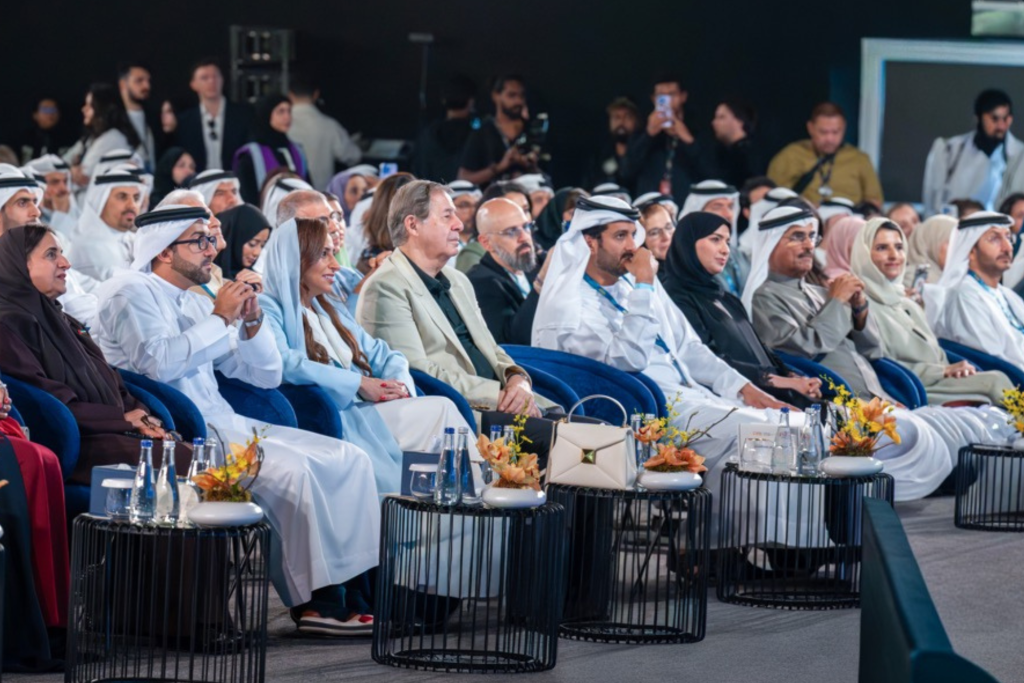
The ninth edition of the Sharjah Entrepreneurship Festival (SEF 2026) took place from January 31 – February 1, 2026 at the Sharjah Research Technology and Innovation Park (SPARK) with a staggering 14,000+ attendees.
OPENING CEREMONY
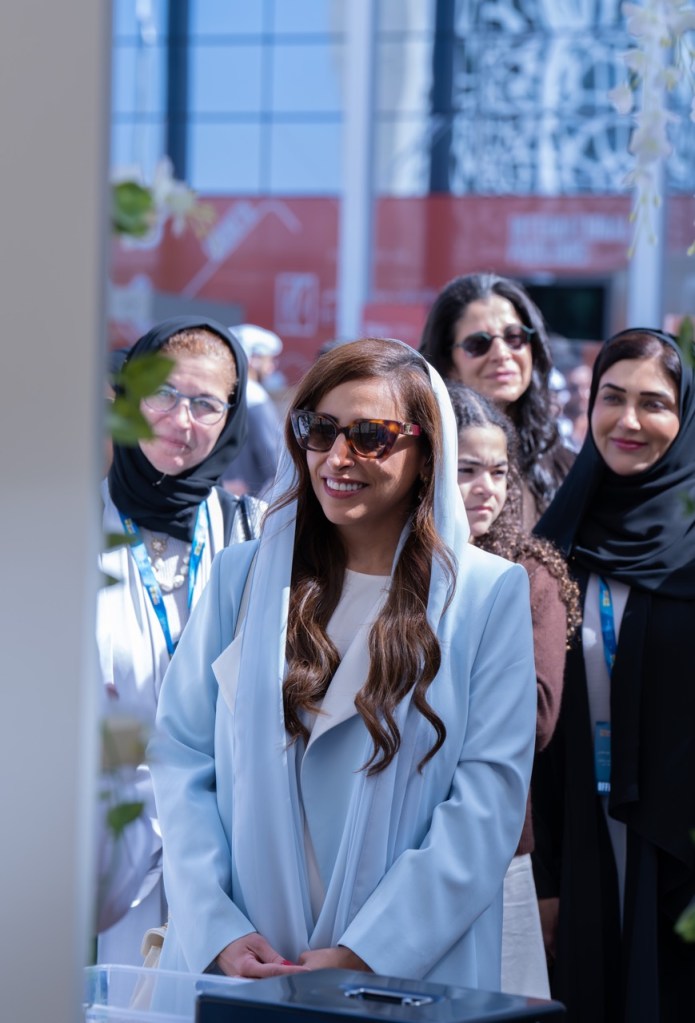
Organized by Sharjah Entrepreneurship Center (Sheraa) under the theme “Where We Belong”, the opening ceremony was attended by Sheikh Fahim bin Sultan Al Qasimi, Chairman of the Department of Government Relations; H.E. Abdulla bin Touq Al Marri, UAE Minister of Economy & Tourism; Her Excellency Dr. Amna bint Abdullah Al Dahak, UAE Minister of Climate Change and the Environment; H.E. Sheikha Lubna bint Khalid Al Qasimi, the UAE’s first female minister; H.H. Sayyida Dr. Basma Al Said, Founder of Whispers of Serenity Clinic; H.E Badr Jafar, Special Envoy for Business and Philanthropy for the United Arab Emirates; H.E. Najla ِAhmed Al Midfa, Vice Chairperson of Sheraa; and H.E. Sara Abdelaziz Al Nuaimi, CEO of Sheraa, alongside government officials, business leaders, and media representatives.
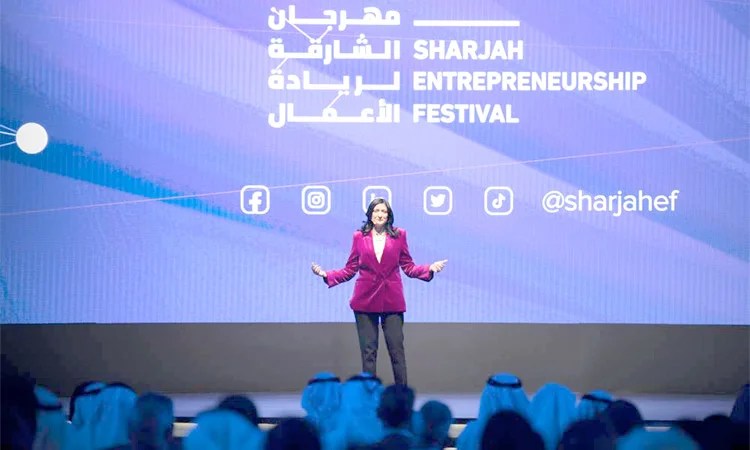
“Sharjah measures time not in months, but in generations; success not in returns, but in people and their well-being,” H.E. Al Midfa noted in her keynote speech. “Today, more than 17,000 SMEs serve the city, a testament to seeds sown decades ago, when the emirate nurtured institutions, welcomed enterprise, and allowed ventures to take root and thrive. Many of those early initiatives have since grown into some of the region’s and the world’s most prominent names.”
RENOWNED GLOBAL ATHLETE-PRENEURS HEADLINE SEF 2026
Two names that created a buzz at SEF 2026 much before the event kicked off were Four-time Formula One World Champion Sebastian Vettel, and UFC Hall of Famer, undefeated former UFC Lightweight Champion (29–0) and mixed martial artist champion Khabib Nurmagomedov.
In a session moderated by Emirati racing trailblazer Amna Al Qubaisi, Vettel drew on both his championship career and life beyond the track to challenge conventional ideas of achievement. He reflected that the most meaningful lessons from Formula One are rooted not in speed but in purpose, noting that society’s definition of success does not always align with personal values. ““If you step in the car and say, I just want to win, of course everybody wants to win. But how society defines success might not be how you define success for yourself,” he said.
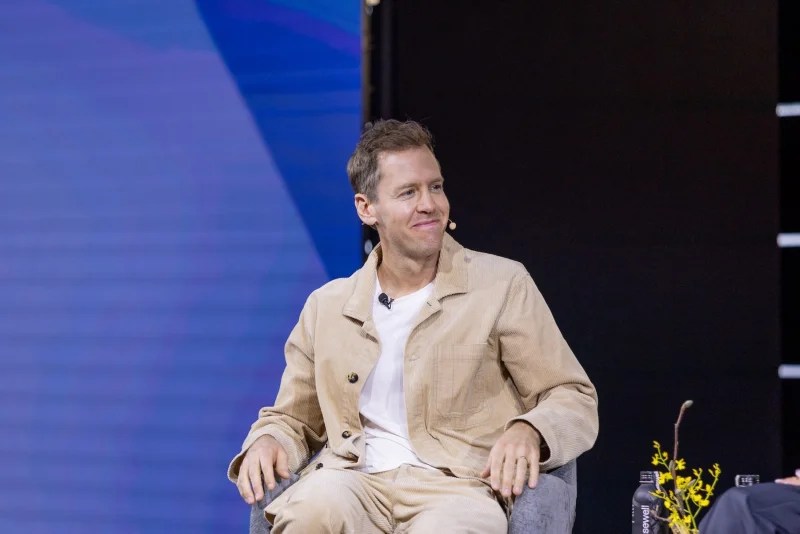
Vettel also reflected on how true success in motorsport, despite its individual image, is built through teamwork, clear vision, and shared belief, noting that even the best drivers depend on the people around them — an analogy that can easily be applied to entrepreneurs and startup founders too. “I decide when to brake and when to accelerate. But you need the people around you,” he said. “If you can explain your vision clearly, belief becomes contagious inside the team.”
Meanwhile, during what marked his first visit to Sharjah, mixed martial arts legend Nurmagomedov reflected on the journey behind his undefeated 29–0 record, emphasizing that his success was built on years of discipline, sacrifice, and relentless training that began in his childhood and carried him to the global stage.
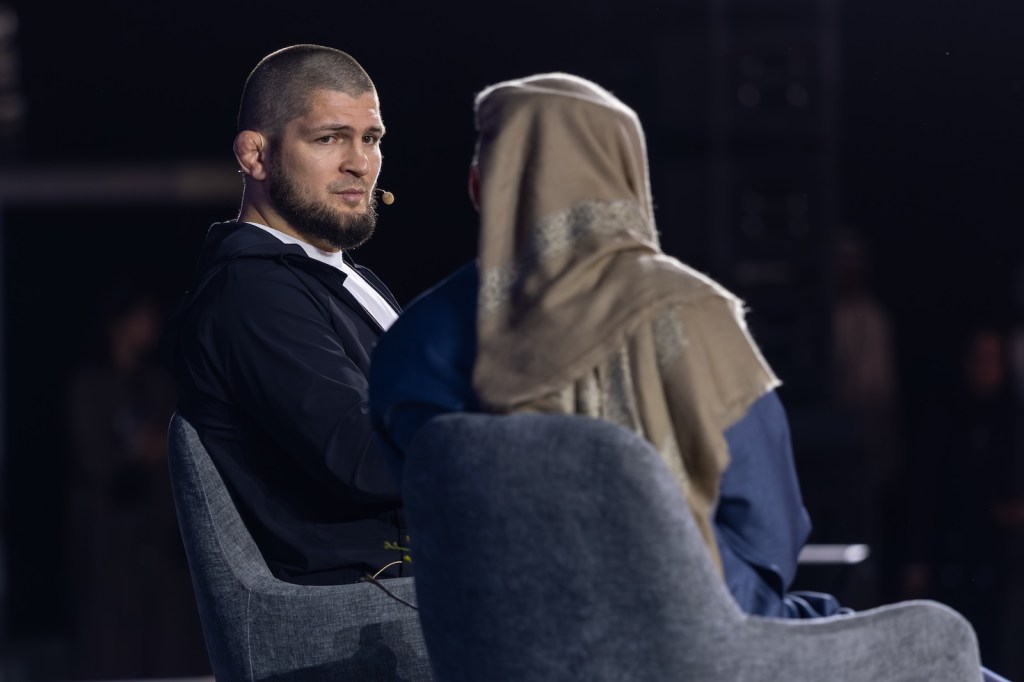
Speaking at a fireside chat hosted by popular Arab podcaster Anas Bukhash, Nurmagomedov explained that discipline for him goes beyond physical preparation to include mental and emotional commitment, with every hour of training and every journey carefully planned with purpose. He also added that his motivation was never fame or money. “Honestly, I never thought this would happen. I was just following my dream to show my dad that I could be the best student he ever had,” Nurmagomedov said.
Apart from these sessions, audiences were also given an intimate glimpse into the lives of three trailblazing Arab female athletes—Manal Rostom, Fatima Abdulrahman Al Awadhi, and Fatima Alloghani—who have redefined endurance, leadership, and courage through their pioneering achievements in sport and adventure.
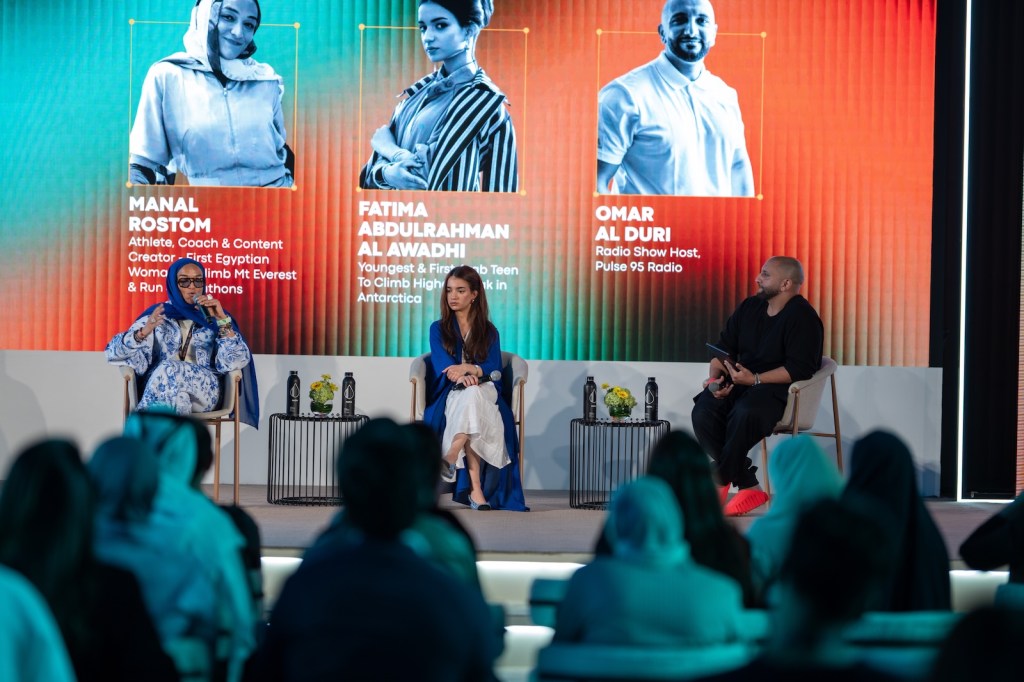
Speaking during the session “Discussion with firsts: Pioneering in sports and athletics,” they shared powerful personal reflections on fear, faith, discipline, and the emotional resilience required behind the scenes of their historic journeys, from summiting Everest and Antarctica’s highest peak to crossing thousands of kilometres on a motorcycle across continents.
SPEAKERS SPOTLIGHT STARTUP FOUNDERS’ RESILIENCE
Having brought together more than 300 global and regional speakers, SEF 2026 offered 250 talks, workshops, and experiential sessions across 10 purpose-built zones focused on entrepreneurship, investment, creativity, impact, and community.
A number of panels and fireside chats in particular delved into the challenges faced by entrepreneurs and startup founders in the current ecosystem.
For example, during the session “Lessons Startups Can Borrow from the Giants,” speakers urged founders to stop viewing growth as a straight-line race and instead approach scale as a series of deliberate, disciplined choices grounded in what truly works. Featuring Ryan Restell of Yango Play, Saman Darkan of Kitopi, Shukri Eid of IBM, and moderated by Olivia Dufour, the discussion highlighted how chasing expansion across every part of a business often creates distraction rather than progress.
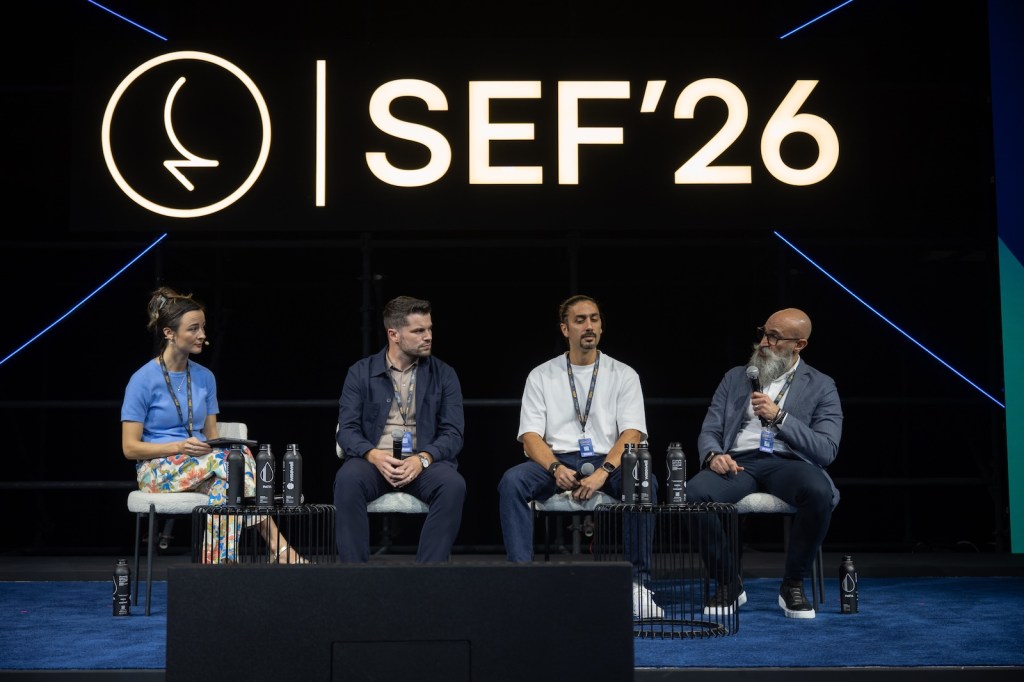
Restell emphasized that not all parts of a company are meant to last, and that decisions must be driven by customer behavior, data, and economics rather than emotion. On the other hand, Darkan shared how Kitopi’s early financial pressure forced the team to rethink its model, ultimately leading them to build their own technology when off-the-shelf systems failed to support their complex operations. Eid warned that many organizations undermine themselves by adding layers of internal complexity, arguing that real scale comes from the ability to choose and execute priorities wisely.
The speakers also reflected on the often-overlooked role of long-term relationships between founders and partners, before closing on the idea that as companies grow more woven into people’s lives, leaders must be ready to shoulder the weight of that responsibility.
In a separate session titled “Path to the Top: Leading a Brand Into the Future,” Rania Masri El Khatib, CEO of The Giving Movement, challenged founders to rethink what real growth looks like, arguing that lasting businesses are built through patience, focus, and local strength rather than a rush for global validation. Speaking alongside Bain & Company’s Anne-Laure Malauzat, she urged entrepreneurs to prioritize depth over distance, saying, “The real value addition and expansion is local” and warning, “Stop trying to win New York before you have won your own neighborhood.”
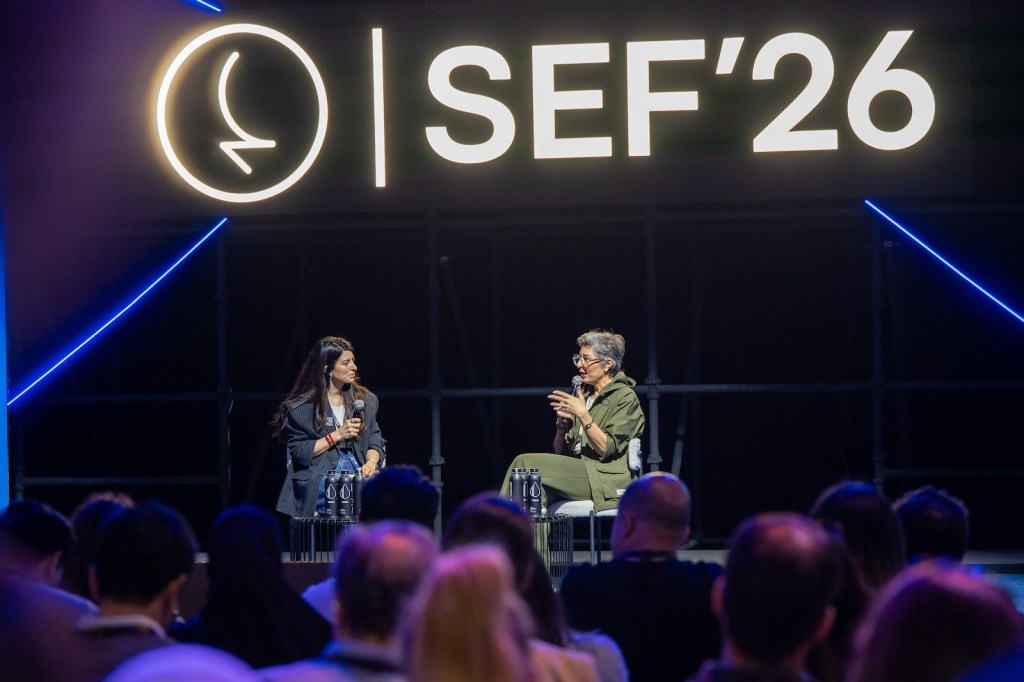
Masri El Khatib also reflected on how a purpose-driven, viral brand becomes enduring, questioning why homegrown companies chase the US before fully owning their own region. Drawing on her 24 years in the UAE across luxury, media, and transformation, she described being local as a competitive advantage, “It’s never been more powerful to be homegrown,” she said. “No international brand can compete with us on our own turf when it comes to culture… There’s no better place to be an entrepreneur. The energy of this place is unbelievable.”
NEW LOW-COST STARTUP LICENSE UNVEILED
SEF 2026 also announced the launch of a new commercial licence priced from Dh1,000 to support aspiring entrepreneurs and startups, with the initiative unveiled during the festival’s ninth edition. The Business Establishment licence was introduced for the first time and made available exclusively throughout the event for eligible early-stage companies operating across six priority sectors—sustainability, creative industries, education technology, advanced manufacturing, health technology, and transport—as part of the emirate’s broader push to lower barriers to entry and strengthen its innovation-driven economy.
INVESTOR INSIGHTS
In a session titled “The Hard Work Starts After Close: Creating Value After the Deal,” founders, investors, and operators explored how real value is built long before and long after funding lands, with Carta’s Peji Kanani setting the tone by reminding the audience that “The hard work starts after the close” and that “Fundraising is a milestone. Not the goal.”
Emirates Growth Fund’s Karolos Travassaros argued that “People think value creation is what happens after closing” but that it actually begins from the very first meeting, when alignment around culture, decisions, and partnerships is formed. “In reality, it’s a mental shift that starts from the first meeting,” he said. “By the time the deal closes, you should already have a clear roadmap for how culture, decision-making, and partnership will work.”
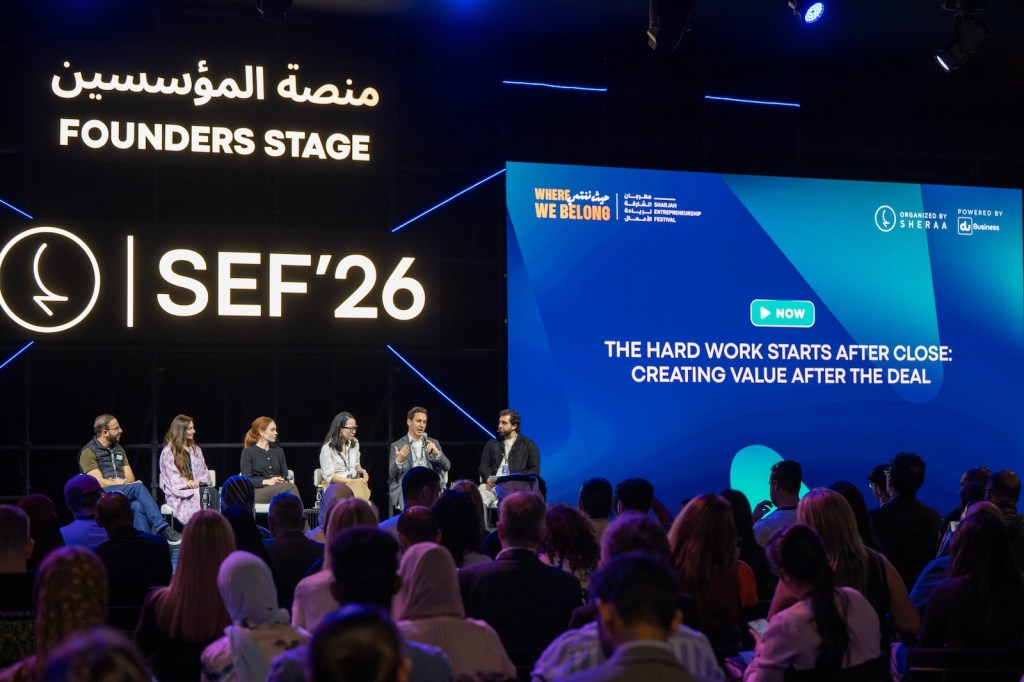
Meanwhile, Juliet Zhu of Constellation Ventures echoed this, saying, “When I was a VC, we had a playbook about adding value in the first 90 days. Looking back, that was silly. The real value creation happens during the deal process from the first meeting through diligence, because that’s where you align how decisions will be made.”
Founder Brooke Bellamy of Brooki, whose brand recently closed a $25 million round with UAE developer Arada, described how the shift plays out in practice.“They spoke about building communities,” she said of early conversations with investors. “And for us, we’re building a brand people want to belong to, not just a product they want to buy. I walked out and told my husband: “this is it.”
That conversation took place a year before the deal closed, when Brooki ran a pop-up in Abu Dhabi that drew hour-long lines. Three months after the investment, Bellamy’s focus is less on expansion than on discipline. Rather than rush into permanent stores, the company is experimenting with pop-ups across the UAE. “Lower spend, higher value. We’re learning directly from customers before we scale.”
As such, there was one warning repeated across the panel: money in the bank can create a dangerous illusion of progress. “Capital amplifies discipline,” Zhu added. “Be very careful with money.”
SEF 2026 BRINGS AI AND DATA TO THE FOREFRONT
Meanwhile, in a session by best-selling author and popular Egyptian tech entrepreneur Mo Gawdat, a clear warning was delivered: that as artificial intelligence moves into emotionally intimate spaces, founders must be fully accountable for how these technologies are created, controlled, and used. Appearing on the Impact Platform in a session moderated by Sanad Yaghi (co-founder of DTEK.ai and emma.love), Gawdat offered the first public insight into Emma, an AI platform designed to support human relationships ahead of its February 14 launch, explaining how it was deliberately built with boundaries and ethical safeguards.
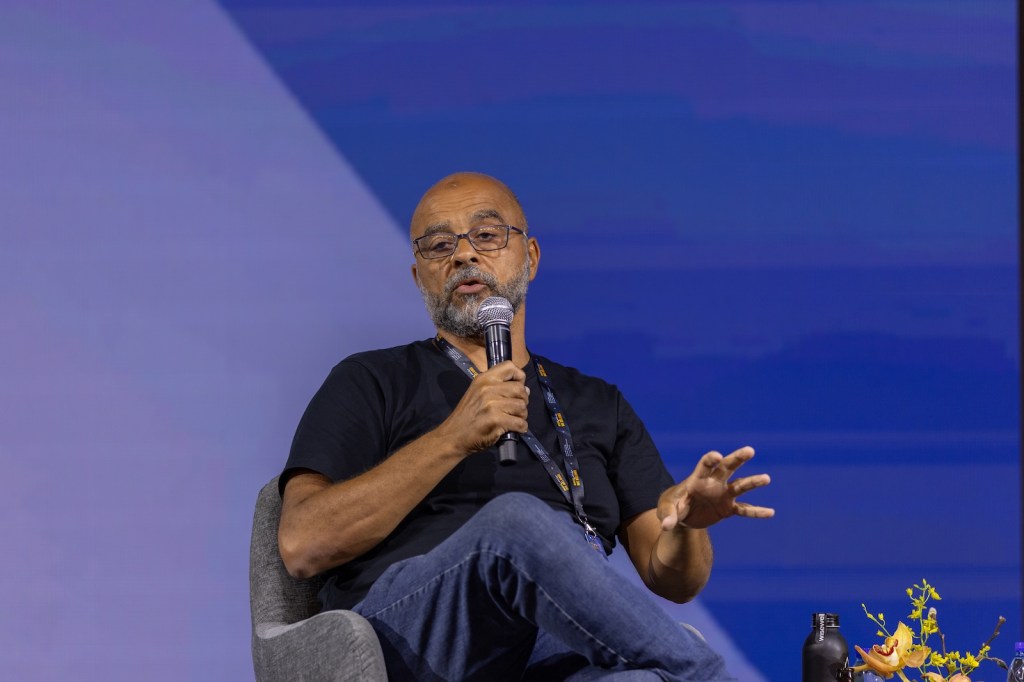
As a four-time bestselling author and co-founder of emma.love, Unstressable, and One Billion Happy, he explored both the promise and the dangers of emotionally aware AI, stressing that when technology begins to interact with people on a deeply human level, responsibility, transparency, and careful governance become just as important as innovation itself. “Most people are worried about the future of humanity in the age of artificial intelligence. There is nothing inherently good or evil about AI itself. The danger comes from allowing powerful intelligence to serve greed and the pursuit of power. That will not serve humanity”, Gawdat said.
In a separate session titled “WHOOP – Building a Brand Around Community,” John Sullivan, CMO of WHOOP, shared how the company has grown from a niche performance tracker into a global, data-driven health membership built around behavior change and community. WHOOP’s performance model is anchored by its “WHOOP Age” metric, which combines data from sleep, recovery, physical strain, fitness, and daily habits to provide a science-based picture of how healthy a person’s body is relative to their actual age, using a validated algorithm that factors in both environmental and lifestyle inputs. “It’s not about living longer. It’s about living fuller,” Sullivan said.
While AI and analytics power the platform, Sullivan emphasized that culture fuels adoption. “You can’t manage what you can’t measure,” he said. “When people see their data, they immediately start improving outcomes. But community, storytelling, and self-expression are what turn that data into a lifestyle.”
ENTREPRENEUR MIDDLE EAST AT SEF 2026
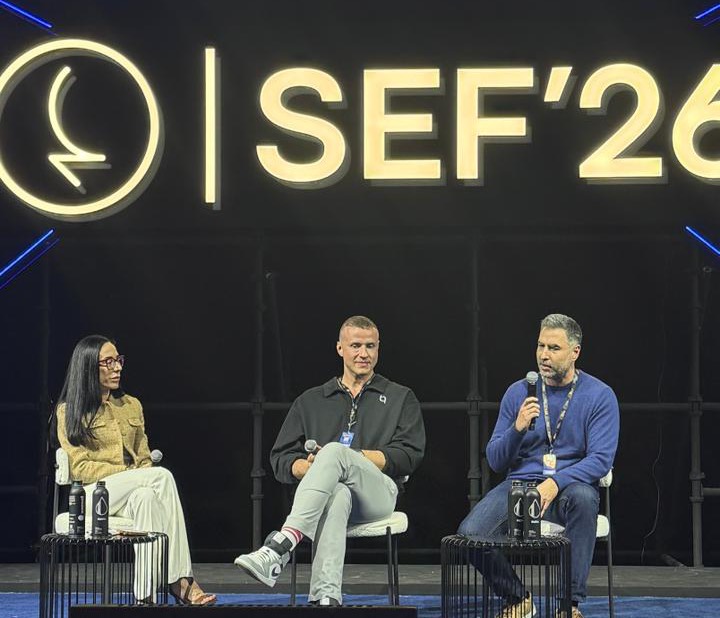
The SEF 2026 panel “What Happens When Two Worlds Collide: The Story of Athletes Turned Founders” offered a candid look at how elite sports experience can translate into entrepreneurial success. In a discussion moderated by Tamara Pupic, Managing Editor of Entrepreneur Middle East, Vadim Fedotov, co-founder and Chairman of Bioniq, and Idriss Al Rifai, co-founder and CEO of Flow48, traced their journeys from professional sport into high-growth business building.
Meanwhile, in a fireside chat titled “Where Commerce Meets Culture: The New Playbook for Region-Born Global Icons,” Nadine Kanso, founder and Creative Director of Bilarabi, shared her journey from photography to jewelry, exploring how identity, memory, and visual culture shaped the foundations of her creative business. Hosted by Aalia Mehreen Ahmed, Features Editor of Entrepreneur Middle East, the discussion moved through the role of Arabic calligraphy as both a cultural language and a commercial design system, before turning to the brand’s global expansion — including its landmark collaboration with Berluti — and the tensions between scaling, capital, and cultural perception.
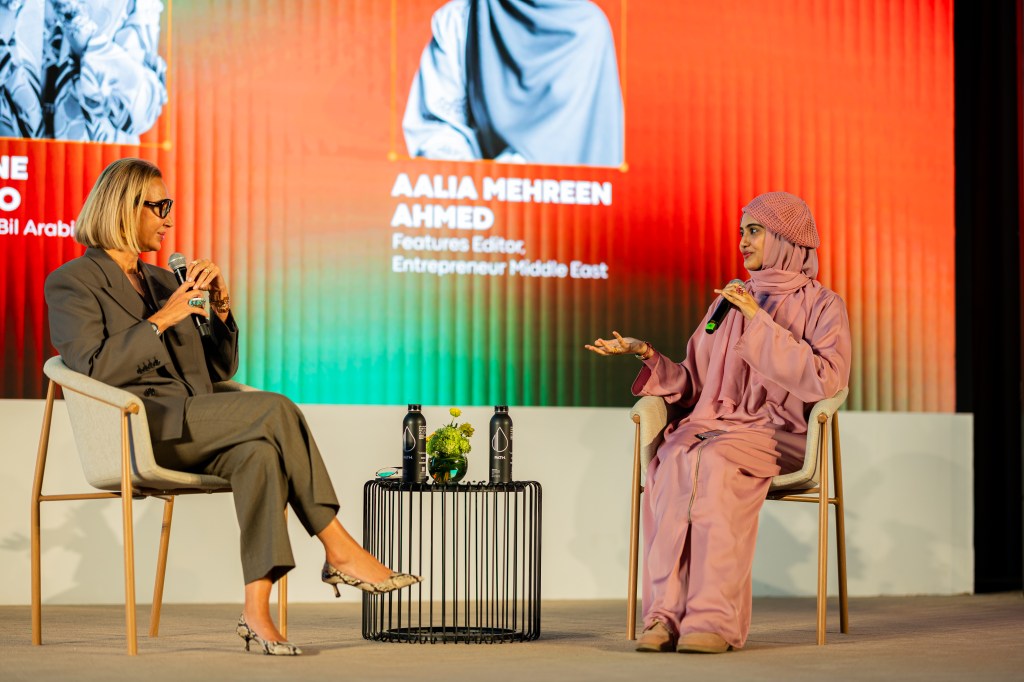
Kanso reflected on the vulnerability required to create, the discipline needed to run a creative business, and the difficult choices between commercial opportunity and artistic integrity. The dialogue also examined how Bil Arabi has protected Arabic calligraphy as intellectual property while preserving its meaning, the milestones that affirmed the brand’s direction, and the lessons learned over nearly two decades at the intersection of art and entrepreneurship. Finally, the session looked to the future, with Kanso sharing her perspective on artificial intelligence and how creative founders can navigate technological change without losing their distinct voice.
The ninth edition of the Sharjah Entrepreneurship Festival (SEF 2026) took place from January 31 – February 1, 2026 at the Sharjah Research Technology and Innovation Park (SPARK) with a staggering 14,000+ attendees.
OPENING CEREMONY
Organized by Sharjah Entrepreneurship Center (Sheraa) under the theme “Where We Belong”, the opening ceremony was attended by Sheikh Fahim bin Sultan Al Qasimi, Chairman of the Department of Government Relations; H.E. Abdulla bin Touq Al Marri, UAE Minister of Economy & Tourism; Her Excellency Dr. Amna bint Abdullah Al Dahak, UAE Minister of Climate Change and the Environment; H.E. Sheikha Lubna bint Khalid Al Qasimi, the UAE’s first female minister; H.H. Sayyida Dr. Basma Al Said, Founder of Whispers of Serenity Clinic; H.E Badr Jafar, Special Envoy for Business and Philanthropy for the United Arab Emirates; H.E. Najla ِAhmed Al Midfa, Vice Chairperson of Sheraa; and H.E. Sara Abdelaziz Al Nuaimi, CEO of Sheraa, alongside government officials, business leaders, and media representatives.

Aalia Mehreen Ahmed • Senior Features Editor, Entrepreneur Middle East
Entrepreneur Staff
Aalia Mehreen Ahmed is the Senior Features Editor at Entrepreneur Middle East. She is an... Read more