The Builder Who Never Stopped Building: Mohamed Alabbar on Turning Crisis Into Long-Term Growth
As founder of Emaar Properties — the company behind the Burj Khalifa, Dubai Mall and hundreds of thousands of homes — he has seen storms before. Here, he explains why the UAE’s greatest chapters are yet to be written.
You're reading Entrepreneur Middle East, an international franchise of Entrepreneur Media.
This article is part of the cover story for the Entrepreneur Real Estate Leaders May 2026 Edition.
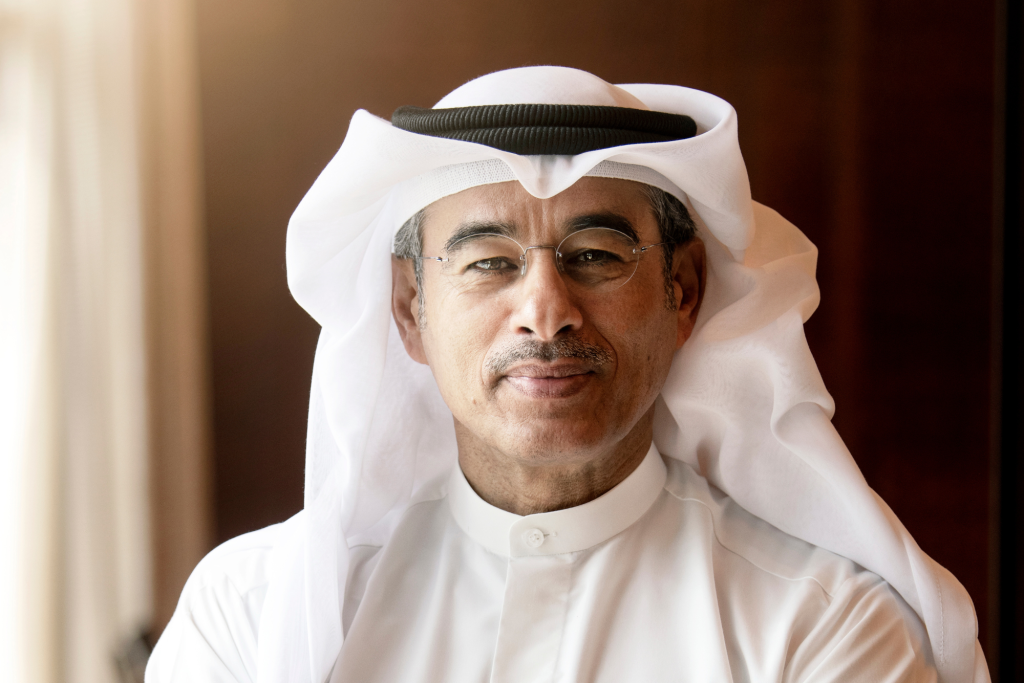
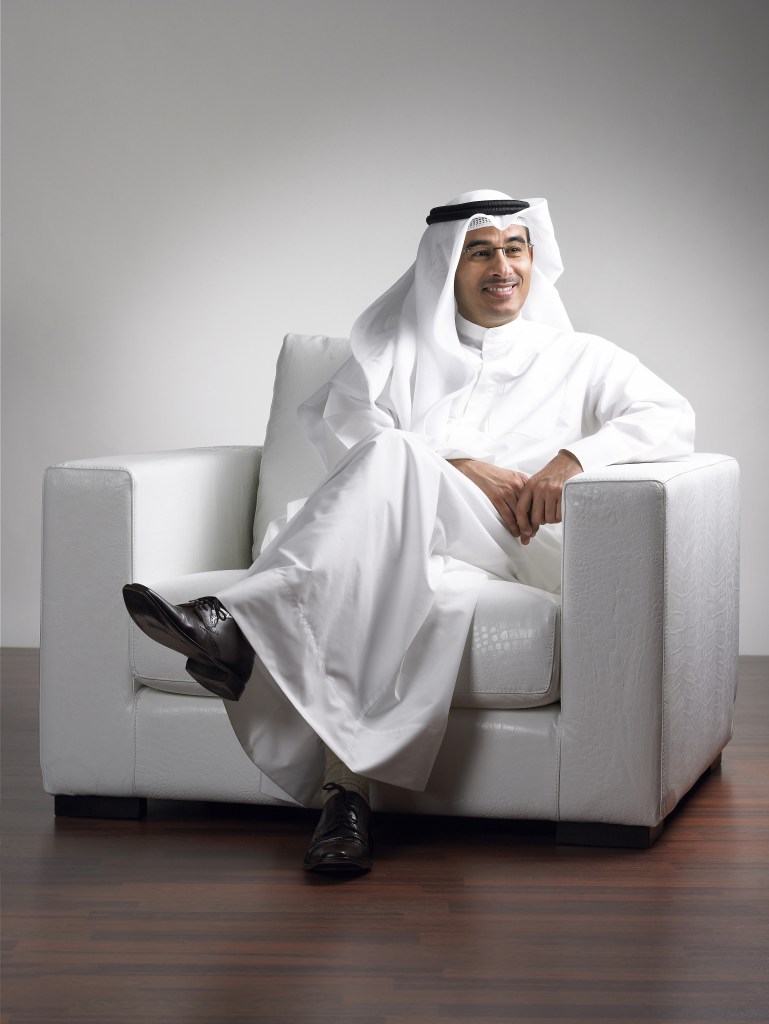
There is a particular kind of confidence that can only be earned, not assumed. Mohamed Alabbar, the man who built a skyline, who conjured the world’s tallest tower from desert sand and raw ambition, has earned it many times over.
He speaks not with the caution of a man who has weathered storms, but with the restless energy of one who has learned to move faster because of them. Alabbar founded Emaar Properties in 1997.
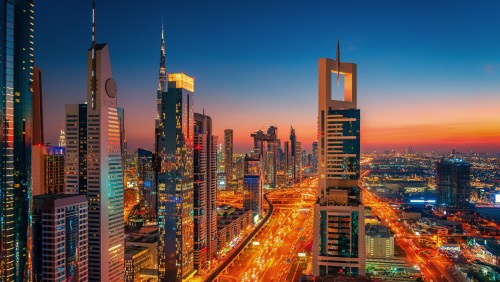
Today, Emaar is one of the world’s most recognised property developers — a colossus responsible for hundreds of thousands residential units delivered across the UAE alone, with a presence stretching across the Middle East, North Africa, South Asia and beyond. Its flagship mixed-use mega development, Downtown Dubai, represents one of the most audacious urban planning exercises of the 21st century: a 500-acre district anchored by the Burj Khalifa — still the world’s tallest building at 828 metres — and the Dubai Mall, which draws more than 105 million visitors per year, making it the most visited retail and leisure destination on the planet.
That philosophy — blunt, unapologetic, and entirely deliberate — is how Alabbar summarises the growth model he forged from previous crises the region has faced. It is a strategy of aggressive expansion tempered by what he calls being “positively paranoid”: a management discipline that targets growth leaps of between 40 and 70 per cent while simultaneously maintaining iron control over costs, processes and market risk, monitored not quarterly, not monthly, but day by day.
“The desire for rapid growth and taking money from the table must be coupled with strict control over processes,” he explains. That means leveraging technology at every turn, watching market dynamics in real time, and — most critically — securing what Alabbar calls financial ‘safety doors’: mechanisms that ensure cash flows in from clients in precise alignment with obligations going out to contractors. It is a system born not from theory but from hard-won scar tissue.
The numbers that most impress Alabbar are not the headline ones — not the 163 floors of the Burj Khalifa, not the 1.2 kilometres of The Dubai Fountain, not the AED 26.2 billion in revenue Emaar recorded in 2023, up 28 per cent year-on-year. The numbers he returns to are the quiet ones, from the worst possible moment.
During the global financial crisis of 2008 to 2009, Emaar was simultaneously managing approximately 100 active construction sites with 40,000 customers paying monthly instalments on off-plan properties.
In normal times, around 1,000 customers at any given moment would request a two-month payment delay. At the peak of what Alabbar memorably calls the crisis “tsunami”, that number rose to just 1,200 — barely a tremor — before falling back to 700. For Alabbar, that statistic is the purest expression of what the UAE has built: not just towers and malls, but something far more durable — a covenant of confidence between the state, its institutions and the people who choose to invest in its future.
Through every period of global uncertainty, that covenant has held. “The resilience of human beings and their memory is something that is great for the world.”
The years since have only amplified the case. Dubai’s residential property market recorded its best-ever year in 2023, with transaction volumes surpassing AED 411 billion — a figure that would have seemed fantastical even a decade ago. Emaar’s own property sales that year hit AED 40.5 billion, its highest ever recorded, driven by sustained demand from international buyers, regional investors and a growing base of long-term residents drawn by the emirate’s safety, infrastructure and quality of life.
Emaar’s portfolio now encompasses not just residential towers but entire ecosystems: The group’s total assets exceed AED 100 billion. Emaar Development — the build-to-sell arm listed on the Dubai Financial Market — posted a net profit of AED 5.7 billion in 2023, a 52 per cent surge on the prior year. But ask Alabbar what he would tell his younger self, and the answer is not about leverage ratios or land bank strategy. It is about people.
“The advice that I wish someone had given me is that I should have the best people to work with me,” he says. “And when I bring the best people to work with me, and after they prove that their work is good, I give them a small percentage of the company. Because a good person is hard to find, so if you find one and they prove themselves for a year and work well with you, you give them a share of the company — or at least a percentage of the profit if you don’t want to give them a share of the company.”
It is a philosophy that has shaped Emaar’s culture from the inside out. The company employs tens of thousands of people directly and supports hundreds of thousands more through its supply chains, contractor networks and tenant base.
Its graduate and leadership development programmes have become a pipeline for some of the UAE’s most capable real estate professionals. His second principle is simpler, and perhaps more universal: “Success requires hard work day and night. Sometimes you might succeed, and sometimes you might not and have to change your path.”
For a man who has redesigned the skyline of one of the world’s fastest-growing cities, the humility in that observation carries real weight. And his third principle takes aim at the most persistent illusion in real estate: the seduction of the brand. True brand value, Alabbar insists, is not built on spectacle. It is built on mastery. “With this foundation of quality, you can easily compete with anyone,” he says.
Which makes his next observation all the more pointed. “There is a lot of fanfare in real estate companies,” he continues. “Someone wearing an expensive watch, driving a Rolls-Royce, making an advertisement on a yacht, or going to Monaco — don’t believe that. This is all just fanfare.” He reserves particular scepticism for the oversized billboard — that supposed symbol of market confidence.
“When I see a large billboard on the street, I think to myself: it’s like you’re telling people you can’t sell and you’re begging them to come to you.”
Excessive marketing, in Alabbar’s view, is a form of deception. Quality, delivered consistently at scale, is the only lasting advertisement. It is a standard that Emaar has applied across every project it touches. From the immaculate delivery of Emaar Beachfront — a private island community of 27 residential towers stretching along 1.5 kilometres of pristine shoreline — to Creek Harbour, the 6-square-kilometre waterfront city rising along the banks of the Dubai Creek, designed around a new tower that will surpass even the Burj Khalifa in height, the company’s commitment to execution over announcement remains absolute.
The recent period of geopolitical uncertainty — the tensions, the regional conflicts, the anxious headlines — has tested markets across the world. And yet, in the story of Dubai’s real estate sector, the chapter being written right now may be among the most remarkable.
The emirate added more than 100,000 new residents in 2023 alone. Prime property values continue to appreciate. Off-plan sales, the mechanism through which Emaar has long channelled its growth, remain at record levels, with buyers from Europe, South Asia, East Asia, and across the Arab world choosing Dubai as their destination of choice.
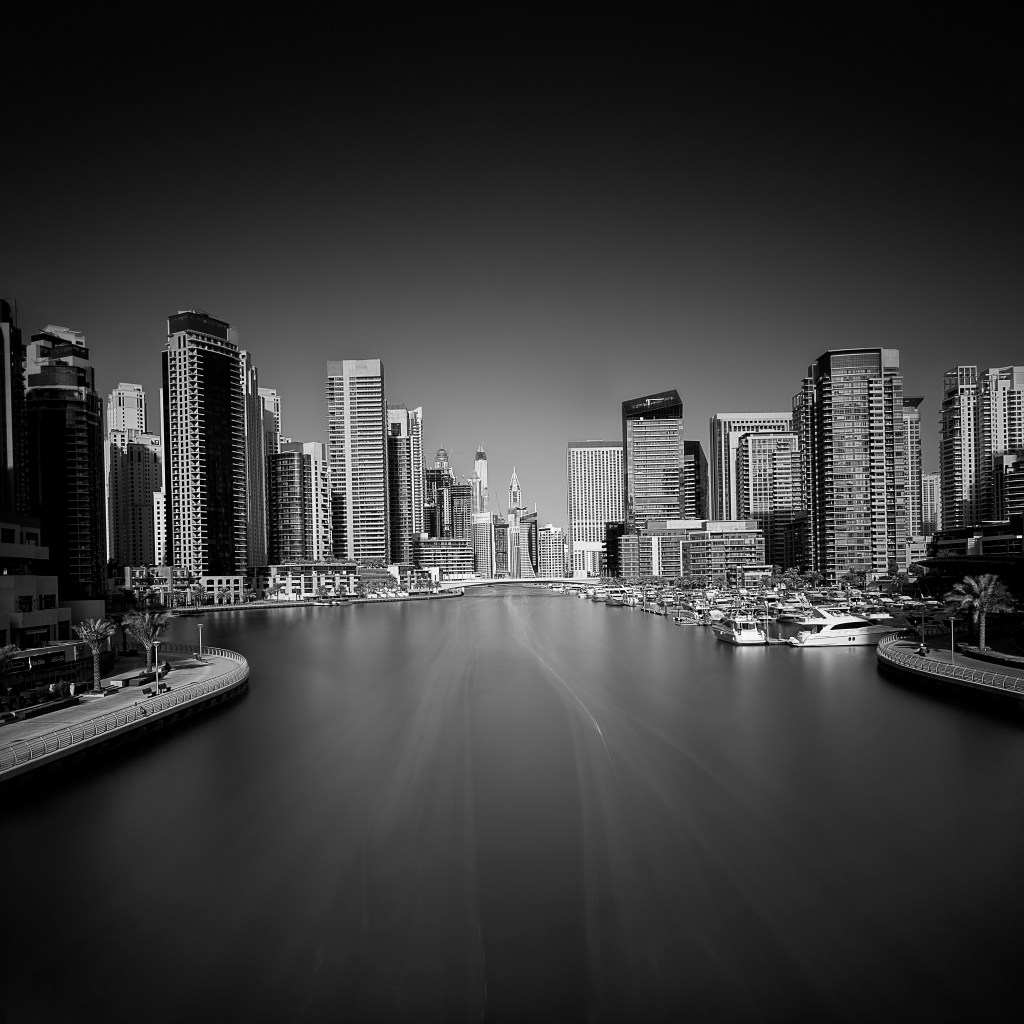
Emaar’s pipeline reflects that confidence. The company has tens of thousands of units under active development across the UAE, with new master-plan communities in various stages of delivery. Rashid Yachts & Marina, a 430-berth marina district on the Dubai Creek, is redefining waterfront living. The Oasis, a 100-million-square foot community in Dubailand, represents one of the most ambitious horizontal developments in the group’s history.
For Alabbar, none of this is accidental. It is the compound result of lessons drawn from crises, of discipline applied daily, of quality delivered without compromise, and of a fundamental belief in the UAE’s capacity to attract, retain and reward ambition.
He has learned, as he puts it, from every shock — and each time, the lesson has been the same: that the institutions and systems built here are stronger than the forces that test them.
There is, perhaps, no better argument for that belief than the view from the 124th floor observation deck of the Burj Khalifa on any given day: a city that did not exist in this form thirty years ago, humming with purpose, stretching toward a horizon it is still in the process of defining.
There is one final lesson that Alabbar carries with him — one shaped not in a boardroom, but in conversation with the architect of the UAE itself. “Sheikh Mohammed bin Rashid keeps telling me, there is a day and there is night, and the night comes. Are you ready for the night? Honestly, we are ready for the night every single night of our lives.” Mohamed Alabbar built much of what you can see from there. And by his own account, he is nowhere close to finished.
This article is part of the cover story for the Entrepreneur Real Estate Leaders May 2026 Edition.
There is a particular kind of confidence that can only be earned, not assumed. Mohamed Alabbar, the man who built a skyline, who conjured the world’s tallest tower from desert sand and raw ambition, has earned it many times over.
He speaks not with the caution of a man who has weathered storms, but with the restless energy of one who has learned to move faster because of them. Alabbar founded Emaar Properties in 1997.

Entrepreneur Middle East Staff
Entrepreneur Staff