Why Climate Adaptation Is Becoming a Business Imperative In the Gulf
Companies that reduce heat load, conserve water, improve efficiency, or harden infrastructure are not selling virtue; they are selling continuity, compliance, and margin.
Disclosure: Our goal is to feature products and services that we think you'll find interesting and useful. If you purchase them, Entrepreneur may get a small share of the revenue from the sale from our commerce partners.
You're reading Entrepreneur Middle East, an international franchise of Entrepreneur Media.
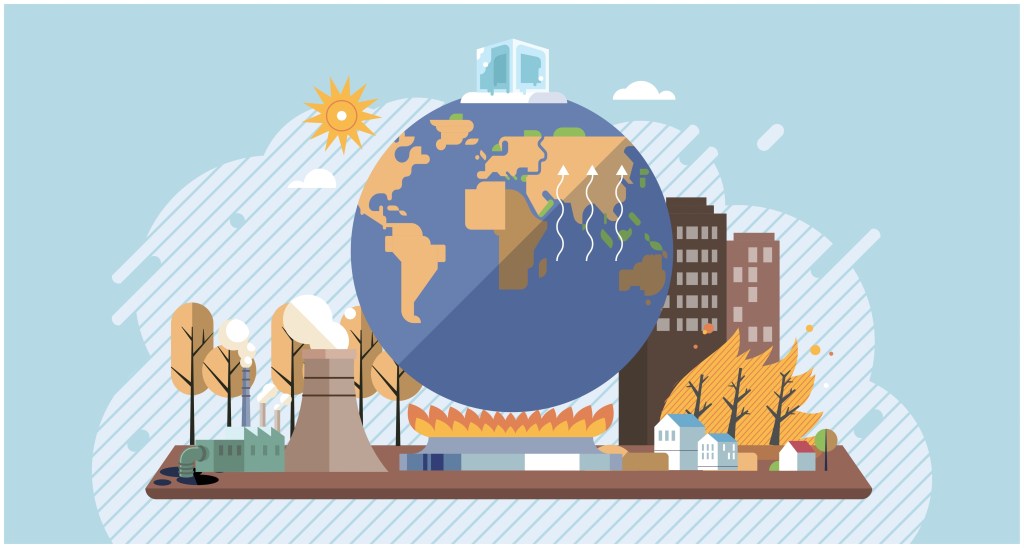
Talking about climate resilience has fallen out of fashion in some boardrooms, swept aside by the next cycle of corporate enthusiasms.
Yet physics is not particularly interested in trends. With the world likely to overshoot a 1.5°C increase—and with the Middle East on the sharp end of the consequences—ignoring sustainability does not make the constraints disappear.
If anything, it clarifies the opportunity. For entrepreneurs in the Gulf, the most attractive bets may now sit in the unglamorous business of adaptation: reducing heat exposure, managing water, improving efficiency, and upgrading materials.
In other words, turning climate pressure into commercial advantage.
The numbers are difficult to dismiss. The Middle East is warming at roughly twice the global average, and recent summers have delivered temperatures nearing 50°C in parts of the region, conditions that raise the cost of running buildings, moving goods, and keeping people productive outdoors.
Water stress, meanwhile, is not an emerging risk but a standing feature of life in the Gulf, which contains many of the world’s most water-scarce states.
For the private sector, this is less an environmental slogan than a predictable demand signal: more spending on cooling, water efficiency, and infrastructure that delivers the same output with fewer inputs.
The economic case is equally straightforward.
Climate adaptation is becoming a category of productivity and continuity, not corporate virtue. Heat stress already translates into lost labour hours, and projections suggest the drag on output will grow, reaching around 1.1% of GDP by 2030 for the region, with some Gulf economies facing sharper impacts.
That is what turns “sustainability” into something a chief financial officer can recognise: higher overtime bills, operational downtime, faster asset degradation, growing insurance exposure, and rising energy loads.
The firms most likely to scale will not be those with the most stirring mission statements.
They will be the ones that quantify return on investment—kilowatt-hours saved, water conserved, failures avoided—and sell adaptation as operational performance.
Policy is reinforcing these incentives rather than fighting them.
The UAE’s updated climate plan points to economy-wide implementation and formal mechanisms to draw private actors into delivery, including the National Dialogue for Climate Ambition.
Regulation is also shifting the burden from voluntary commitments to governed practice: Federal Decree-Law No. (11) of 2024 requires relevant entities to measure emissions, maintain inventories, and report periodically.
In Dubai, Al Sa’fat imposes baseline requirements for new buildings, ensuring a steady market for firms that improve efficiency, cooling performance, water management, and materials. Founders are rarely offered such a direct alignment between national direction and commercial demand.
For entrepreneurs, then, the conclusion is less ideological than financial.
In the Gulf, climate adaptation is becoming a line item: first as a cost to control (cooling, water, asset wear), then as a risk to price (downtime, regulation, workforce strain), and increasingly as a source of competitiveness.
That is what makes it investable: demand is structural rather than cyclical, and buyers are motivated by necessity rather than sentiment.
Companies that reduce heat load, conserve water, improve efficiency, or harden infrastructure are not selling virtue; they are selling continuity, compliance, and margin.
In a region building fast and planning long, adaptation is shifting quietly from “nice to have” to “necessary to operate”. Enduring markets tend to form in precisely such moments.
Talking about climate resilience has fallen out of fashion in some boardrooms, swept aside by the next cycle of corporate enthusiasms.
Yet physics is not particularly interested in trends. With the world likely to overshoot a 1.5°C increase—and with the Middle East on the sharp end of the consequences—ignoring sustainability does not make the constraints disappear.
If anything, it clarifies the opportunity. For entrepreneurs in the Gulf, the most attractive bets may now sit in the unglamorous business of adaptation: reducing heat exposure, managing water, improving efficiency, and upgrading materials.