From Oilfields to AI: How Bilal Hydrie Is Building a Next-Generation Investment Platform
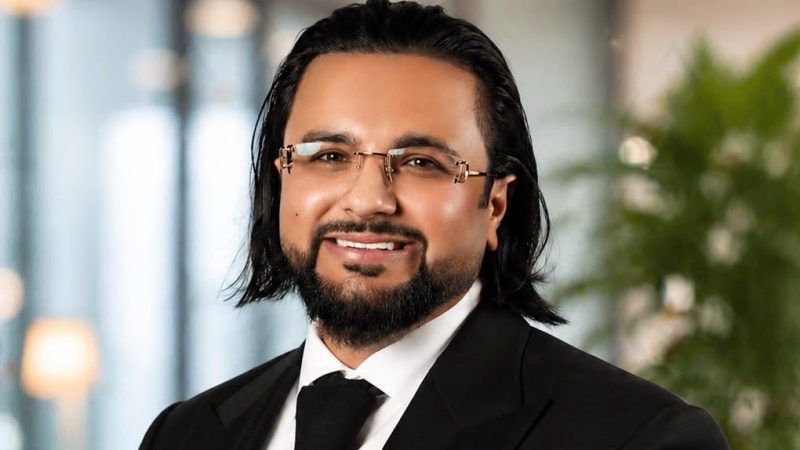
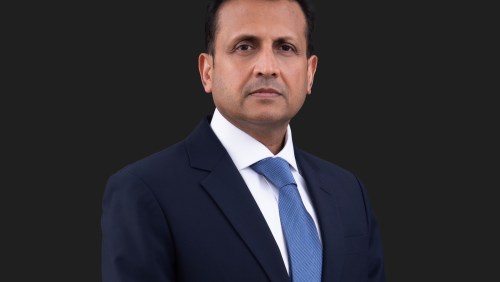
Bilal Hydrie
You're reading Entrepreneur Middle East, an international franchise of Entrepreneur Media.
Energy cycles reveal more about capital than they do about commodities. When prices collapse, reserves remain in the ground, infrastructure continues to stand and experienced operators do not suddenly lose their ability to produce. What often disappears is confidence—and with it, the capital producers require to keep moving.
Bilal Hydrie built his business in the gap that emerges when conventional capital steps back.
Hydrie did not enter energy through financial modelling or an institutional investment mandate. He began in oil and gas operations, working closely with equipment, field logistics and the daily realities of bringing production out of the ground.
That experience taught him how downtime compounds, how operational failures affect cash flow and how quickly financing can disappear when commodity prices decline. By the time he began deploying capital, he understood where risk existed because he had spent years working beside it.
The challenge became particularly visible in Alberta, home to some of North America’s most significant energy assets. Even producers with viable operations and valuable reserves could find themselves constrained by inflexible lending structures. As banks reduced exposure and credit frameworks became more conservative, operators were often assessed through financial templates that did not fully reflect the performance of their assets.
Hydrie saw a disconnect between operational value and the capital available to support it. That disconnect became the foundation of Inclusive Energy Ltd.
Initially established as an equipment and oilfield services business, Inclusive Energy evolved into an integrated energy investment platform combining operational capabilities with flexible capital solutions. Instead of requiring producers to source equipment, facilities, financing and strategic support from multiple providers, the company brings those requirements together.
The model allows Inclusive Energy to evaluate opportunities from the wellhead to the balance sheet.
For operators, this can mean faster execution, fewer disconnected service providers and financing structures designed around the realities of a particular asset. For investors, it provides an approach grounded not only in projections and reserve reports, but also in production performance, service reliability and management discipline.
Inclusive Energy’s structures can include debt lending, strategic equity, royalty interests and pre-pay production arrangements. Rather than forcing every opportunity into a standardized credit model, the financing is shaped around the asset, its production profile and the operator’s requirements.
This is where Hydrie’s operational background continues to influence his investment philosophy. He does not view capital as something that should exist separately from execution. He believes the strongest investment structures emerge when financiers understand how the underlying business works and when operators and capital partners are aligned around long-term value creation.
Today, Hydrie operates between Calgary and Dubai, connecting North American energy experience with Middle Eastern capital networks. Calgary provides proximity to assets, operators and technical expertise, while Dubai offers access to global investors, family offices and institutions seeking opportunities across energy, infrastructure and alternative investments.
However, Hydrie’s ambition is no longer limited to where the energy industry has been. It is increasingly focused on where it is going.
He believes the next decade will be shaped by the convergence of capital, energy, artificial intelligence and emerging technology. AI, automation and advanced data systems are already transforming how industrial assets are monitored, maintained and managed. Decisions that once relied primarily on manual reporting can increasingly be informed by real-time operational intelligence.
For Hydrie, this represents both an industrial transformation and an investment opportunity.
His vision is for Inclusive Energy to invest in technologies that improve efficiency, reduce operational friction and create more intelligent infrastructure. This may include AI-driven asset monitoring, automation technologies, predictive maintenance systems and data platforms capable of identifying operational risks earlier.
Rather than watching this transition from the sidelines, Hydrie wants to deploy capital behind the technologies and entrepreneurs driving it.
He is equally focused on the generation building those companies. Hydrie believes younger founders, raised with technology and increasingly fluent in artificial intelligence, will approach energy, infrastructure and investment differently. His ambition is to combine their technological fluency with the operating experience and financial discipline developed by established industry leaders.
The broader objective is not simply to build one energy company. It is to develop an investment ecosystem capable of backing startups, supporting ambitious founders, forming international partnerships and applying operational expertise to the technologies shaping the future.
That gives Inclusive Energy a wider position: an operator-driven investment platform rooted in conventional energy, but increasingly looking toward infrastructure, AI and emerging technology.
Hydrie’s strategy is not to pursue innovation because it is fashionable. New technologies must still solve real problems, demonstrate commercial value and remain resilient under pressure.
Energy markets will remain cyclical. Technology will continue evolving. Capital will move toward the industries and entrepreneurs capable of demonstrating both relevance and durability.
Hydrie’s journey—from oilfield operations to structured capital and now toward next-generation investment—reflects that evolution. What he is building brings together operational knowledge, global capital, emerging technology and the founders who may define the next economic cycle.
Energy cycles reveal more about capital than they do about commodities. When prices collapse, reserves remain in the ground, infrastructure continues to stand and experienced operators do not suddenly lose their ability to produce. What often disappears is confidence—and with it, the capital producers require to keep moving.
Bilal Hydrie built his business in the gap that emerges when conventional capital steps back.
Hydrie did not enter energy through financial modelling or an institutional investment mandate. He began in oil and gas operations, working closely with equipment, field logistics and the daily realities of bringing production out of the ground.

Entrepreneur Middle East Staff
Entrepreneur Staff