Globalized Growth: The UAE and GCC’s Pivotal Role in Borderless Trade and Investment
With a global footprint spanning 58 cities and 27 markets, and a diverse team of more than 3,000 professionals supporting 65,000 client entities, the Ascentium network offers businesses a valuable opportunity to scale operations internationally, with specialized cross-border compliance, offshore banking, fiduciary and trust services ensuring full adherence to the regulations of individual countries or jurisdictions.

Shutterstock
Opinions expressed by Entrepreneur contributors are their own.
You're reading Entrepreneur Middle East, an international franchise of Entrepreneur Media.
Attracting a record AED 117.3 billion (USD 48.3 billion) in foreign direct investment inflows in 2025, the UAE further cemented its reputation as a global FDI magnet, even outperforming European economies such as France, the Netherlands, Spain and Switzerland, based on figures published by the United Nations Conference on Trade and Development (UNCTAD).
In terms of greenfield FDI, the UAE dominated the Gulf region, securing a milestone 1,533 inward FDI projects, or 19.21 times more FDI projects relative to its economy size, according to a separate report from fDI Intelligence.
Business, tech and financial services accounted for over 50% of these projects, while logistics and industrial equipment also demonstrated robust year-on-year growth.
The 2026 Kearney FDI Confidence Index, which ranks the most attractive investment markets worldwide, also placed the UAE ninth in investor confidence and second in emerging market performance.
UAE CEPAs: Forging a stronger international trade network
Complementing its healthy influx of investment, the UAE has been proactively building the groundwork for a far-reaching trade and investment network, effectively putting the country at the nexus of regional and global economic activities. Since 2021, the UAE has finalized 37 Comprehensive Economic Partnership Agreements (CEPAs), 18 of which have already been enforced and include agreements with Australia, New Zealand, Türkiye, India, Costa Rica, Malaysia and more.
After recently concluding a CEPA with Canada, whose bilateral trade with the UAE reached AED 15.4 billion (USD 4.2 billion) last year, the government revealed it is currently finalizing an additional 20 economic partnership agreements, a feat that is congruent with its goal of generating AED 4 trillion (USD 1.09 trillion) in non-oil foreign trade by 2031.
The UAE recently reported that its non-oil foreign trade value hit AED 1.937 trillion (USD 527.4 billion) in the first half of 2026, signifying an annual growth of 13.1%. Furthermore, non-oil trade with CEPA partners reached AED 304.3 billion (USD 82.8 billion), with imports amounting to AED 193.5 billion (USD 52.68 billion) and exports totalling AED 66.1 billion (USD 18 billion).
The Middle East emerges as a world-leading investment destination
While the UAE retained the top spot for FDI inflow in the region, Saudi Arabia, Qatar and Oman also witnessed significant growth, primarily driven by the business-friendly policies and economic diversification strategies they have adopted.
Saudi Arabia placed 13th in UNCTAD’s World Investment Report, with net FDI inflows of USD 32.6 billion, reflecting a yearly growth of 53%. On the other hand, greenfield FDI in Qatar and Oman rose substantially, with the two GCC nations landing in the fifth and 14th spots of fDI Intelligence’s index, respectively.
The flow of these cross-border investments highlights the irrefutable impact and influence of Gulf countries, and despite the regional uncertainty, market analysts expect GCC economies to recover by up to 8.1% in 2027.
Virtuzone & Ascentium: Connecting global markets through AI-powered, human-centric corporate services
When Virtuzone joined the Ascentium Group in 2025, one of the core objectives of the integration was to provide a streamlined and two-way framework for growth: UAE-based companies can tap into Ascentium’s strong international presence through Virtuzone and expand their operations to other key markets across the Middle East, Europe, Asia Pacific and even Latin America.
Similarly, Ascentium clients that aim to establish a foothold in the UAE and the region can leverage Virtuzone’s local market expertise and holistic suite of business solutions.
With a global footprint spanning 58 cities and 27 markets, and a diverse team of more than 3,000 professionals supporting 65,000 client entities, the Ascentium network offers businesses a valuable opportunity to scale operations internationally, with specialized cross-border compliance, offshore banking, fiduciary and trust services ensuring full adherence to the regulations of individual countries or jurisdictions.
On another note, as the UAE and wider GCC reinforce their position at the centre of global economic development, artificial intelligence has become another powerful instrument for connecting businesses, capital and markets.
Since launching its national Artificial Intelligence Strategy in 2017, the UAE has recorded a remarkable 97% adoption of AI tools in government entities, grown its number of programmers to more than 450,000, and attracted over AED 543 billion (USD 147.8 billion) in AI-related investments.
In fact, PricewaterhouseCoopers (PwC) estimates that AI could contribute AED 1.175 trillion (USD 320 billion) to the Middle East economy by 2030, with the UAE expected to witness the largest relative impact at nearly 14% of its GDP that year.
For Virtuzone and Ascentium, these advances provide an opportunity to make cross-border corporate services faster, more accurate and more seamlessly connected. Integrating AI into their solutions can improve data visibility, anticipate compliance requirements, and identify potential gaps across multiple jurisdictions. However, international expansion cannot be managed through automation alone.
Decisions involving corporate structures, regulatory obligations, ownership arrangements, and market entry still require contextual understanding, professional judgment, and accountability—insights and attributes that are uniquely and intrinsically human.
As such, Virtuzone and Ascentium maintain a human-centric approach to supporting entrepreneurs and businesses, while harnessing cutting-edge technology and digital infrastructures to deliver superior efficiency, precision and speed.
This amalgamation of Virtuzone’s and Ascentium’s capabilities, therefore, creates an exclusive ecosystem that allows businesses to enter new markets, optimize operations and gain unrivalled international reach, essentially positioning them at the centre of borderless commerce and facilitating seamless inbound and outbound trade.
Attracting a record AED 117.3 billion (USD 48.3 billion) in foreign direct investment inflows in 2025, the UAE further cemented its reputation as a global FDI magnet, even outperforming European economies such as France, the Netherlands, Spain and Switzerland, based on figures published by the United Nations Conference on Trade and Development (UNCTAD).
In terms of greenfield FDI, the UAE dominated the Gulf region, securing a milestone 1,533 inward FDI projects, or 19.21 times more FDI projects relative to its economy size, according to a separate report from fDI Intelligence.
Business, tech and financial services accounted for over 50% of these projects, while logistics and industrial equipment also demonstrated robust year-on-year growth.

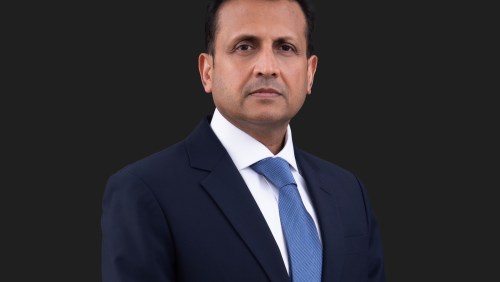
George Hojeige • CEO at Virtuzone
George Hojeige is CEO at Virtuzone. As CEO, Hojeige ensures the company maintains its position... Read more