The Long Game: How Thierry Sabbagh Built a Career, and a Brand, to Last
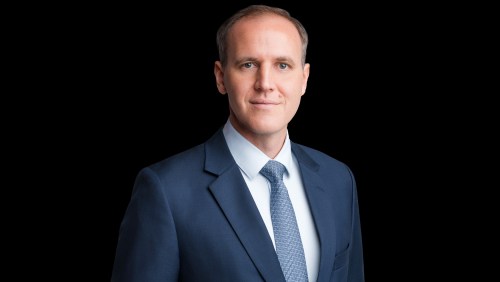
Thierry Sabbagh, Divisional Vice President and President, Middle East, KSA, India and CIS, Nissan and INFINITI, on 25 years of building trust across the automotive industry, the power of showing up, and why resilience is never a single moment, it’s a process.
You're reading Entrepreneur Middle East, an international franchise of Entrepreneur Media.
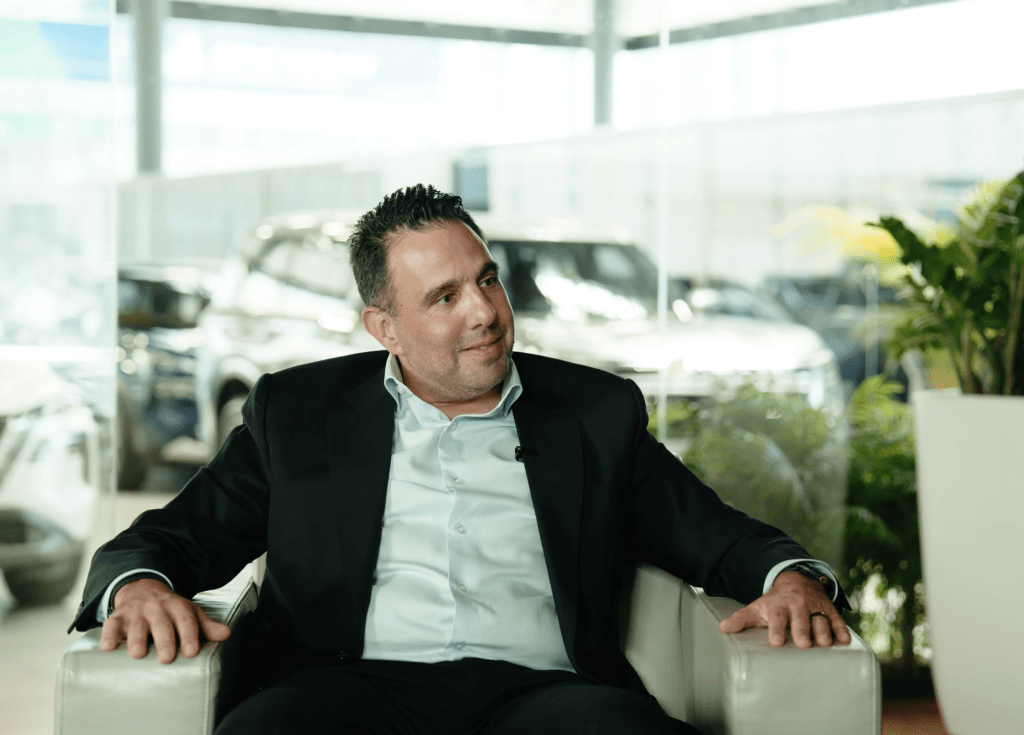
Thierry Sabbagh didn’t set out to spend a quarter of a century in the UAE. He arrived, worked hard, and somewhere along the way, he still finds it difficult to pinpoint exactly when, the country stopped being a place he was working in and started being a place he belonged to.
“There is not a single dramatic moment when this happened”, he says. “But there was definitely a day when I started to realize that in this country I’m no longer an observer, I’m actually part of the rhythm.”
That sense of belonging runs deeper than the years themselves. For Sabbagh, who today oversees Nissan’s operations across the Middle East, KSA, India and CIS as the DVP and President, it has shaped the way he thinks about leadership, about brand-building, and about what it means to earn the trust of a market rather than simply sell into it.
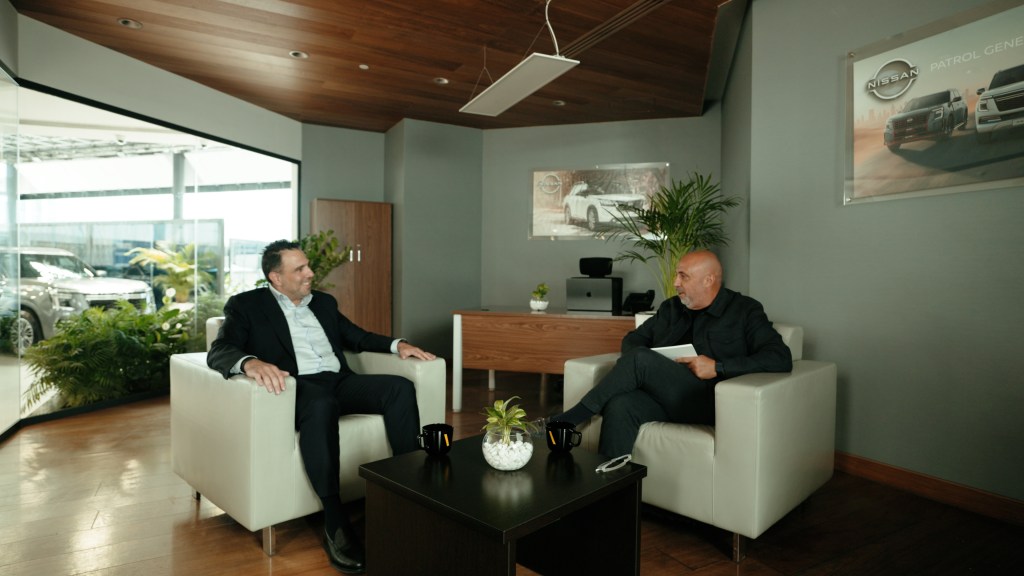
Sabbagh sat down with Reda Raad, Group CEO of TBWA\RAAD, on “Built to Last”, TBWA\RAAD’s new leadership podcast, filmed at the AWR Automotive showroom, the brand’s exclusive distributor in Dubai and the Northern Emirates. What emerged over 31 minutes was less an interview and more a genuine conversation between two people who have spent decades thinking seriously about what it takes to build something in this part of the world that actually endures.
One of the principles that has guided Sabbagh’s leadership over the years is borrowed from a Japanese management philosophy. The concept is called “gamba”. In practice, this means regular visits to dealerships across the region, conversations with sales teams, and an ongoing attentiveness to what customers are actually experiencing.
“The best market insights, the best feedback you get, is really when you do these visits, when you speak to customers, when you speak to the frontliners. It gives you a true analysis of what is happening.”
In an era of dashboards, data reports, and remote decision-making, Sabbagh still believes that the most important intelligence and greatest insights come from a face-to-face conversation in a showroom.
When a Car Becomes a Culture
There are very few products anywhere in the world that carry the kind of cultural weight the Nissan Patrol carries in the Gulf. It is the kind of thing that is almost impossible to engineer. It accumulates over decades, through genuine use, through stories passed between generations, through the particular relationship that forms between a machine and the terrain it was built to cross.
“Patrol has become more than a car”, Sabbagh says. “It’s an icon. It’s a culture. People have learned to drive in this car. People have been trusting this car, whether for family gatherings, for off-road adventure, for on-the-road driving.”
When Nissan launched the latest generation of the Patrol globally, the choice of venue was, in Sabbagh’s words, entirely natural: Abu Dhabi. The brand’s most important global product reveal happened in the country where that product means the most to the people who own it. Sabbagh describes it as “a token of respect for the love of Patrol from the region”, a gesture that acknowledged decades of loyalty rather than simply marking a new chapter in the model’s history.
It is the kind of decision that sounds obvious in retrospect and is actually quite rare in multinational brand management, where global launch strategies tend to follow established hierarchies of prestige. The fact that Nissan made it reflects something that Sabbagh has spent years quietly advocating for: that the Middle East is a central part of Nissan’s story.
The First Thing You Do in a Crisis
When the region faced one of its most significant tests in recent memory, the instinct of many organizations was to consolidate, to tighten controls, and slow down decisions. Sabbagh’s approach moved in the opposite direction.
His first priority, he says without hesitation, was his people. Before logistics, before market share, before any strategic recalibration, it was the wellbeing and clarity of the men and women working for Nissan across the region that demanded his immediate attention.
“In times of crisis, it’s important that you have strong and clear communication, making sure that people understand that we are all here together to go through this crisis”, he explains. “We have learned from previous crises that the first priority you have to look at is your own people.”
Alongside that came speed. The lesson of previous disruptions, the pandemic not least among them, was that waiting for perfect information before making decisions is a luxury that crisis situations rarely afford. “Being quick and decisive is important”, he says. “We have learned that waiting would not help.”
What also helped significantly was the quality of support that came from Nissan’s global headquarters in Japan. In many multinationals, a regional emergency triggers a centralizing instinct: a tightening of oversight from people who are geographically far from the situation. Sabbagh experienced something different: a swift, open, and largely unrestricted backing from the top that gave his regional team the room and support they needed to respond.
“The support we received from global was something we can be very humbled and proud of”, he says. “It was very quick, limitless, and open to all suggestions.”
That kind of institutional trust is the dividend on years of consistent performance and honest communication, a relationship that Sabbagh has spent years carefully cultivating.
RELATED: Dr. Reem Osman: Building Businesses With Purpose Through Reem Holding
Resilience Is a Process, Not a Moment
The post-pandemic recovery of the automotive sector in the Middle East was, by most accounts, stronger than anyone had initially projected. For Nissan, it represented some of the most robust performance figures the regional operation had seen. Sabbagh is careful not to attribute this to any single decision or any particular stroke of fortune.
“Resilience is not only for the specific moment”, he says. “It is a process. It is a journey.”
The groundwork that made the recovery possible: the depth of the dealer network, the loyalty of the customer base, the quality of the after-sales experience, the resale value that Nissan vehicles consistently hold in the Gulf market, had been laid over years. None of it was assembled quickly in response to the crisis. All of it was already there.
“If we continue to stay committed, if we continue to stay very much focused on what has to be delivered, I’m very confident and optimistic about the future.”
It is an optimism grounded in a clear understanding of what the brand has built and why it has lasted. Sabbagh has seen the market shrink and grow enough times to know that the organizations that last are rarely the ones that reacted best in the moment. They are the ones that had done enough of the right things in the quiet years that, when the difficult years arrived, the foundations held.
Authenticity: The Attribute Market Research Can’t Give You
When asked what he has learned about Nissan’s customers in the Middle East that no piece of market research could have revealed to him, Sabbagh talks about authenticity, not as a brand value, but as a lived expectation that customers hold brands to, often without voicing it.
“Authenticity is a key attribute that we have learned customers today expect”, he says. “A brand to be authentic, to be transparent, to build trust, and to be open about what it is offering.”
In a region where the car-buying relationship is often highly personal, where the dealer knows the family, knows the lifestyle, knows the history of previous vehicles, the gap between what a brand projects and what it actually delivers is felt deeply. Sabbagh points to the totality of the ownership experience as the real currency of trust: the warranty, the roadside assistance, the technology, the resale value.
“This is what customers look for. This is the true DNA of Nissan.”
Be the CEO of Your Job
For all the complexity of managing a regional operation that spans dozens of markets, hundreds of employees, and one of the most culturally significant product lines in the automotive world, the piece of advice that Sabbagh returns to most naturally is also the most straightforward one.
“I’ve always treated every job I’m in as if I’m the CEO of that job”, he says. “I put all the commitment, I put all the passion. I always try to inject an entrepreneurship mindset into the corporate world.”
His focus has always been on the work at hand rather than the role that comes next. What absorbs him is the work in front of him and the conviction that if you give everything to the role you hold today, the future has a way of taking care of itself.
“I don’t always think about what is the next step. I want to make sure we excel in the current job. And then you will be able to grow throughout your career.”
It is a philosophy that has carried him through 25 years in one of the world’s most dynamic and demanding markets, through a pandemic, through regional disruption, and through the daily complexity of running a brand that means genuinely different things to different people across a vast and varied geography. It is, by any measure, a philosophy that has paid off.
RELATED: Captain Pradeep Singh on Dubai Becoming a Global Hub for Intellectual Capital
Thierry Sabbagh didn’t set out to spend a quarter of a century in the UAE. He arrived, worked hard, and somewhere along the way, he still finds it difficult to pinpoint exactly when, the country stopped being a place he was working in and started being a place he belonged to.
“There is not a single dramatic moment when this happened”, he says. “But there was definitely a day when I started to realize that in this country I’m no longer an observer, I’m actually part of the rhythm.”
That sense of belonging runs deeper than the years themselves. For Sabbagh, who today oversees Nissan’s operations across the Middle East, KSA, India and CIS as the DVP and President, it has shaped the way he thinks about leadership, about brand-building, and about what it means to earn the trust of a market rather than simply sell into it.

Entrepreneur Middle East Staff
Entrepreneur Staff