Catalyzing Innovation: QSTP’s Vision for Tomorrow
You're reading Entrepreneur Middle East, an international franchise of Entrepreneur Media.
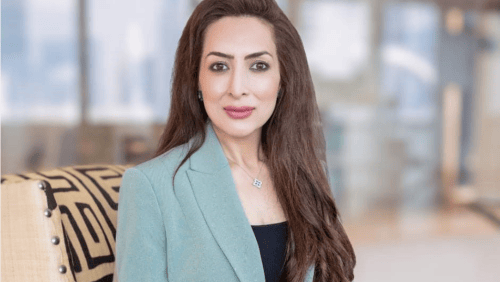
In a Q&A interview, Rama Chakaki, President of Qatar Science and Technology Park (QSTP), shares how the hub is shaping the future of tech and entrepreneurship in Qatar, driving collaboration, and empowering the next generation of innovators.
As Qatar deepens its commitment to knowledge-based growth, Qatar Science & Technology Park stands at the intersection of innovation, research and enterprise. In this interview, Rama Chakaki, President of QSTP, discusses the organization’s evolving role in nurturing homegrown tech talent, attracting global partnerships, and accelerating solutions that address real-world challenges.
How would you characterize the current state of venture capital investment in the Gulf?
Venture capital investment in the Gulf is growing significantly. We saw a significant jump in the investment out of the entire region. We now see the UAE and Saudi Arabia among the top investors in the region, and it is growing in Qatar. The ecosystem is active and expanding, with diverse sectoral investment across multiple industries.
The Middle East recorded US$3,425 billion in funding in 2025, an 89% year-over-year increase, with 581 deals, up 13% from the previous year, according to MAGNiTT. The ecosystem is active and expanding, with diverse sectoral investment across multiple industries, with FinTech leading at US$1,042 million, up 164% year-over-year.
Qatar has taken a highly strategic, state-backed approach to innovation and technology investment. How does Qatar’s investment philosophy differ from other GCC markets, both in terms of risk appetite and long-term objectives?
Our investment philosophy is complementary and unique to the rest of the region. We entered the venture capital space after the UAE and Saudi Arabia, which gave us the advantage of learning from their experiences, both successes and challenges, and applying those lessons to our own strategy.
The Qatar Investment Authority has made significant investments through fund-of-funds structures in both local and international VCs. These portfolios are diversified across investment stages, technology sectors, and impact-focused initiatives, and by the gender composition of founders, all aligned with Qatar’s national objectives.
A key strength of our approach is the explicit alignment of all our venture capital investments with Qatar National Vision 2030. This strategic coherence has created a healthy pipeline of startups that are looking to tap into those funds that are established now in Qatar.
What role does Qatar Science and Technology Park play in achieving Qatar’s investment goals?
Qatar Science and Technology Park plays a pivotal role in achieving Qatar’s investment goals by acting as a central hub connecting key stakeholders in the innovation ecosystem. We bridge multinationals, many of whom have the problem statements that these startups are solving for.
We have a thriving incubator with over 300 companies that are a part of it, so they get to apply to VCs and we do the recommendations on a monthly basis to the VCs on who to invest in. Then we also have a pipeline of commercialized technologies that are coming in from the Qatar academic ecosystem.
These are PhD or professors, students or professors who develop technologies and are looking to commercialize them. All of that is a very healthy pipeline for the VCs.
QSTP sits at the intersection of research, commercialization, and capital. Please share with us a few examples of how QSTP is ensuring that deep-tech and research-driven innovation translates into venture-scale companies?
One approach is through our accelerators. We’ve selected thematic accelerators, including the FemTech Accelerator, which we recently launched in partnership with the pharmaceutical company Merck to advance women’s health innovation. It invites companies looking to pilot their technologies in the biotech space. We’ve partnered with our local ecosystem, including Weill Cornell Medicine – Qatar, Sidra Medicine, and Hamad Medical Corporation. This allows companies in the accelerator to implement a quick land and expand strategy, immediately tapping into these partners and collaborating with researchers and both private and public sector hospitals to deploy their technologies.
Beyond what many accelerators offer, we’ve also established partnerships in other countries. This provides additional value to the startup, the partner, and the other country where we deploy the accelerator.
AI has become a priority investment theme globally. From your perspective, what fundamentally differentiates the way Gulf investors—and QSTP in particular—approach AI investment compared to the U.S. model?
We are a value-driven country, and with that, we consider the cultural impact and long-term implications for our youth, nation, and private sector ecosystem. While we did not have a first-mover advantage in AI, we benefit from observing the challenges faced by U.S. companies on the cultural and regulatory sides, and we’re learning from them.
Our approach to the regulatory framework, for example, ensures that startups play a role in educating consumers. Rather than solely extracting value from consumers, startups are at the table ensuring consumers understand both the potential harms and how to minimize them while maximizing the value they receive.
Looking ahead, which sectors or technologies do you see emerging as Qatar’s strategic investment priorities over the next five to ten years?
We are taking a cluster approach to rolling out technologies, aligned with our national research interests, our investment promotion agency, and our in-country talent pool. Based on these alignments, we’ve selected sectors that will have a significant impact on employment, citizen value, and private sector profitability.
Our strategic investment priorities include health tech, food security and agri-tech, and prop tech as we continue developing our urban landscape as a growing nation.
What is your advice on what startup founders in Qatar should prioritize to remain investor-relevant in 2026 and beyond.
As a founder, the first priority is to develop yourself as a sensible partner. Early-stage VCs invest in founders as much as in ideas. They look for resilience, the ability to weather turbulent markets, focus, and the capacity to identify opportunities, prove they work, and then expand. Our role is to support founders in developing these skills while helping them navigate an ever-changing market landscape.
In a Q&A interview, Rama Chakaki, President of Qatar Science and Technology Park (QSTP), shares how the hub is shaping the future of tech and entrepreneurship in Qatar, driving collaboration, and empowering the next generation of innovators.
As Qatar deepens its commitment to knowledge-based growth, Qatar Science & Technology Park stands at the intersection of innovation, research and enterprise. In this interview, Rama Chakaki, President of QSTP, discusses the organization’s evolving role in nurturing homegrown tech talent, attracting global partnerships, and accelerating solutions that address real-world challenges.
How would you characterize the current state of venture capital investment in the Gulf?
Venture capital investment in the Gulf is growing significantly. We saw a significant jump in the investment out of the entire region. We now see the UAE and Saudi Arabia among the top investors in the region, and it is growing in Qatar. The ecosystem is active and expanding, with diverse sectoral investment across multiple industries.

Entrepreneur Middle East Staff
Entrepreneur Staff