How To Humanize Your Business To Drive Growth
To ensure our firm’s longevity, and to adapt and transform to survive in the marketplace, we need to bring about several strategic and operational changes within the organization.

Shutterstock
Opinions expressed by Entrepreneur contributors are their own.
You're reading Entrepreneur Middle East, an international franchise of Entrepreneur Media.
New research suggests that by 2027, we would be living in a world in which the average company is likely to last only 12 years on the S&P 500, an index widely considered to be the best indicator of how the U.S. stock market is performing. To put things in perspective, if you were listed in the S&P 500 in 1935, the life span of a company was 90 years.
There is no doubt that we live today in some of the most interesting economic times. To ensure our firm’s longevity, and to adapt and transform to survive in the marketplace, we need to bring about several strategic and operational changes within the organization. A 2017 survey report by North Highland, a global management consulting firm, states that “at the center of successful transformation in today’s global business ecosystems are the people.”
The traditional approach of business transformation was purely numbers-based or operationally-focused. Hard facts and figures such as profits, year-on-year growth, balance sheet, and cash flow statements were the tools that assessed performance and measured success. This was seen as the tangible measurement of business. However, the North Highland report states that “organizations that get the human experience right, will have the support of their people, who are fully empowered to innovate, collaborate, and generate sustained value, even in states of near constant change.”
No matter how far advanced technology may take us, the future will still be human, it states.
In my personal experience as an entrepreneur, building up a service-oriented automotive business from scratch, I have realized that the “experience” of people, be it your consumers, employees, suppliers, or shareholders, both as recipients and activators of change, should not be overlooked, as humans engage and connect to each other in a way that technology cannot.
Related: AI: The New Engine Of HR
So, how do you “humanize” a business? How can you empower and activate people to be at the helm of change?
I strongly believe that just as we strive to create better customer experiences, we should also equally focus on empowering our employees to feel motivated to make improvements, and contribute in a fruitful way toward the success of the business. Employees who embody the mission of an organization, and understand its values are always willing to go one step ahead to ensure that the company succeeds, and customers are happy.
Humanizing the business is all about listening- to the needs of your employees, customers, suppliers, clients, and shareholders, for these are the people who will make your business successful. Mastering the art of listening allows you to analyze and derive insights, and gain a better understanding of how to improve experiences for both customers and employees, far better than any chart or graph that monitors your company’s stock value. It is through these human-to-human encounters that allow us to see, feel, and share -and which cannot be measured in numerical terms- that I have followed up on some of the most defining transformative changes in my organization.
When you treat both customers and employees like humans, and not as mere numbers on your database, it leads to the creation of lasting, personal, and positive experiences overall for all parties involved. This emotional investment that we make in our people is the ultimate approach in humanizing a business. Companies that are more data driven tend to lose the human touch, and as such, their individuality.
I am a firm believer that the best investment is always in the people. When an organization gives priority to the needs and wellbeing of its employees, the employees are likely to respond in kind. Empowered and engaging employees, in turn, impact customer perspective. Customers trust brands that take care of their people; it is the mark of an organization that has its values in the right place; it is a sign of honesty and integrity.
As entrepreneurs or leaders of organizations, we should realize that our reputation or perceived market value is only as good as the people we employ. Shifting the focus from profits to people, therefore, works in favor of the business’s bottom line, longevity, and its brand image.
So, whether you deal with a basic product like water or tea, or a specialized engineering offering, it is not enough to have just a high-quality product to boost the bottom line. Getting your people metrics right, and empowering your employees will help redefine your growth in the coming years.
Related: The Need To Humanize Technology (In Its True Sense)
New research suggests that by 2027, we would be living in a world in which the average company is likely to last only 12 years on the S&P 500, an index widely considered to be the best indicator of how the U.S. stock market is performing. To put things in perspective, if you were listed in the S&P 500 in 1935, the life span of a company was 90 years.
There is no doubt that we live today in some of the most interesting economic times. To ensure our firm’s longevity, and to adapt and transform to survive in the marketplace, we need to bring about several strategic and operational changes within the organization. A 2017 survey report by North Highland, a global management consulting firm, states that “at the center of successful transformation in today’s global business ecosystems are the people.”
The traditional approach of business transformation was purely numbers-based or operationally-focused. Hard facts and figures such as profits, year-on-year growth, balance sheet, and cash flow statements were the tools that assessed performance and measured success. This was seen as the tangible measurement of business. However, the North Highland report states that “organizations that get the human experience right, will have the support of their people, who are fully empowered to innovate, collaborate, and generate sustained value, even in states of near constant change.”

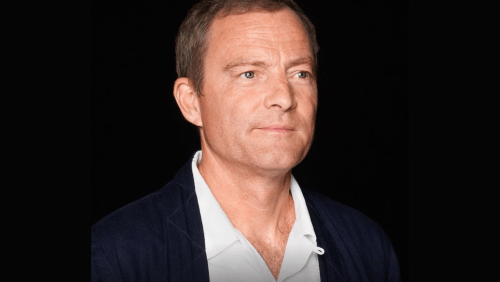
Oweis Zahran • CEO, OWS Auto
As a dynamic entrepreneur in both the automotive industry and in the VC space, Oweis... Read more