The UAE’s Next Economic Powerhouse Will Be Built By SMEs—But Only If They Can Scale
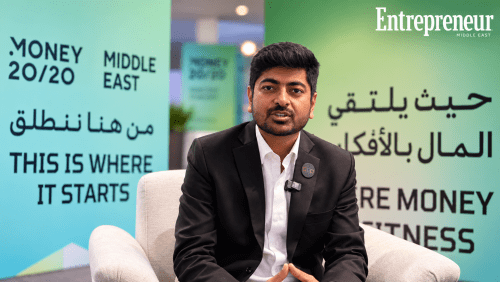
Gregg Pearce, Head of SoHo and SME at du, explains why the next chapter of the UAE’s entrepreneurial growth will depend on helping founders move beyond fragmented systems, administrative overload, and startup-stage thinking.

Gregg Pearce, Head of SoHo and SME at du
Opinions expressed by Entrepreneur contributors are their own.
You're reading Entrepreneur Middle East, an international franchise of Entrepreneur Media.
Small and medium-sized enterprises are no longer playing a supporting role in the UAE economy. They are becoming one of its most important engines of growth.
SMEs currently account for 94% of businesses in the country, while startups and SMEs collectively contribute more than 63% of the UAE’s non-oil GDP, according to Gregg Pearce, Head of SoHo and SME at du. As the country continues to build a knowledge-based and innovation-led economy, he believes smaller businesses will be central to creating jobs, adopting artificial intelligence, and testing new business models at a pace that larger organizations often cannot match.
“The next phase of growth is about helping today’s SMEs scale into serious, globally competitive businesses,” Pearce says. “That’s where the real economic upside lies.”
The UAE has already established itself as one of the world’s most ambitious entrepreneurial markets. Its Vision 2031 agenda includes plans to nurture two million SMEs, while national initiatives are seeking to train thousands of young entrepreneurs and support the creation of new unicorns. However, starting a company and building one that can scale sustainably are two very different challenges.
For many founders, growth is slowed not by a lack of ambition, but by the operational complexity of running a business. Invoicing, compliance, human resources, cybersecurity, connectivity, and basic IT management can quickly consume the time that should be spent developing products, acquiring customers, and building a team.
Pearce describes this as one of the most underestimated barriers facing entrepreneurs.
“Administrative overload leaves very little bandwidth for the actual business of building,” he says. “Founders should not have to stitch together multiple subscriptions and vendor relationships just to run their business.”
This is also changing what entrepreneurs expect from large corporate partners. Connectivity alone is no longer enough. Founders increasingly want integrated support that combines digital infrastructure, cloud services, productivity tools, cybersecurity, mentorship, funding access, and connections to the wider business ecosystem.
For du, that shift has meant evolving from a traditional telecommunications provider into what Pearce describes as a digital enablement partner. Its SME offerings include bundled connectivity and productivity services, Microsoft 365 solutions, cybersecurity tools, e-commerce support, and platforms designed to simplify the process of setting up and managing a company.
The objective is to reduce the friction created by fragmented systems, particularly during the period when a promising startup is attempting to become a successful scaleup.
“Founders need the ability to test, adapt, and pivot without being held back by rigid systems,” Pearce explains. “The businesses that scale successfully are the ones that put modular, cloud-enabled infrastructure in place early, so that when growth comes, their systems can absorb it.”
Artificial intelligence is becoming an increasingly important part of that infrastructure. Yet Pearce believes founders should avoid approaching AI as a trend or attempting to transform every part of the business at once.
The most effective starting point is often much simpler: identifying two or three repetitive tasks that are consuming time and using AI to automate them.
For SMEs, this could include automating administrative work, using predictive analytics to forecast demand, or introducing AI-powered customer support that operates around the clock without requiring additional headcount.
du Launchpad, the company’s AI-powered platform for entrepreneurs, was developed around this principle. It brings together essential business services within a single digital experience, allowing SMEs to manage operations, compliance, and growth without needing an in-house technology team.
AI is also becoming critical to cybersecurity. Through its partnership with Microsoft, du offers AI-powered security services intended to give smaller businesses access to protection that was once largely limited to major enterprises.
This matters because the risks facing a company increase significantly as it begins handling more customer information, payments, and digital transactions. Pearce argues that founders should address security and compliance before they become urgent problems, rather than treating them as issues to solve after the business has already grown.
“Future-ready businesses treat AI as infrastructure,” he says. “The companies embedding it into their core operations now will be the ones with a real competitive edge in the years ahead.”
Technology, however, is only one part of the equation. Pearce believes the UAE’s advantage lies in the way government entities, corporations, investors, accelerators, and entrepreneurs are increasingly working together.
Government bodies can create supportive regulations and business frameworks. Corporations can provide technology, infrastructure, and market access. Innovation hubs can connect founders with funding and mentorship. The greatest impact comes when these elements operate as part of one connected system.
The DIFC Innovation Hub’s Ignyte platform is one example. It has connected 100,000 startups with more than 5,000 investors and mentors, while du supports the ecosystem through connectivity, cloud services, cybersecurity, and access to its customer network.
du has also developed partnerships with organizations including the Dubai Department of Economy and Tourism, Dubai SME, Sheraa, and DIFC Innovation Hub.
Its role as the first telecom partner for DET’s SME in a Box initiative reflects the same approach. The program brings together essential parts of establishing a business in Dubai, from licensing and banking to connectivity and compliance, within a more simplified journey.
For Pearce, the message to founders is clear: they do not need to build every capability alone.
“Much of the heavy lifting of creating a support system has already been done,” he says. “The opportunity is there, but founders need to actively engage with it.”
That means joining accelerator programs early, building relationships with ecosystem partners, investing in adaptable technology, and creating infrastructure that can support the business it may become—not only the company it is today.
It also requires a shift in identity.
Pearce’s most important advice to entrepreneurs is to stop thinking of themselves simply as small business owners. The term belongs to an earlier era of linear growth and regional limitations. Today’s founders can build digital-first companies that reach customers, partners, and markets far beyond their immediate geography.
“The moment you start thinking and operating as a borderless business, everything changes,” he says. “The tools you choose, the partnerships you pursue, and the speed at which you make decisions all change.”
The UAE has built an ecosystem designed to support that ambition. But ambition alone will not create globally competitive companies. Founders must match it with the right systems, partnerships, and digital foundations from the beginning.
As Pearce puts it: “A dream is only as strong as the infrastructure it sits on.”
Small and medium-sized enterprises are no longer playing a supporting role in the UAE economy. They are becoming one of its most important engines of growth.
SMEs currently account for 94% of businesses in the country, while startups and SMEs collectively contribute more than 63% of the UAE’s non-oil GDP, according to Gregg Pearce, Head of SoHo and SME at du. As the country continues to build a knowledge-based and innovation-led economy, he believes smaller businesses will be central to creating jobs, adopting artificial intelligence, and testing new business models at a pace that larger organizations often cannot match.
“The next phase of growth is about helping today’s SMEs scale into serious, globally competitive businesses,” Pearce says. “That’s where the real economic upside lies.”

Mina Vucic • Director of Production and Multimedia, BNC Publishing
Entrepreneur Staff
Mina Vucic is the Director of Production and Multimedia at BNC Publishing, the media house... Read more