Engineering the Future: Jake Dyson on Driving the Next Wave of Innovation
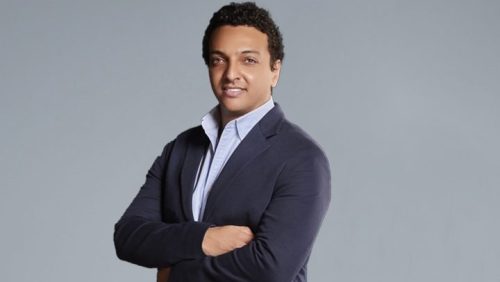
Jake Dyson tells Entrepreneur Middle East how he’s leading a new era of innovation at Dyson.
Opinions expressed by Entrepreneur contributors are their own.
You're reading Entrepreneur Middle East, an international franchise of Entrepreneur Media.
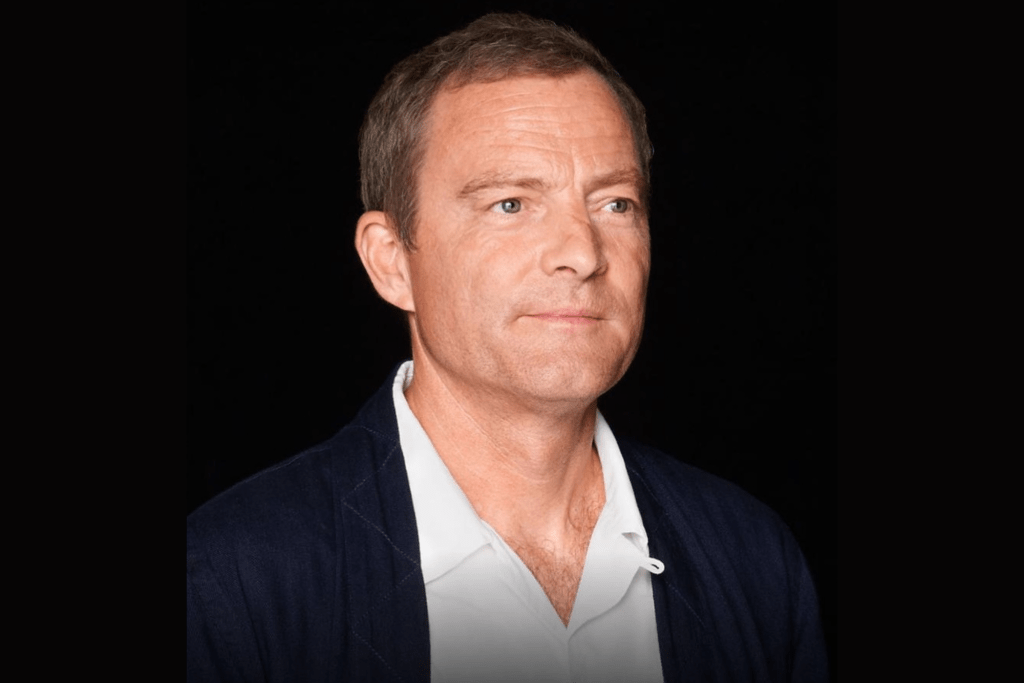
Dyson has become the ultimate disruptor by focusing on mechanical and physical enhancements to drive innovation. Best known for inventing the bagless cyclonic vacuum cleaner, which uses high-speed centrifugal force to collect dust and debris instead of a traditional bag, the company single-handedly revolutionized the floor care sector. Then came luxury styling tools, such as the Supersonic hairdryer and Airwrap multi-styler, which set new standards in hair care. According to Chief Engineer, Jake Dyson, dental care is up next with the launch of CameraJet, the only toothbrush equipped with a camera and powered by a proprietary algorithm to floss teeth while brushing.
He said, “It’s our investment in core technologies that enables us to diversify and disrupt various categories. That’s why we invested 10 years into developing the smallest digital motors to transform vacuum cleaners and hairdryers. Our breakthroughs have come about through mechanical engineering, but it’s our research in robotics and the use of cameras and vision systems that have shifted our approach and opened up new ways to innovate and improve our products.”
“We’re now using artificial intelligence, vision systems and machine learning to allow the machines to understand the environment they are operating in. The approach is the same whether it’s operating in your mouth, on your hair or in your home.”
A new era of innovation
Working closely with his father, James Dyson, founder and Chairman of Dyson, Jake leads teams across the UK and Singapore to bring new products to market.
Speaking about their dynamic, he said: “He’s very focused on engineering and designing the products we create now, and the efficiency of the business. I’m very focused on how we shape that for the future and what we drive towards, and it works very well.”
While the old guard is still engaged and impactful, Jake is ushering in a new wave of product development that focuses on software connectivity and future technology. He admits that while the company continues to trailblaze, it does require a bit of negotiating.

“When it comes to connectivity and what you can do through software and intelligence and machine learning, when you have 70-year-old board members who are sitting around the table, they just don’t quite understand it. But, you can see it. You can see the possibility, and it’s fine because sometimes it’s taken like a year for them to say, “Ooh, ooh, maybe we should do that” – I said that a year ago. But they recognize that, and now it’s a lot more immediate. I say we need to do this, and they say, ‘Okay. We’re doing it.’”
As Dyson’s list of groundbreaking rollouts continues to grow, Jake reflects on the achievement he’s most proud of.
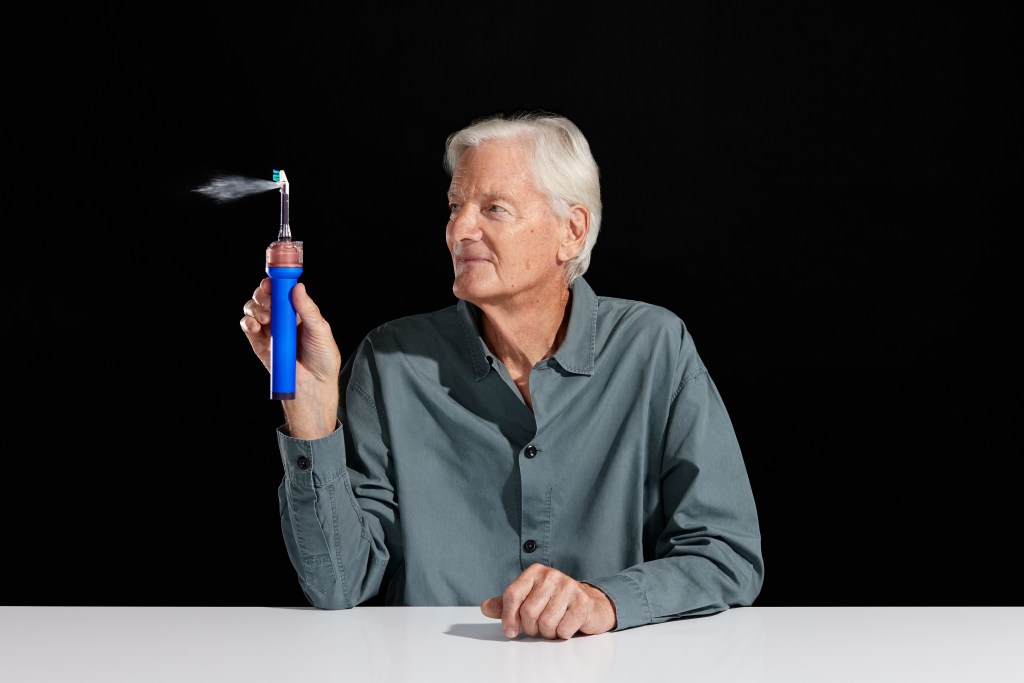
“This is pretty incredible,” he said, gesturing to the recently launched CameraJet, positioned on the table as a centerpiece.
“I think our intelligence going on in the background to measure and see every machine when it’s connected is remarkable. And, it’s because we have a lot of sensors in our machines to make sure that the batteries talk to the motor and everything’s performing to peak performance. So those sensors are already in there and to be able to get that information back out into a dashboard is very advanced and fantastic. I think that what we’re doing with vision systems in the background is also amazing.”
“And, I’m very, very proud of our research teams. We’re the type of business where we give them freedom to go and search things – to explore – but what they discover is mind-blowing, really, really mind-blowing…research and our scientists are absolutely fundamental to future innovation.”
Pioneering progress
For decades, oral care routines have remained the same with separate steps for brushing, flossing and rinsing. According to Dyson’s Oral Care Usage and Attitudes Study commissioned in 2017, nine out of ten people do not floss as regularly as they should and people spend an average of 45 seconds brushing their teeth, which is well below the recommended two minutes. Furthermore, the World Health Organization’s 2025 Oral Health Status Report confirmed that nearly 3.7 billion people are estimated to be affected by oral disease globally. Meanwhile, brushing technology remained unchanged since the 1980s. Dyson engineers saw this as a real problem to solve, so they fixated on the idea of training a camera to target gaps and fire a jet to floss teeth.
“I thought, if you can get it that accurate and it hits the right point between the gap, it will floss your teeth. We’ve also designed all these bristles around the curvature of the tooth to have better cleaning action on your teeth, so that’s why it’s more than a toothbrush. We reconsidered everything about it, even the vibration and oscillation and how that cleans your teeth. I mean, you have to because if you do a camera jet floss and your toothbrush is not as good as someone else’s, you know, it fails. So it all has to be better – the whole system.”
The Dyson CameraJet rolls all of the oral care steps into one. It is the only toothbrush with a camera powered by Gap Optical Targeting to identify gaps between teeth and precision-floss while you brush. An integrated 100,000 pixel macro lens camera powered by machine learning detects, tracks and predicts gaps between teeth in real time, triggering a precision jet burst of mouth rinse exactly where it is needed. It is the result of six years of research, development and engineering, challenging every aspect of conventional oral care.
RELATED: 10 Emerging Technologies of 2026 by Dubai Future Foundation and World Economic Forum
Paving the way forward
Including the CameraJet, Dyson recently launched six new products built around this emerging concept of intelligence. While this is cause for celebration, it’s also an opportune time to refine internal processes as the company shifts from being conservative to more experimental. Jake Dyson asserts that it’s important to strike a balance between product iteration and market readiness. He discussed the downside of being fixated on launching products that work perfectly, mentioning a missed opportunity two years ago.
“We have made mistakes before where we thought that [a product or feature] was not of value, but actually it really, really was. And other companies have gone ahead and done things that we did six years ago, but we didn’t put into the market, and we kicked ourselves. And it’s very difficult because you can’t really go out there and get customer feedback because they see what you’re doing. I think that we’ve gone through a phase of being quite conservative, and now we’re coming out of it, where if anything’s interesting and it’s good, then we should do it.”
“I think most ideas we think about now, we wouldn’t think of unless there was something interesting in it that people would find valuable or useful. So most of the things we think about, we put into products. I think more now than we would have done four or five years ago.”
He offers the same advice to entrepreneurs who build products, as opposed to delivering services.
“If you have a breakthrough idea, then go for it. Don’t stop and don’t give up and get it out there as fast as possible. But don’t just have one thing because there’ll be a copy of it in the market in three months at half the price.”
“We’ve been working on CameraJet for about six years. In the last two years, machine learning started to work very well, and the training with AI made it remarkably good.”
“We won’t launch a product unless it really works and is better than anyone else’s. But it has to really work. Our company is about honesty, and when we tell you what a product is going to do for you, it has to be honest and true.”
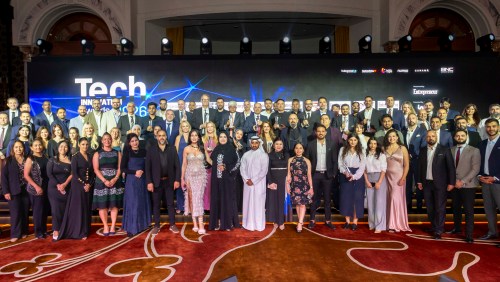
RELATED: The Recap: Entrepreneur Middle East’s Tech Innovation Awards 2026
Dyson has become the ultimate disruptor by focusing on mechanical and physical enhancements to drive innovation. Best known for inventing the bagless cyclonic vacuum cleaner, which uses high-speed centrifugal force to collect dust and debris instead of a traditional bag, the company single-handedly revolutionized the floor care sector. Then came luxury styling tools, such as the Supersonic hairdryer and Airwrap multi-styler, which set new standards in hair care. According to Chief Engineer, Jake Dyson, dental care is up next with the launch of CameraJet, the only toothbrush equipped with a camera and powered by a proprietary algorithm to floss teeth while brushing.
He said, “It’s our investment in core technologies that enables us to diversify and disrupt various categories. That’s why we invested 10 years into developing the smallest digital motors to transform vacuum cleaners and hairdryers. Our breakthroughs have come about through mechanical engineering, but it’s our research in robotics and the use of cameras and vision systems that have shifted our approach and opened up new ways to innovate and improve our products.”
“We’re now using artificial intelligence, vision systems and machine learning to allow the machines to understand the environment they are operating in. The approach is the same whether it’s operating in your mouth, on your hair or in your home.”

Tamara Clarke • Columnist
Tamara Clarke, a former software development professional, is the tech and lifestyle enthusiast behind The... Read more