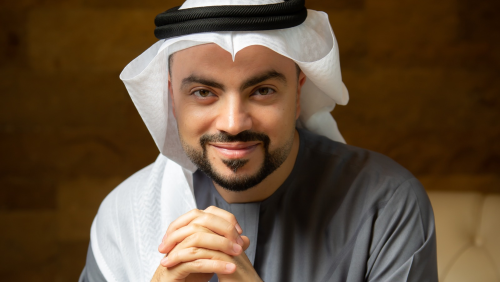
Investing in Minds: How Riadh Al Zubaidi’s Manarway Is Bringing AI Innovation to Iraqi School Education
Having left Iraq as a teenager and sought refuge and education in France, Al Zubaidi is now drawing on his experience as a space engineer to transform education in his home country through Manarway, an AI-powered learning platform designed to make quality education more accessible and interactive for Iraqi students.
You're reading Entrepreneur Middle East, an international franchise of Entrepreneur Media.
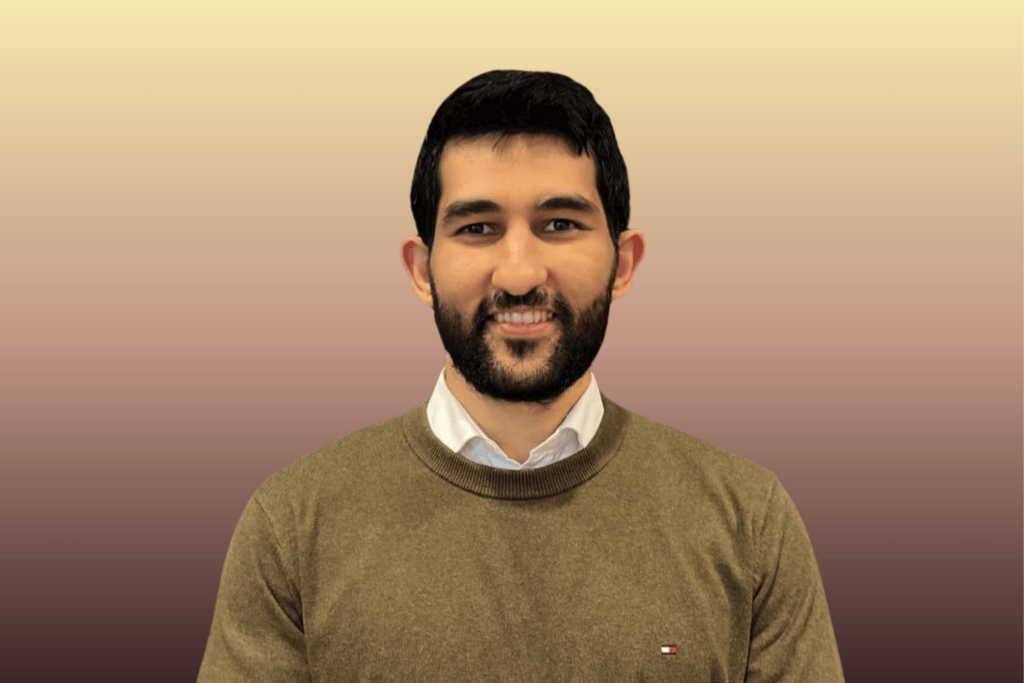
Officially launched in October 2026, Manarway is an AI-powered learning platform for students in Iraq that was conceptualized in 2025 by two Iraqi individuals who crossed paths, thousands of miles away from their homeland, in London – namely, Riadh Al Zubaidi, a space engineer and former Airbus professional, and Ramez Chedly, who, at the time, had already scaled over 12 education businesses that have today reached more than 300,000 users. Al Zubaidi, who left the war-stricken Iraq as a teenager and reached France as a refugee, and “never stopped wanting to help the students who are still there [in Iraq]”, therefore asked Chedly how he could help, particularly given his engineering background. “His answer was education with AI,” Al Zubaidi recalls.
“I looked at what Iraqi students face, a problem shared across our region but worse in Iraq: few labs, little interactivity, theory after theory. Students learn for the exam without understanding, because they never see or practise anything. I wanted to bring them the interactive quality I had in Europe. Airbus taught me quality, because in space nothing is allowed to fail. Additionally, my MBA at EDHEC, one of the top French business schools, taught me the business side, and my work on telecom partnerships at a Fortune 500 company will help us scale. Manarway is where both meet.”
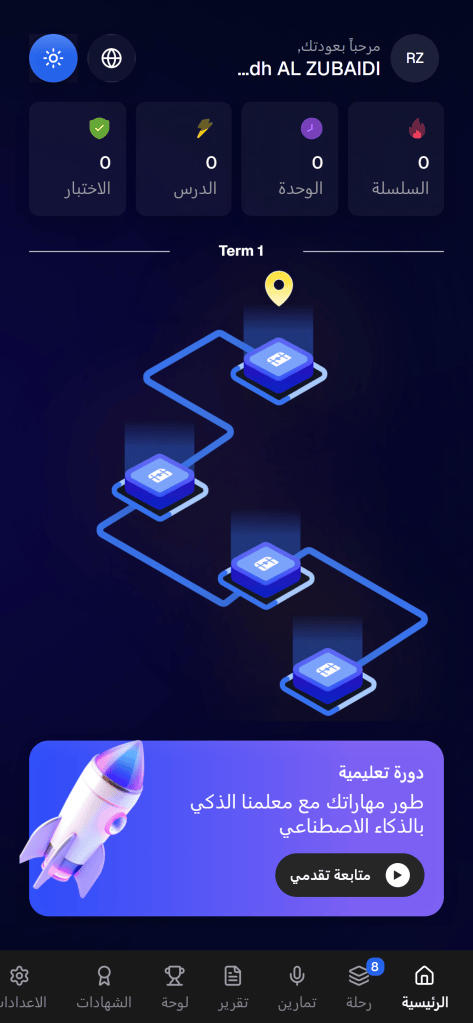
Designed to move beyond traditional textbook-based learning, Manarway combines AI-powered assistance, interactive lessons, and gamified learning experiences to help students better understand the subjects they study. Much of this model has to do with Al Zubaidi’s own educational and professional journeys, he explains. “As an engineer, I learned by seeing how a system works: models, simulations, tests. Not by heart. That is why Manarway is built around interaction: 3D models, virtual labs, stories the student can discuss with the AI, and audio for every word of a lesson. On quality, we did not pour textbooks into an AI. Iraqi teachers on our team rewrote the official curriculum chapter by chapter for digital delivery, which is why Iraq took a full year. The AI tutor is grounded in that curriculum, so its answers stay on what the student will be examined on. For science and technology, we build the 3D labs with the latest AI models, and we update the content as the curriculum and the tools move forward.”
At the heart of this approach is a simple goal: to help students understand what they learn, rather than simply memorize it. As Al Zubaidi explains, “Manarway teaches students to understand, not to memorize. We started with English: we took the official Iraqi English curriculum and turned it into something modern, fun and interactive. With an AI speaking coach, students practise speaking every day, not only grammar for the exam. English opens international universities, scholarships, remote work and the global internet. Next come our 3D courses. When a student turns a cell in 3D, takes it apart and asks the AI tutor why, they learn to ask questions. That habit is what universities and employers look for.”
“Every student also gets a private tutor on their phone, in Arabic and English, at any hour,” Al Zubaidi adds. “Today that is a luxury only some families can pay for. If a student in Basra can study like a student in Dubai or Paris, their options after school change completely. Some of them will build the next Iraqi startups.”
To bring this vision to fruition, Manarway’s team today operates across multiple countries, with teachers and account managers based in Iraq, other team members in France, and technical operations spread across North Africa and Thailand. Within the first two weeks of its launch, the platform recorded over 500 sign-ups and nearly 6,000 website visitors, while its social media content garnered more than 122,000 views.
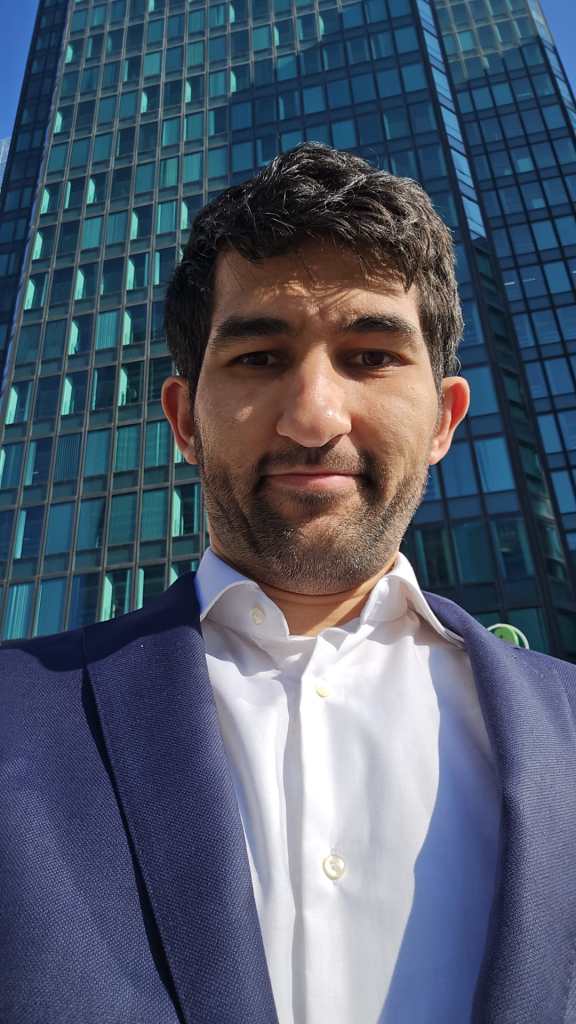
Image courtesy Manarway
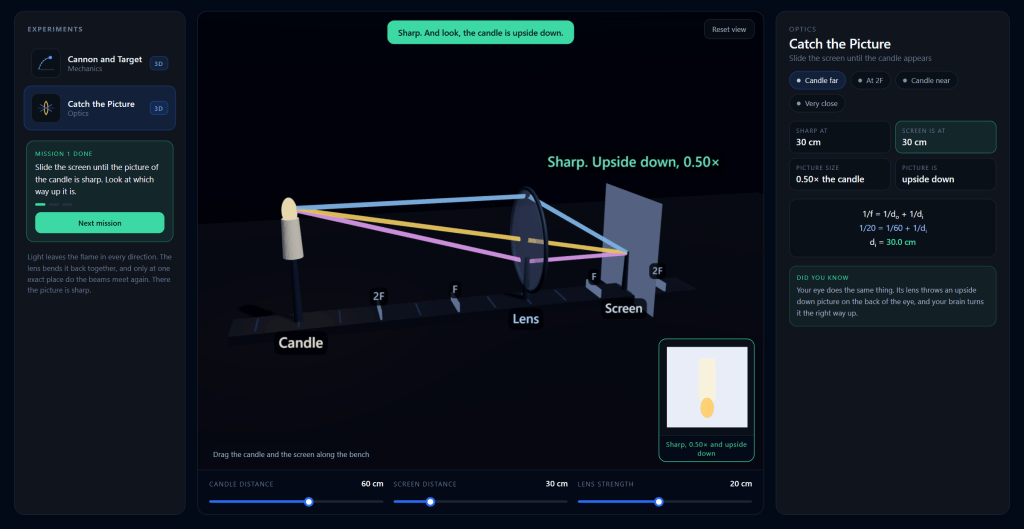
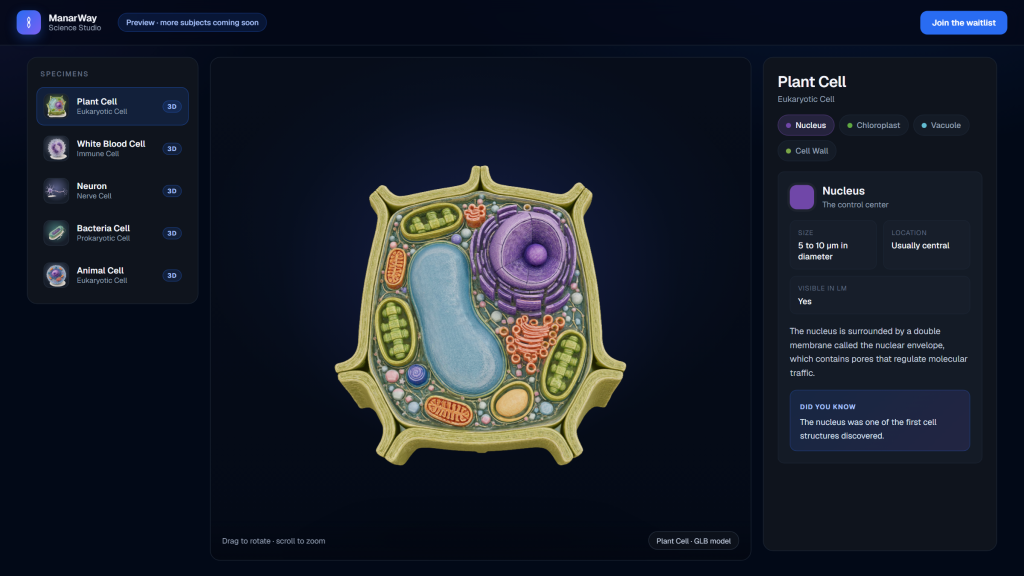
Although Manarway is still in its early days, Al Zubaidi believes his startup could set a precedent for how Iraq’s education system could progress. “Many public schools have no laboratory at all, and classes are too big for a teacher to show every student an experiment. On Manarway, the lab is on the phone,” he explains. “A student can open a real cell in 3D and see the nucleus and the chloroplasts, or move a candle and a lens on an optical bench and watch the image turn upside down. Biology, physics, chemistry and maths labs are rolling out now. The AI tutor answers the student’s own question, and about 90% of the features work without the internet. The precedent I hope for is simple: no student should be told they cannot do science because their school has no lab. If a phone can bring the lab and the tutor, resources stop being the excuse.”
So far, Manarway has been entirely self-funded, with Al Zubaidi investing his personal savings and even selling both his cars to finance the startup. While it has yet to raise external funding, the startup has joined the NVIDIA Inception program and secured participation at LEAP, Saudi Arabia’s major technology event, after being selected from over 2,000 applicants. Al Zubaidi is also in the process of entering an international UNESCO competition focused on education and science.
However, despite these developments, building and scaling an edtech startup in Iraq has come with its own set of challenges. “The challenges are structural. Procedures in Iraq are slow and not yet built for startups, and some requirements, such as around $150,000 for an education platform, weigh size over quality,” he explains. “Support for private startups is still to come. A culture of learning by heart also takes time to change. One of the region’s biggest telecom operators has confirmed its willingness to partner with us, and we are currently working through the paperwork.”
As Al Zubaidi now looks to the future, he’s clear about one thing: his ambitions for Manarway go beyond his motherland. “I started with Iraq because I am building Manarway with my own means, but make no mistake: my goal is the whole region,” he declares. “In five to seven years, I want Manarway to change how students across the Middle East learn. Our system adapts to a new country’s curriculum in about two months, so the method can travel. The goal is a generation that truly understands what it learns, instead of memorising for exams. Students who understand can innovate, build our countries and make our region a pioneer in science. Once revenue allows, a non profit arm will also bring this to refugee camps.
“Success for me is a student in a crowded school, with only a phone, who understands, passes exams and gets into a good university. As an Iraqi who left as a teenager, that is how I want to invest in my country: in the students who stayed.”
Officially launched in October 2026, Manarway is an AI-powered learning platform for students in Iraq that was conceptualized in 2025 by two Iraqi individuals who crossed paths, thousands of miles away from their homeland, in London – namely, Riadh Al Zubaidi, a space engineer and former Airbus professional, and Ramez Chedly, who, at the time, had already scaled over 12 education businesses that have today reached more than 300,000 users. Al Zubaidi, who left the war-stricken Iraq as a teenager and reached France as a refugee, and “never stopped wanting to help the students who are still there [in Iraq]”, therefore asked Chedly how he could help, particularly given his engineering background. “His answer was education with AI,” Al Zubaidi recalls.
“I looked at what Iraqi students face, a problem shared across our region but worse in Iraq: few labs, little interactivity, theory after theory. Students learn for the exam without understanding, because they never see or practise anything. I wanted to bring them the interactive quality I had in Europe. Airbus taught me quality, because in space nothing is allowed to fail. Additionally, my MBA at EDHEC, one of the top French business schools, taught me the business side, and my work on telecom partnerships at a Fortune 500 company will help us scale. Manarway is where both meet.”
Designed to move beyond traditional textbook-based learning, Manarway combines AI-powered assistance, interactive lessons, and gamified learning experiences to help students better understand the subjects they study. Much of this model has to do with Al Zubaidi’s own educational and professional journeys, he explains. “As an engineer, I learned by seeing how a system works: models, simulations, tests. Not by heart. That is why Manarway is built around interaction: 3D models, virtual labs, stories the student can discuss with the AI, and audio for every word of a lesson. On quality, we did not pour textbooks into an AI. Iraqi teachers on our team rewrote the official curriculum chapter by chapter for digital delivery, which is why Iraq took a full year. The AI tutor is grounded in that curriculum, so its answers stay on what the student will be examined on. For science and technology, we build the 3D labs with the latest AI models, and we update the content as the curriculum and the tools move forward.”

Aalia Mehreen Ahmed • Senior Features Editor, Entrepreneur Middle East
Entrepreneur Staff
Senior Features Editor at Entrepreneur Middle East and host of Anchored Echoes, with nearly seven... Read more