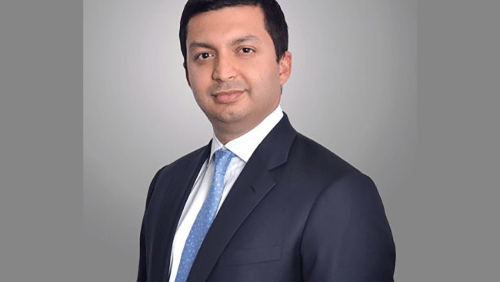
Why “Crazy John” Says Japan and the GCC Are Poised to Co-Create the Next Innovation Wave
At SuperReturn Saudi in Riyadh, “Crazy John” John Kojiro Moriwaka isn’t pitching hype—he’s mapping where capital should go next.
Opinions expressed by Entrepreneur contributors are their own.
You're reading Entrepreneur Middle East, an international franchise of Entrepreneur Media.
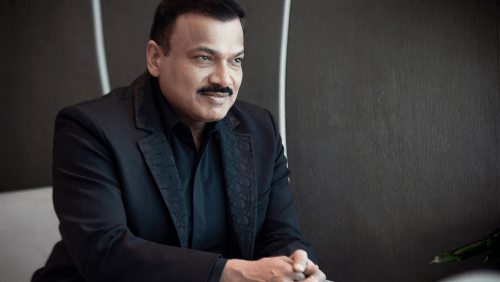
At SuperReturn Saudi in Riyadh, where capital meets conviction, “Crazy John” John Kojiro Moriwaka moves easily between venture capitalists, family offices, and founders. The nickname sticks, but the strategy is precise. As an advisor to VCs, LPs, and startups across continents, Moriwaka sits at the intersection of money and momentum. He had just come from Davos. Now, in Riyadh, he is scanning the horizon again.
SuperReturn, he says, is where both sides of the venture equation converge. “I advise LPs and VCs,” he explains, which makes gatherings like this less about networking and more about pattern recognition. Who is allocating? Who is building? Where is capital accelerating—and where is it missing?
For Moriwaka, the Middle East is not yet a portfolio story. His firms invest globally, but not—so far—in the GCC. That absence, however, is precisely why he is here. “We see a great opportunity for European and Japanese investors to co-invest in the region,” he says, pointing out that while Chinese and American capital flows are visible and strong, Japan and much of Europe remain relatively underrepresented.
That gap, he suggests, is not a weakness but an opening.
The GCC’s transformation agenda, sovereign wealth activity, and appetite for frontier innovation create what he calls “next innovation” potential. It is not merely about deploying capital—it is about shaping ecosystems. For Japanese and European LPs looking for diversification beyond traditional corridors, the Gulf offers something more than returns: relevance.
Moriwaka speaks from experience in ecosystem building. In Japan, he has been deeply involved in cultivating startup clusters across the country. Contrary to the outdated stereotype of Japan as a conservative, slow-moving market, he describes a nation reorganizing itself around entrepreneurial energy.
There are nine startup ecosystems across Japan, spread over eight major cities, each with a distinct industrial DNA.
Hokkaido leverages its vast land mass to lead in agritech and even space tech. Tohoku, anchored by Tohoku University, is strong in MedTech, combining medical science and engineering excellence. Tokyo, as expected, is dominant across sectors. Nagoya thrives in mobility, powered by Toyota’s industrial gravity. Osaka stands out in pharmaceuticals and MedTech. Hiroshima, shaped by history, champions SDGs and peace-driven innovation. Kyushu is carving out space in manufacturing, Web3, AI, and blockchain. Okinawa is actively building its own identity within this mosaic.
This is not the Japan of the 1990s. It is modular, specialized, and increasingly global.
When asked whether entrepreneurship in Japan has finally shed its image as “not very exciting,” Moriwaka answers without hesitation: it has changed.
He points to Sushi Tech—short for Sustainable Technology—as evidence. Not a culinary festival, but a global innovation conference with more than 60,000 attendees last year. As an ambassador for the event, Moriwaka has witnessed firsthand how Japan is repositioning itself as a hub for sustainability-driven innovation. The upcoming edition is expected to draw even larger crowds, welcoming startups, investors, and corporates from around the world.
If Davos signals where the world’s macro narratives are heading, Sushi Tech signals where Japan wants to compete.
Yet perhaps his most provocative insight lies in how he reframes Japan’s demographic challenges. An aging population and declining birth rate are often cited as structural headwinds. Moriwaka sees them as a laboratory.
“Living longer is the next good innovation and investment opportunity,” he says.
Longevity, healthspan, elderly care technologies, robotics, AI-enabled medical services—these are not defensive sectors. They are growth industries born out of necessity. Japan, being one of the world’s most advanced aging societies, becomes a blueprint rather than a warning sign.
For GCC investors, this lens is particularly relevant. As Gulf economies diversify and recalibrate their social models, cross-regional collaboration in health, sustainable infrastructure, and advanced manufacturing could create powerful new corridors between Riyadh and Tokyo.
At SuperReturn Saudi, amid private equity dealmaking and sovereign ambition, Moriwaka’s message is clear: the future of venture is increasingly multi-polar. The next wave will not be driven by one geography alone, but by co-investment, cross-ecosystem learning, and strategic partnerships that bridge East Asia, Europe, and the Middle East.
“Crazy John” may embrace the moniker, but there is nothing chaotic about his thesis.
The capital is global. The ecosystems are specialized. The opportunity lies in connecting them.
And Riyadh, he believes, is becoming one of the places where those connections begin.
At SuperReturn Saudi in Riyadh, where capital meets conviction, “Crazy John” John Kojiro Moriwaka moves easily between venture capitalists, family offices, and founders. The nickname sticks, but the strategy is precise. As an advisor to VCs, LPs, and startups across continents, Moriwaka sits at the intersection of money and momentum. He had just come from Davos. Now, in Riyadh, he is scanning the horizon again.
SuperReturn, he says, is where both sides of the venture equation converge. “I advise LPs and VCs,” he explains, which makes gatherings like this less about networking and more about pattern recognition. Who is allocating? Who is building? Where is capital accelerating—and where is it missing?
For Moriwaka, the Middle East is not yet a portfolio story. His firms invest globally, but not—so far—in the GCC. That absence, however, is precisely why he is here. “We see a great opportunity for European and Japanese investors to co-invest in the region,” he says, pointing out that while Chinese and American capital flows are visible and strong, Japan and much of Europe remain relatively underrepresented.

Erika Masako Welch • Chief Content Officer, Lucidity Insights
Erika Masako Welch is the Chief Content Officer of Lucidity Insights.