The Boardroom Gap Isn’t Talent—It’s Trust: Katja Rieger on Why the GCC’s Next Leap Needs Women at the Table
At SuperReturn Saudi, Katja Rieger of Women for Boards GCC explains why the real barrier to women joining boards isn’t talent—it’s trusted access to decision makers, and how the region is accelerating change.
Opinions expressed by Entrepreneur contributors are their own.
You're reading Entrepreneur Middle East, an international franchise of Entrepreneur Media.
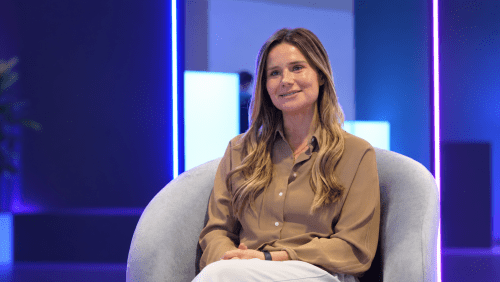
At SuperReturn Saudi, where capital, governance, and ambition mingle in the same crowded corridors, Katja Rieger is talking about a different kind of return—one measured not only in multiples, but in better decisions. Rieger leads Women for Boards in the GCC, and her mission is as direct as it is overdue: get more women into the region’s top decision-making bodies, not as a symbolic gesture, but as a governance advantage.
Rieger didn’t arrive at this work through slogans. She arrived through exposure—watching how decisions are made, who is in the room, and what gets missed when perspectives are too similar. “Women offer a valuable, different perspective,” she says, on risks, opportunities, and outcomes “for all stakeholders.” It’s the language of boardrooms—risk, oversight, accountability—delivered with the clarity of someone who has seen the cost of blind spots up close.
Her credibility is anchored in practice, not theory. A board governance advisor by trade, Rieger has spent the past two years working at Aramco—an experience that places her squarely inside one of the region’s most consequential corporate environments. That proximity gives her a pragmatic lens on how influence actually moves: through credibility, track record, and—crucially—trust.
And this is where her argument gets sharp.
The issue, she insists, is not a shortage of qualified women. If anything, she describes the GCC as rich in capability: “highly accomplished, well-educated, smart, and caring women” who actively want to make a difference. The bottleneck isn’t competence. It’s connectivity.
“The biggest barrier for women entering boards is the lack of connection—and trusted connection—to the decision makers,” Rieger says. That phrase matters, because it points to the real mechanics of board appointments. Boards are not only skills matrices; they are networks. They are reputations. They are shortlists built on who is known, who is vouched for, who is considered “safe hands” when the stakes are high.
In other words: merit is necessary, but it often isn’t sufficient. The deciding factor is frequently trust—earned, yes, but also granted through proximity.
Rieger’s work with Women for Boards is designed to close that distance. Not by asking for favors, but by changing how boardrooms source perspective and talent in the first place. She speaks about actively bringing men and women together in working groups, creating environments where collaboration is visible and credibility can form naturally. The goal is not to “convince” anyone with abstract arguments, but to make the value undeniable in real time—so that decision makers experience it, rather than debate it.
When men and women work side by side, she says, men can see the “amazing perspectives women can bring.” It’s a simple idea with an unusually high success rate: don’t sell people on the concept of diversity—let them witness how it improves decision quality, reduces groupthink, and expands the set of risks and opportunities under discussion.
What makes this conversation particularly relevant in Riyadh is Rieger’s belief that the GCC is not lagging—it’s moving. She acknowledges that this is a global challenge, not a regional quirk. But she argues the GCC, and Saudi Arabia in particular, are “doing better than the rest of the world” when it comes to supporting women into decision-making roles.
Still, she’s unsentimental about timelines. Vision 2030 has only been in place for a decade, she notes, which means there is still “catch up to do.” That isn’t a critique so much as a reality check: systemic change is measurable, but it’s not instant. Representation shifts when pipelines mature, when networks widen, when selection habits evolve—and when institutions decide that governance standards must rise in step with growth ambitions.
In the context of Saudi’s transformation, the boardroom conversation becomes more than an HR milestone. It becomes a competitiveness issue. As markets deepen, as private capital grows, as global partners look for maturity and transparency, governance becomes part of the investment thesis. Board composition is a signal. It tells investors how a company thinks, how it challenges itself, and whether it is building resilience or relying on consensus.
That is why Rieger’s presence at SuperReturn Saudi makes strategic sense. She isn’t here to lecture the investment community; she’s here because she believes many of the funds in the room genuinely want to create positive change—“in their country, the region, and globally.” And, she adds, they increasingly understand that they need women to do that.
This is the quiet shift Rieger is betting on: the moment when inclusion stops being positioned as “progress” and starts being treated as performance. When women on boards are not framed as a social objective, but as an operating advantage—particularly in periods of volatility, transition, and reinvention.
The logic is hard to argue with. A board’s job is to test assumptions, interrogate risk, and see around corners. If the board’s composition narrows the range of lived experience and professional vantage points, it doesn’t matter how brilliant the individuals are—the collective field of vision shrinks. Diverse perspectives, when integrated well, broaden it.
Rieger’s focus, then, is not simply to open doors. It’s to redesign the hallway: to build the trusted connections that turn impressive CVs into credible candidates, and credible candidates into board appointments. That means visibility, sponsorship, collaboration, and real mechanisms for men and women to work together where the stakes are meaningful.
In a region moving at pace—building new sectors, attracting global capital, and rewriting what “business as usual” looks like—the boardroom can’t afford to be the last place where the future is politely kept outside.
At SuperReturn Saudi, amid the talk of deals and deployment, Rieger’s message lands as a governance truth: if you want better outcomes, you need better inputs. And if you want better inputs, you need the full spectrum of talent—not watching from the sidelines, but shaping the decisions that matter most.
At SuperReturn Saudi, where capital, governance, and ambition mingle in the same crowded corridors, Katja Rieger is talking about a different kind of return—one measured not only in multiples, but in better decisions. Rieger leads Women for Boards in the GCC, and her mission is as direct as it is overdue: get more women into the region’s top decision-making bodies, not as a symbolic gesture, but as a governance advantage.
Rieger didn’t arrive at this work through slogans. She arrived through exposure—watching how decisions are made, who is in the room, and what gets missed when perspectives are too similar. “Women offer a valuable, different perspective,” she says, on risks, opportunities, and outcomes “for all stakeholders.” It’s the language of boardrooms—risk, oversight, accountability—delivered with the clarity of someone who has seen the cost of blind spots up close.
Her credibility is anchored in practice, not theory. A board governance advisor by trade, Rieger has spent the past two years working at Aramco—an experience that places her squarely inside one of the region’s most consequential corporate environments. That proximity gives her a pragmatic lens on how influence actually moves: through credibility, track record, and—crucially—trust.

Erika Masako Welch • Chief Content Officer, Lucidity Insights
Erika Masako Welch is the Chief Content Officer of Lucidity Insights.