The AI CEO: Why Future Business Leaders Must Think Like Engineers
Just as engineers design resilient and scalable systems, modern executives must think in terms of interconnected business structures that leverage AI for efficiency and growth.

Shutterstock
Opinions expressed by Entrepreneur contributors are their own.
You're reading Entrepreneur Middle East, an international franchise of Entrepreneur Media.
In an era where artificial intelligence is redefining industries at an unprecedented pace, the traditional business playbook is being rewritten. The most successful leaders today are not just visionaries or strategists—they are problem-solvers who think like engineers and leverage artificial intelligence (AI) to drive innovation. This is particularly relevant in fast-growing markets like Dubai and the broader Middle East and Africa (MEA), where AI and digital transformation are rapidly shaping the future of business.
First-Principles Thinking: Redefining Business Challenges with AI
Elon Musk popularized first-principles thinking in business, but its origins lie in engineering and physics. Instead of reasoning by analogy—adopting existing methods or tweaking established models—leaders applying first principles deconstruct problems to their most fundamental truths.
For example, rather than asking, “How do we improve our marketing funnel?” an AI-driven CEO might ask, “What are the fundamental drivers of customer conversion, and how can AI optimize them from the ground up?” With AI-powered analytics and predictive modeling, leaders can move beyond assumptions and use data-driven insights to drive exponential improvements. In cities like Dubai, where AI is a core government priority, leaders who adopt this mindset are better positioned to stay ahead.
Systems Design: Orchestrating AI-Driven Organizations
Just as engineers design resilient and scalable systems, modern executives must think in terms of interconnected business structures that leverage AI for efficiency and growth. A company is not just departments working in silos; it’s a dynamic system where each function interacts with AI-powered insights and automation.
A CEO with an AI and engineering mindset examines:
Dependencies and Bottlenecks: What are the critical constraints in our organization’s workflow, and how can AI optimize them?
Feedback Loops: How do AI-driven insights enhance decision-making across departments?
Scalability: Are our AI and automation strategies designed to handle exponential growth?
In MEA, where startups are scaling rapidly, applying AI-driven systems thinking can help leaders navigate infrastructure challenges, regulatory environments, and diverse market needs.
Iteration: The Power of AI-Driven Experimentation
In software development, iteration is the cornerstone of progress. Products evolve through continuous feedback, testing, and improvement. AI accelerates this process by providing real-time data, enabling rapid decision-making and automated optimization.
Amazon’s Jeff Bezos encapsulates this with his philosophy of high-velocity decision-making. Companies that prioritize AI-driven iterative learning—whether through A/B testing, AI-enhanced MVP launches, or adaptive strategy—stay ahead of slower, more rigid competitors. This approach is especially relevant in Dubai’s tech ecosystem, where agility and AI adoption define successful enterprises.
AI-Driven Strategy: The Shift to Intelligent Leadership
The most disruptive companies today are AI-centric, regardless of their industry. Whether it’s Tesla in automotive, OpenAI in research, or Amazon in e-commerce, the defining factor is AI-driven decision-making.
For CEOs, this means:
Embracing AI Automation: Using AI and machine learning to enhance operations, from customer service to supply chain management.
Leveraging AI-Driven Data Analytics: Building a culture where business decisions are guided by predictive analytics and machine learning, not just intuition.
Agility Over Bureaucracy: Replacing hierarchical decision-making with AI-augmented, cross-functional teams that can iterate quickly.
Governments and enterprises in the UAE are already investing heavily in AI, blockchain, and automation, making AI fluency a non-negotiable skill set for leaders operating in the region.
Practical Takeaways for Today’s AI-Driven Leaders
Deconstruct Problems Like an Engineer – Apply first-principles thinking to break down challenges and reimagine AI-powered solutions from the ground up.
Design Your Organization as an AI-Optimized System – Identify interdependencies, optimize workflows with AI, and build resilience into your business model.
Test, Learn, Adapt with AI – Cultivate a culture of continuous iteration, using AI-driven insights for rapid experimentation and course correction.
Lead with an AI-First Mindset – Even if you’re not in tech, embrace AI automation, leverage data science, and build an intelligent, AI-powered organization.
The next generation of CEOs will be those who merge business acumen with an engineer’s approach to AI-powered problem-solving. In a world defined by technological acceleration, thinking like an engineer and embracing AI isn’t optional—it’s the key to leading the future, particularly in regions like Dubai and MEA, where AI-driven economies are booming.
Related: Creating Cyber Immunity in the Era of Interconnected Technologies: The How-To
In an era where artificial intelligence is redefining industries at an unprecedented pace, the traditional business playbook is being rewritten. The most successful leaders today are not just visionaries or strategists—they are problem-solvers who think like engineers and leverage artificial intelligence (AI) to drive innovation. This is particularly relevant in fast-growing markets like Dubai and the broader Middle East and Africa (MEA), where AI and digital transformation are rapidly shaping the future of business.
First-Principles Thinking: Redefining Business Challenges with AI
Elon Musk popularized first-principles thinking in business, but its origins lie in engineering and physics. Instead of reasoning by analogy—adopting existing methods or tweaking established models—leaders applying first principles deconstruct problems to their most fundamental truths.

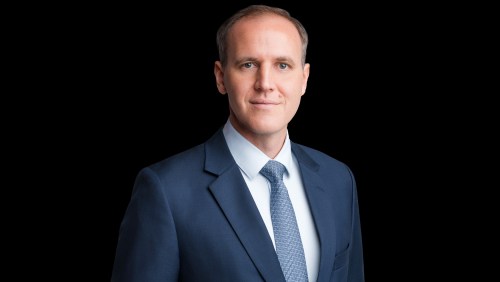
Hussam Mohsineh • Digital Economy expert and serial entrepreneur
Hussam Mohsineh is a serial entrepreneur and tech communities leader serving a region that aspires... Read more