Moving Forward With Hope: How The Israel-UAE Accord Can Enable The Countries’ Startup Ecosystems To Benefit From Each Other
The peace agreement between Israel and the United Arab Emirates was not named the “Abraham Accords” in vain- its name symbolizes that respect for the past and the religion that sits in the core being of each one of these two countries.

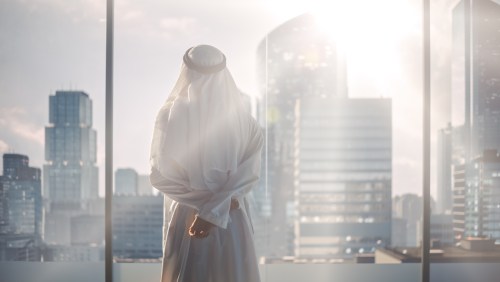
Shutterstock.com
Opinions expressed by Entrepreneur contributors are their own.
You're reading Entrepreneur Middle East, an international franchise of Entrepreneur Media.
These are exciting, unpredictable times in the Middle East and all over the globe.
On one hand, the COVID-19 crisis poses economic threats and exposes political weaknesses, testing the will and capability of individuals, companies, and governments to adapt fast to a new, rapidly changing reality. As tech entrepreneurs, we are quite familiar with the need to act fast and with determination, towards scalable and sustainable solutions. It is at the core of our work.
On the other hand, after decades of segregation and fear, a new word is now spreading between the Mediterranean and the Gulf: hope. This word is now inspiring many in Israel and the United Arab Emirates, during an economically challenging period for both countries, for the region, and for the world.
The Israel-UAE accord has the potential to lead to successful collaborations between the startup ecosystems of the two countries, for a number of reasons.
First and foremost, Israel and the UAE are two nations that have a lot in common. Both have relatively small populations, as well as modest geographic territories, in comparison to most of their neighbours. Both societies are driven by innovation, and thrive on the usage of new technologies. Both countries are considered relatively open and inviting to foreigners. But most importantly, both economies are very well versed in the language of international business.
Related: The Future Is Bright: Five Top Industries For Tech Startups Right Now
An example of how the above factors can come into play, and how the startup ecosystems in both Israel and the UAE can benefit as a result of the recent accords, is through Salaryo, a fintech company that I have the privilege to lead, while also being one of its original founders. To date, Salaryo, is the first Israeli startup to publicly announce an investment from a UAE-based fund.
Salaryo provides small business owners, entrepreneurs, and freelancers with instant access to business loans and working capital in the United States, helping them to cope with one of the most challenging financial periods of our times. Now that we have made our first step in the UAE’s institutional investor landscape, we can continue to explore new strategic partnerships that may enable us to extend help to small businesses and entrepreneurs in the UAE, Bahrain, and hopefully other countries in the region. Together, we can keep spreading peace and prosperity throughout the region.
The Salaryo case is also a good representation of how the two respective business cultures of Israel and the UAE can complement each other to perfection. While Israel brings to the table creativity, velocity, and flexibility, the UAE brings ambition, long-term vision, and the capability to manage large scale, global transactions. With the two sets of qualities combined, we can turn aspiring and inspiring ideas into a reality- today.
Finally, both Israel and the UAE are countries that live their current present with a brave view of the future, along with a strong connection to their traditions, beliefs, and past. The peace agreement between Israel and the United Arab Emirates was not named the “Abraham Accords” in vain- its name symbolizes that respect for the past and the religion that sits in the core being of each one of these two countries.
Indeed, the outcome of this agreement, the business relations that it is opening for independent entrepreneurs, startup companies and investors, has hope written all over it.
Related: Welcome A New Generation Of Entrepreneurs: Here Are The UAE Winners Of The James Dyson Awards 2020
These are exciting, unpredictable times in the Middle East and all over the globe.
On one hand, the COVID-19 crisis poses economic threats and exposes political weaknesses, testing the will and capability of individuals, companies, and governments to adapt fast to a new, rapidly changing reality. As tech entrepreneurs, we are quite familiar with the need to act fast and with determination, towards scalable and sustainable solutions. It is at the core of our work.
On the other hand, after decades of segregation and fear, a new word is now spreading between the Mediterranean and the Gulf: hope. This word is now inspiring many in Israel and the United Arab Emirates, during an economically challenging period for both countries, for the region, and for the world.