NLPearl’s Vision for Scalable, Human-Centered AI Voice Infrastructure
NLPearl
You're reading Entrepreneur Middle East, an international franchise of Entrepreneur Media.
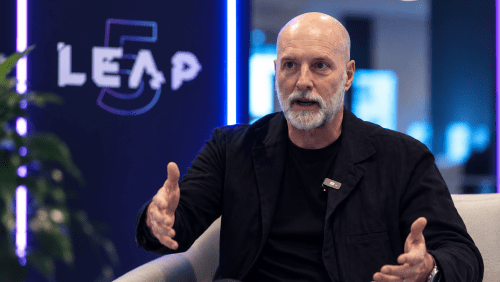
A growing share of organizations adopting artificial intelligence in their customer service have reported an increase in customer satisfaction percentage, yet tech entrepreneur David Sztern, CEO of NLPearl, believes that few technologies have succeeded in making those interactions feel natural. NLPearl was built to bridge that gap by blending technical innovation with a clear operational goal. The goal, for Sztern, is to help businesses scale without sacrificing conversational quality.
Sztern has spent more than a decade building technology-led ventures, guided by early immersion in software and systems thinking. “I was on computers from a very young age, coding and building,” he says. “Over time, that turned into a mix of data science, software engineering, and eventually business leadership.” Today, his role as CEO centers on translating complex AI capabilities into usable, revenue-driving infrastructure for organizations of all sizes.
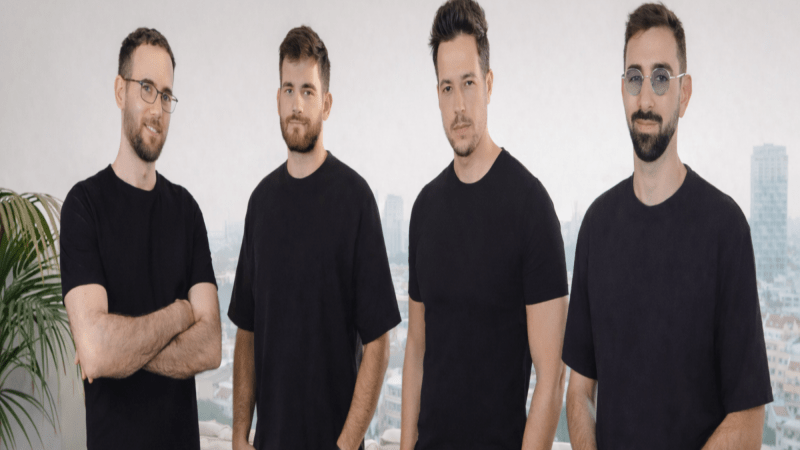
NLPearl was founded three years ago by a team of four deeply technical co-founders, each bringing specialized expertise across data science, software engineering, and large-scale systems architecture. Sztern emphasizes that this collective background is foundational to the product’s performance. “We are very technical,” he says. “That’s why the product works the way it does. Everyone involved understands the technology at a very deep level.”
The idea for NLPearl emerged directly from operational experience. Sztern previously owned a call center and became acutely aware of how inefficient and exhausting repetitive phone work can be. “After an hour of doing the same calls, the same script, people are drained,” he says. “It’s not efficient, and it’s not good for humans either.” That realization led to a more ambitious question: could AI handle repetitive phone interactions while still feeling intelligent and human?
Those questions gave rise to NLPearl’s platform, Pearl, an autonomous AI phone agent built for sales, support, and operational calls. Trained on millions of conversations, Pearl operates through real-time speech-to-speech interaction, adaptive dialogue, and voice-based sentiment analysis. According to Sztern, overcoming customer bias toward automated systems was a core challenge. “People think of old bots and IVR systems,” he explains. “Today, with the technology we’ve built, it feels like you’re talking to a real person. That’s what makes people open up and engage.”
A defining model of the platform is PearlVibe, which Sztern describes as an AI engineer. PearlVibe allows businesses to build and deploy a fully functioning AI call center through a single prompt. “It creates the personality, the voice, the scripts, the call flows, and the integrations,” he says. “It builds everything, from pre-call actions to what happens during the call and after the call is finished.”
Once deployed, Pearl is designed to handle tasks such as outbound campaigns, appointment scheduling, order tracking, customer support intake, and industry-specific workflows across sectors, including real estate, healthcare, hospitality, and retail.
The system, Sztern highlights, can generate call summaries, transcripts, recordings, and real-time sentiment analysis automatically, giving businesses immediate operational visibility. According to the company, Pearl currently supports approximately 20 languages and multiple accents, with voice customization and testing built into the platform.
The business impact is tangible. Industry data shows that AI-driven contact automation can reduce contact centre operating costs by up to 50 percent, and Sztern notes that similar outcomes could be achieved through NLPearl’s technologies. “I believe customers could reduce around 30 percent of their call center load with our AI model, and my goal is to replace 100 percent,” he adds. And with accessibility as a key component of the business, Sztern aims for businesses to achieve those numbers seamlessly. “You don’t need technical knowledge. Small businesses can run a call center that they simply couldn’t build in the real world,” he says.
Security and compliance remain integral to adoption. Sztern notes that NLPearl applies end-to-end encryption and maintains infrastructure designed to meet stringent data protection and access control standards. He highlights that trust is non-negotiable when AI is handling live conversations and sensitive data.
For the future, NLPearl’s priorities are refinement and realism. “It sounds natural today,” Sztern says, “but that’s not enough. The goal is that even I, as CEO, should be confused. I shouldn’t be able to tell the difference.” That ambition reflects the company’s broader belief that AI ultimately succeeds not by announcing itself, but by quietly delivering scale, efficiency, and human-like communication at the same time.
A growing share of organizations adopting artificial intelligence in their customer service have reported an increase in customer satisfaction percentage, yet tech entrepreneur David Sztern, CEO of NLPearl, believes that few technologies have succeeded in making those interactions feel natural. NLPearl was built to bridge that gap by blending technical innovation with a clear operational goal. The goal, for Sztern, is to help businesses scale without sacrificing conversational quality.
Sztern has spent more than a decade building technology-led ventures, guided by early immersion in software and systems thinking. “I was on computers from a very young age, coding and building,” he says. “Over time, that turned into a mix of data science, software engineering, and eventually business leadership.” Today, his role as CEO centers on translating complex AI capabilities into usable, revenue-driving infrastructure for organizations of all sizes.
NLPearl was founded three years ago by a team of four deeply technical co-founders, each bringing specialized expertise across data science, software engineering, and large-scale systems architecture. Sztern emphasizes that this collective background is foundational to the product’s performance. “We are very technical,” he says. “That’s why the product works the way it does. Everyone involved understands the technology at a very deep level.”

Entrepreneur Middle East Staff
Entrepreneur Staff