Sonia Shaw Explains Why Most Tokenized Real Estate Is Built on “Digital IOUs”

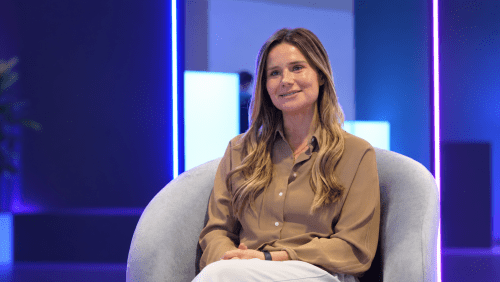
Sonia Shaw
You're reading Entrepreneur Middle East, an international franchise of Entrepreneur Media.
The conversation about tokenized real estate has reached a familiar inflection point. Capital is flowing into real-world asset projects. New protocols launch weekly. The promise of fractional ownership and instant liquidity is repeated with increasing confidence. Yet beneath the surface, a more uncomfortable question is being ignored.
What does the token actually represent?
For Sonia Shaw, CEO of OneAsset, this question isn’t academic. It is the central failure of an industry she believes is building on sand. “The biggest misconception is that a token automatically represents ownership of something real,” she says. “In reality, a token is just a digital representation. What matters is the legal structure behind it.”

Shaw’s critique lands at a moment when institutional interest in tokenized assets is accelerating. But her diagnosis suggests that most projects rushing to market are delivering something closer to a speculation tool than an investment vehicle. “Without that structure, a token is essentially a digital receipt or promise, not an asset-backed instrument,” she says.
The infrastructure blind spot.
The gap Shaw identifies is not technological. It is largely structural in nature.
Traditional real estate finance has well-understood friction points: high entry barriers, illiquid positions, opaque deal structures, and processes overloaded with intermediaries. Blockchain offers a plausible alternative infrastructure layer, one where ownership, transfers, and distributions can be made programmable. But programmability alone does not create legal enforceability.
“For a tokenized asset to represent real ownership, the property needs to be held in a properly structured legal vehicle, investor rights need to be clearly defined, and the token has to be linked to those rights through enforceable frameworks,” Shaw says.
This is the layer most projects skip. They built the mint button. They design the user interface. They market the democratization narrative. However, the legal framework needed for token holders to demonstrate ownership in a court of law is often given less attention. The result, in Shaw’s framing, is a market of digital IOUs dressed as institutional assets.
The convergence thesis
OneAsset’s response to this gap is not to build a competing trading platform or consumer app. The company is focused entirely on upstream infrastructure: the legal engineering, regulatory structures, and asset management discipline that must sit beneath any credible tokenized offering.
“We see crypto and traditional finance as complementary layers, not competitors,” Shaw says. “Banks and financial institutions will continue to play a critical role, particularly in regulated asset classes like real estate. Our view is that the future will likely involve hybrid systems where blockchain infrastructure sits alongside existing financial institutions.”
This positioning is deliberate. OneAsset is venue-neutral by design, built to plug into banks and custodians rather than replace them. It is a bet that the infrastructure most likely to succeed will be the one institutions are able to trust, not the one that bypasses them.
Shaw describes this as translating between two worlds that often speak very different languages. “I’ve spent a large part of my career in real estate and finance, where the priority is asset quality, governance, and long-term capital preservation. At the same time, I’ve been deeply involved in the digital asset space and understand how blockchain infrastructure actually operates. Building infrastructure means designing systems that both regulators and institutions can trust, while still capturing the efficiencies that blockchain makes possible.”
The timeline problem
The crypto industry operates on fast cycles. Narrative shifts happen quarterly. Liquidity events are the measure of success. Shaw acknowledges this dynamic but questions whether it is compatible with building asset-backed markets.
“Crypto moves very quickly, and experimentation has been one of the industry’s strengths,” she says. “At the same time, asset-backed markets operate on very different timelines. Real estate, infrastructure, and institutional capital require stability, legal clarity, and risk management.”
The tension appears to be largely structural. Speed advantages projects that want to launch quickly. But infrastructure that institutional investors and regulators are willing to trust requires a different kind of discipline. “If the goal is simply to launch quickly, speed can be an advantage,” Shaw says. “But if the goal is to build infrastructure that institutional investors and regulators are comfortable with, then structure becomes increasingly important.”
She sees the industry in transition, moving from experimentation toward more durable systems. The projects that survive that transition, in her view, will be those that prioritize the unsexy work of legal architecture and regulatory alignment over the dopamine hit of a live token sale.
What changes first
If Shaw and OneAsset are right about the direction of travel, the immediate shifts will be invisible to most retail participants. Early advantages are likely to come from structural factors rather than behavioral ones. “Before institutions meaningfully change how they allocate capital, the market needs credible infrastructure,” Shaw says. “Regulatory clarity, custody frameworks, standardized asset structures, and reliable ways for ownership to be recorded and transferred.”
Once those foundations are in place, two things begin to evolve. Institutions may gain a more efficient way to access global real estate markets, and individuals may gain exposure to assets that historically required very large capital commitments.
But the deeper change may be in how real estate functions as an asset class. It has traditionally been one of the least liquid markets, with ownership transfers requiring months and mountains of paperwork. Tokenization, properly structured, introduces the possibility of more flexible mechanisms for secondary market participation without sacrificing legal integrity.
“Tokenization doesn’t change the fundamentals of real estate,” Shaw says. “What it changes is the infrastructure around how ownership is structured, accessed, and transferred.”
That distinction matters because it reframes what success looks like in this transition. The goal is not to replace real estate with something unrecognizable. It is to build infrastructure that removes friction while preserving the integrity of the underlying asset. For the market to scale, the architecture has to be invisible, the legal backbone has to be unquestionable, and the token has to be more than a promise.
In Shaw’s view, that work is unglamorous by necessity. “Infrastructure is always a collective effort,” she says. “It involves strong teams, regulators, and partners.” The timeline is long. The incentives are misaligned with quick liquidity. But if the foundation is built correctly, the assets that sit on top of it will not need to explain what they represent. This may become clearer through the structure itself.
Investing involves risk and your investment may lose value. Past performance gives no indication of future results. These statements do not constitute and cannot replace investment advice.
The conversation about tokenized real estate has reached a familiar inflection point. Capital is flowing into real-world asset projects. New protocols launch weekly. The promise of fractional ownership and instant liquidity is repeated with increasing confidence. Yet beneath the surface, a more uncomfortable question is being ignored.
What does the token actually represent?
For Sonia Shaw, CEO of OneAsset, this question isn’t academic. It is the central failure of an industry she believes is building on sand. “The biggest misconception is that a token automatically represents ownership of something real,” she says. “In reality, a token is just a digital representation. What matters is the legal structure behind it.”

Entrepreneur Middle East Staff
Entrepreneur Staff