The Rise of Middle East Fintech: Unicorns, Investments, and Regional Growth
Middle East fintech funding peaked in 2023, with US$4.2 billion worth of funding raised by fintech startups.

Shutterstock
Opinions expressed by Entrepreneur contributors are their own.
You're reading Entrepreneur Middle East, an international franchise of Entrepreneur Media.
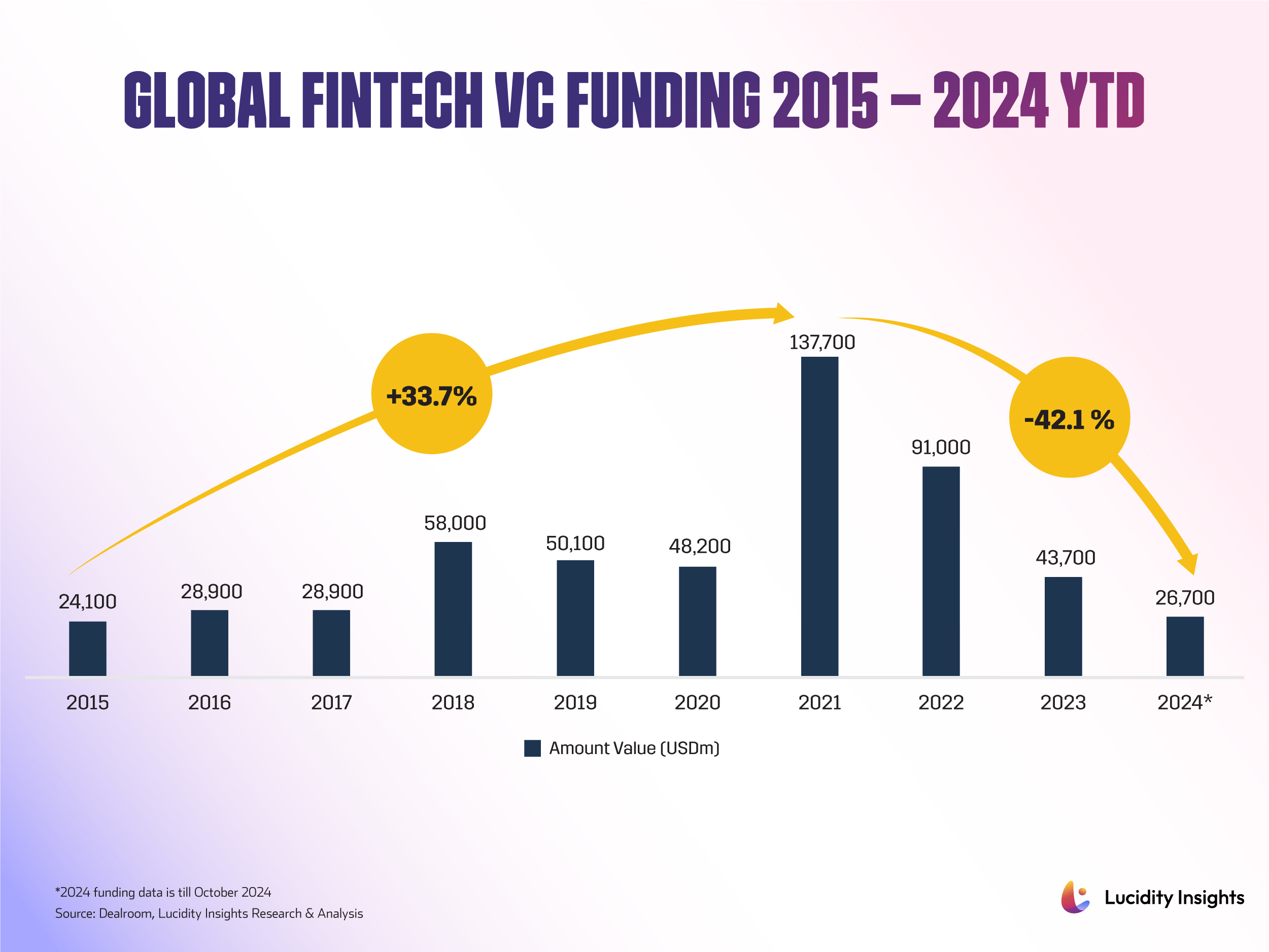
Fintech continues to dominate the world’s tech ecosystems, and fintech startups have attracted well over half a trillion dollars in venture capital investing in the last decade from 2015 to 2024. Global fintech VC investment peaked in 2021 with US $137.7 billion worth of funding distributed in a single year.
Furthermore, at least three of the top ten most valuable privately owned companies in the world are fintechs (as of the end of 2024) – namely, Ireland-based payments player Stripe (US$70 billion valuation), UK-based Neobank Revolut (US$45 billion), and US-based Neobank Chime (US$25 billion). If you count crypto-exchanges as Fintechs, as we do in this report, then we would have to make room for Binance (US$62 billion) and Coinbase (US$47.5 billion).
Despite this list being dominated by western startups, there are emerging market leaders too. Ant Group, which is the parent company of AliPay – one of China’s largest digital payment providers serving 1.3 billion users and 80 million merchants – is valued at US$80 billion. Nubank, a Brazilian Neobank with a staggering US$56.4 billion valuation has over 100 million customers across key South American countries, is profitable, and successfully IPO’d in 2021.
Middle East Fintech Unicorns: Pioneers of the Region
Though valuations of regional MENA fintechs are much smaller, many of the region’s first wave of unicorns have been fintechs as well. UAE-born, KSA-headquartered Buy-Now-Pay-Later (BNPL) player Tabby, reached unicorn status at the end of 2023 when it raised US$200 million at a US$1.5 billion valuation. Other fintech unicorns in the region include Turkey’s Papara (US$1.5 billion), Egypt’s MNT-Halan (>US$1 billion), and Saudi Arabia’s Tamara (>US$1 billion). There are many up-and-coming soonicorns in the region as well, with the likes of Geidea, Midas, PayTabs and Sarwa all making waves. 26 MENA-based fintech startups have successfully raised over US$100 million, also indicating a strong line-up of companies vying for unicorn-status in the coming years.
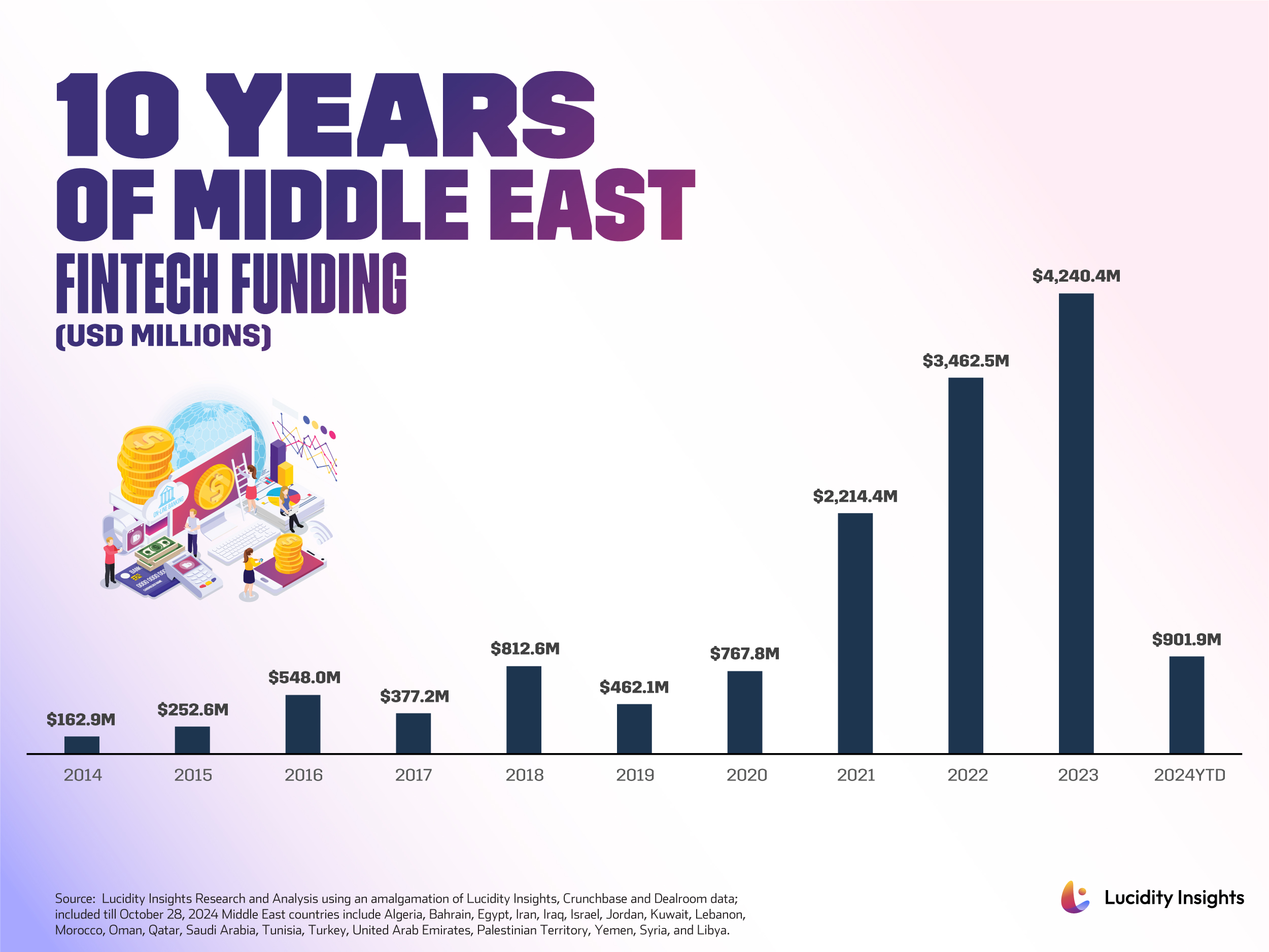
Middle East fintech funding peaked in 2023, with US$4.2 billion worth of funding raised by fintech startups, seemingly unaffected by the VC winter until a marked drop came in 2024. Though there are many reputable local and regional Venture Capital investors, there are also many international investors that have looked to support startups from the region. One such indicator is Y-Combinator’s (YC) growing pool of Middle Eastern Fintech alumni; to date, YC has invested in 30+ Fintechs from the MENA region.
Related: New Report Highlights the Middle East as a New Global Fintech Contender
Sector Spotlight: Payments, Crypto, and Wealthtech Innovations
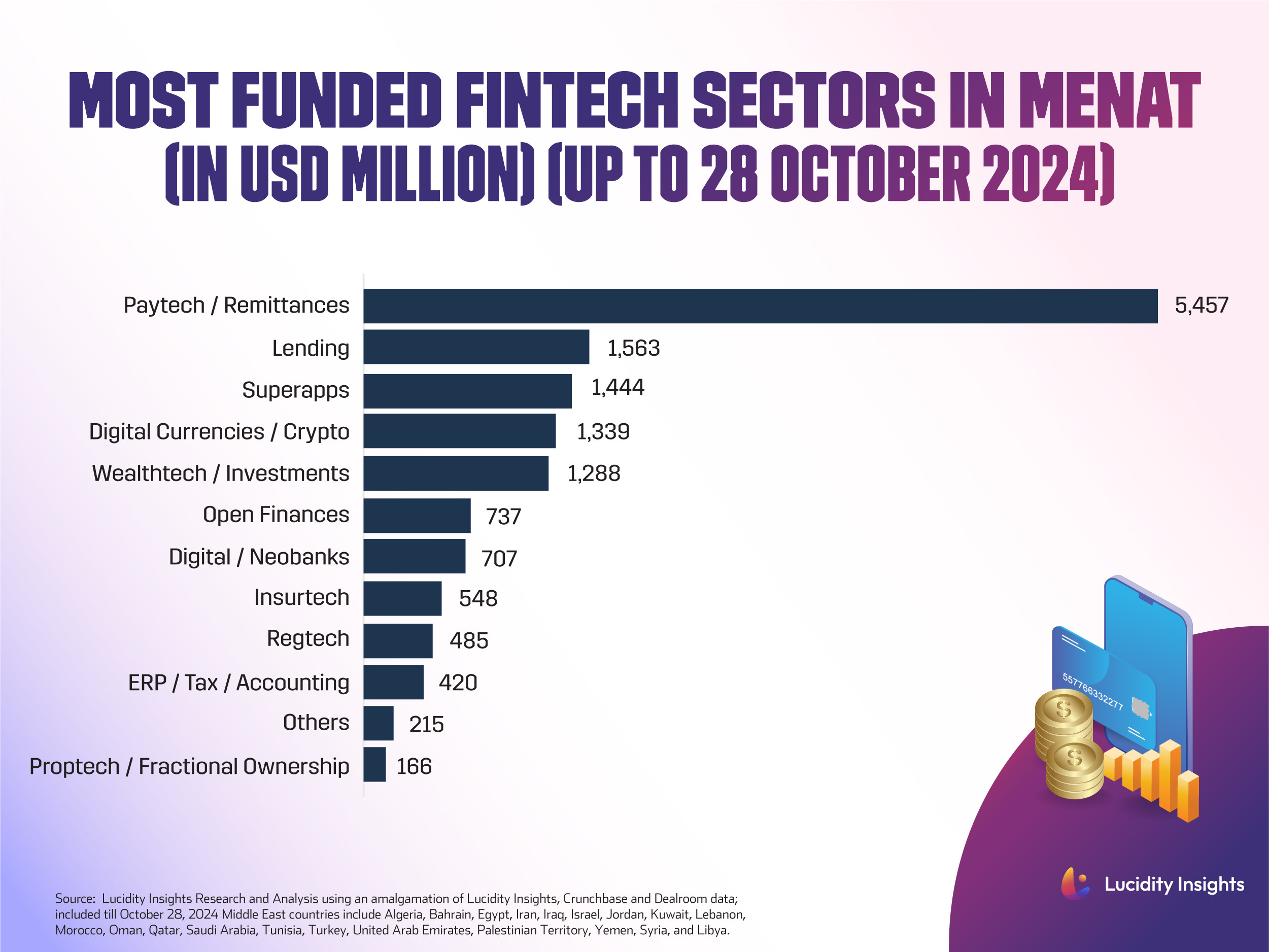
Across the region, over 5,450 funding rounds have been made out to payment and remittance fintech startups, accumulating over US$5.4 billion in investments over the years. Fintech companies that are developing lending, superapps, crypto and wealthtech solutions are all heavily invested in sectors as well.
It can be estimated that there are roughly 2,000 fintech startups across the MENAT region, of which half are likely to have raised some form of capital and disclosed it. Of this group, 465 have successfully raised US$1 million or more, reaching scaleup status. Though Israel has the highest number of general technology scaleups calling it home, the UAE has the highest number of fintech scaleups, with most residing in Dubai. This speaks to the UAE being a regional financial hub with a national fintech strategy in place. Other countries in the region that are rapidly developing their fintech sectors include Saudi Arabia, Turkey, and Egypt. We hope you enjoy this informative special report, on the state of fintech in the Middle East.
Explore the transformative trends shaping the Middle East’s Fintech sector. Read or download your copy of “The State of Fintech in the Middle East” now.
This article was originally published on Lucidity Insights, a partner of Entrepreneur Middle East in developing special reports on the Middle East and Africa’s tech and entrepreneurial ecosystems.
Fintech continues to dominate the world’s tech ecosystems, and fintech startups have attracted well over half a trillion dollars in venture capital investing in the last decade from 2015 to 2024. Global fintech VC investment peaked in 2021 with US $137.7 billion worth of funding distributed in a single year.
Furthermore, at least three of the top ten most valuable privately owned companies in the world are fintechs (as of the end of 2024) – namely, Ireland-based payments player Stripe (US$70 billion valuation), UK-based Neobank Revolut (US$45 billion), and US-based Neobank Chime (US$25 billion). If you count crypto-exchanges as Fintechs, as we do in this report, then we would have to make room for Binance (US$62 billion) and Coinbase (US$47.5 billion).

Erika Masako Welch • Chief Content Officer, Lucidity Insights
Erika Masako Welch is the Chief Content Officer of Lucidity Insights.