With Web3, We Can Build The World We Want To Live In
“The builder spark is alive in each and every one of us. It is existential: I build, therefore I am.”
Shutterstock.com
Opinions expressed by Entrepreneur contributors are their own.
You're reading Entrepreneur Middle East, an international franchise of Entrepreneur Media.
Our society is constructed on the foundations of various centralized entities, including governments, corporations, and a wide variety of religious and community groups. Top-down command and control, as an organizing principle, have enabled us to make tremendous gains as a society globally. It has helped us to build a great civilization.
Unfortunately, our great civilization does not serve 99% of us as well as it can. But fortunately, our societal development has brought us to the point technologically where we’re enabled to build a society –a more decentralized society– that serves nearly everyone well.
In 2008, Satoshi Nakamoto built something profound that has the power to transform life on our planet. A mechanism that enables us to build far better alternatives to the legacy systems. Alternative structures for economic, social, and political systems that could exist on a foundation that could not be improperly manipulated. It is a new kind of global ledger, the blockchain, and through this invention a revolutionary new higher-powered form of trust has emerged: decentralized trust.
Over the years, the internet has undergone a remarkable evolution, shaping the lives of individuals and society as a whole. It all began with the pre-web protocols, the internet protocols developed in the ’80s. Building upon those foundations, Web 1.0 emerged, offering static text and images interconnected through hyperlinks.
Then came Web 2.0, where we find ourselves today, introducing interactivity, e-commerce, mobile connectivity, and social media. While Web 1.0 represented an extraordinary breakthrough, the advent of Web 2.0 was the one that truly transformed society on a global scale. Yet, in many ways, the business model of Web 2.0 so far has been a hangover from the dominant business model of the 20th century: manufacture products for sale, and advertise to create (often artificial) demand.
Related: Boomtown On The Blockchain: Where Old-School Finances Meet The Wild West Of Web3
Web3, or the decentralized web, is what we are merging into. It serves as a key component of a new paradigm shift that humanity is currently undergoing, moving from the age of silos to the age of collaboration, where opportunities are more widely distributed and accessible. Web3-based systems are forging new ways of interacting, innovative business models, and entirely new industries.
The Web3 paradigm shift starkly contrasts the business models of the last millennia, where corporations operated in adversarial relationships with their customers, extracting as much as possible in exchange for as little as possible. In the face of these exploitative practices, we have observed over the years how the power that currently resides within centralized corporations is becoming distributed through the diverse creativity of the growing Web3 ecosystem via progressive decentralization.
Web3 empowers communities with economic, social, and political agency while enabling individuals to exercise self-sovereignty. In Web3, we are not just passive consumers (or worse, products monetized by social media companies); we are active builders. Regardless of the specific activities individuals are engaged in, whether it’s creating non-fungible tokens (NFTs), building collections of them, developing decentralized applications (dApps), participating in decentralized autonomous organizations (DAOs), shaping policies, or designing protocols, we all contribute as builders to the next generation of the web.
Builders are not only developers, researchers, and entrepreneurs, but also artists, writers, musicians, educators, and more. Each brings a unique perspective to form the collective essence and, ultimately, wisdom, at the core of this paradigm shift to the more decentralized future. By harnessing the transformative power of Web3, we can collectively build the world we want to live in, firmly rooted in this new trust foundation. The builder spark is alive in each and every one of us. It is existential: I build, therefore I am.
To dive deeper into the future of Web3 and the decentralized web, read our full report on Opportunities in Web3 by clicking here.
This article was originally published on Lucidity Insights, a partner of Entrepreneur Middle East in developing special reports on the Middle East and Africa’s tech and entrepreneurial ecosystems.
Related: From Ethereum to Consensys: Joseph Lubin’s Visionary Journey
Our society is constructed on the foundations of various centralized entities, including governments, corporations, and a wide variety of religious and community groups. Top-down command and control, as an organizing principle, have enabled us to make tremendous gains as a society globally. It has helped us to build a great civilization.
Unfortunately, our great civilization does not serve 99% of us as well as it can. But fortunately, our societal development has brought us to the point technologically where we’re enabled to build a society –a more decentralized society– that serves nearly everyone well.
In 2008, Satoshi Nakamoto built something profound that has the power to transform life on our planet. A mechanism that enables us to build far better alternatives to the legacy systems. Alternative structures for economic, social, and political systems that could exist on a foundation that could not be improperly manipulated. It is a new kind of global ledger, the blockchain, and through this invention a revolutionary new higher-powered form of trust has emerged: decentralized trust.

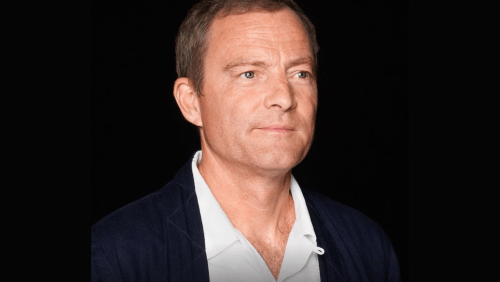
Joseph Lubin • Co-founder, Ethereum, and founder, ConsenSys
Joseph Lubin is a co-founder of Ethereum and the founder of ConsenSys, a full-stack, global... Read more