Storytelling That Endures: Emirates Literature Foundation CEO Ahlam Bolooki on Building a Home for Literature in the Age of AI
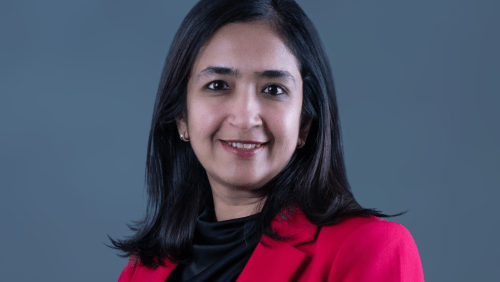
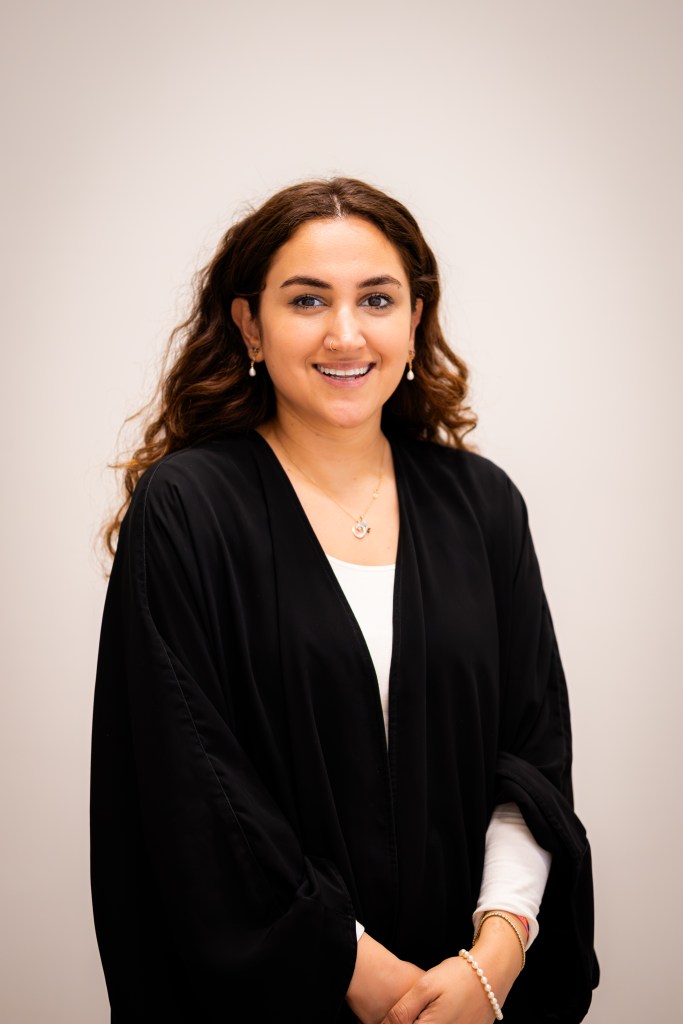
As the CEO of the Emirates Literature Foundation, Ahlam Bolooki has shaped the organisation into a reliable haven for reading, writing, and cultural exchange. Ahead of the 18th edition of the Foundation’s flagship Emirates Airline Festival of Literature, she discusses nurturing local writers, championing translation, safeguarding human creativity in the age of AI, and building a community where stories connect generations and cultures.
You're reading Entrepreneur Middle East, an international franchise of Entrepreneur Media.
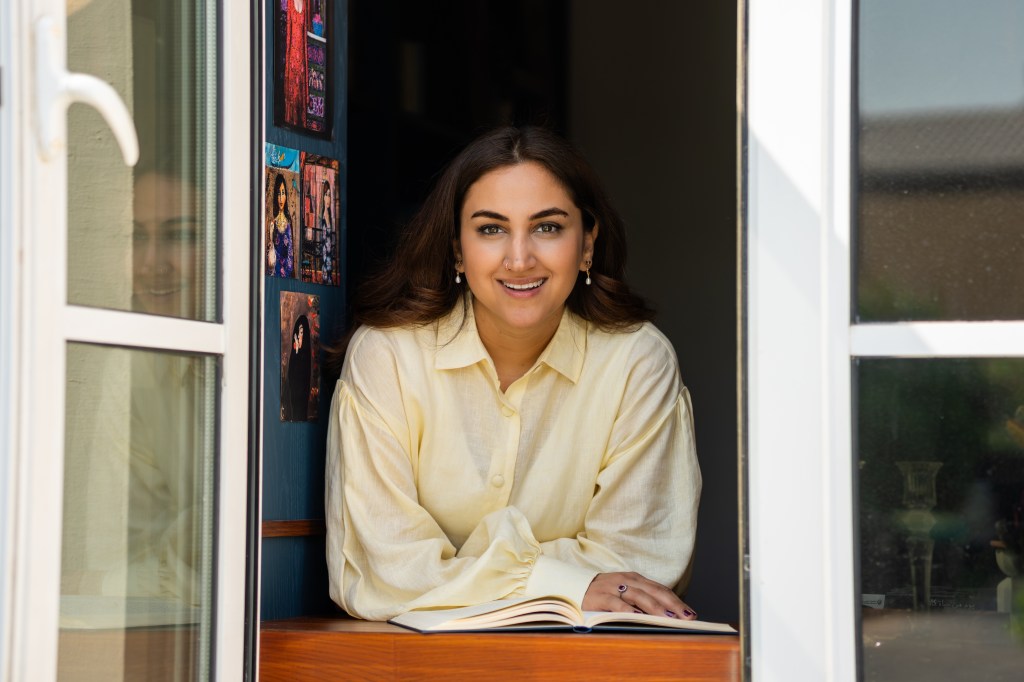
Ahlam Bolooki has also been featured on Anchored Echoes, a video series by Entrepreneur Middle East- watch the full episode HERE.
“I don’t believe anything in life is an accident,” says Ahlam Bolooki when describing how a sturdy career in hospitality and marketing —including roles at Jumeirah Group and Dubai Tourism— eventually led her towards becoming the CEO of the Emirates Literature Foundation, the UAE-based not-for-profit non-governmental organisation that offers a roster of cultural initiatives (including its flagship Emirates Airline Festival of Literature) to foster a love for literature across the nation and wider region. “We’re always led towards our destiny, and everything I’ve done in my career or throughout my life, I believe, has led me to this moment in time,” she continues. “So I studied hospitality and worked in restaurant marketing, and through that gained a good understanding of operations and customer service. This is something that you gain from hospitality: how to deal with people and unhappy guests, how to navigate difficult situations, and how to be precise and well presented. And there’s a lot you learn in terms of how to work under pressure, long hours, and follow and build processes. But from there I moved on to the tourism board where we were promoting Dubai as a festival destination, among other things. That was an amazing experience as well, working citywide with a vast range of festivals, and seeing all the operations behind it. But reading, literature, writing…this has always been a love of mine and something I have always set aside time for.”
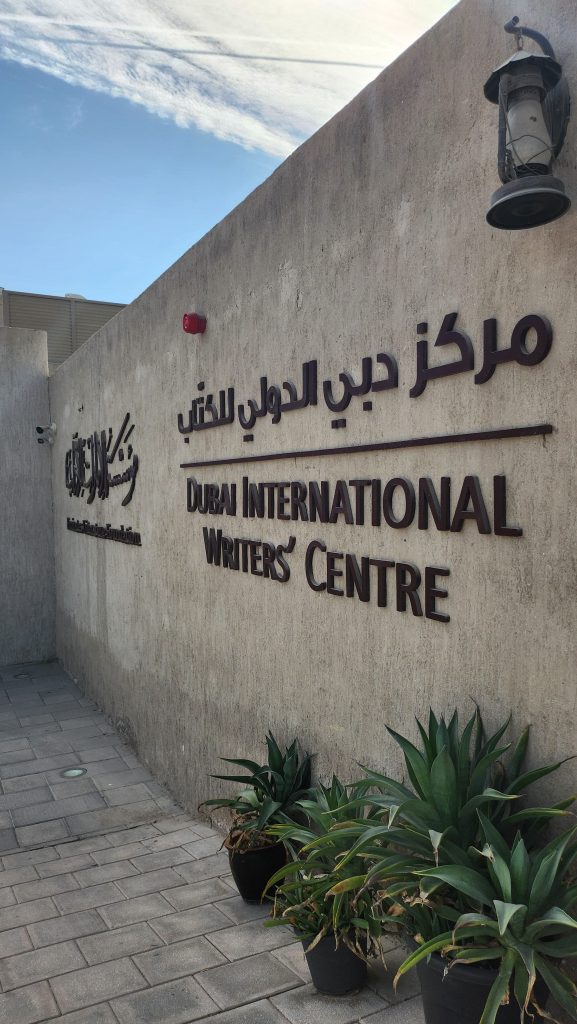
At a later point during the interview, at the Foundation’s tranquil headquarters in Dubai’s culturally rich Shindagha area, Bolooki tells me that an old classmate she met recently reminded her that “you would always make us go to Magrudy’s [one of Dubai’s oldest bookstores]!” That inherent love for books and the written word brought Bolooki, unbeknownst to herself, closer to her current role at the Emirates Literature Foundation. “I would do writing courses whenever I could,” she recalls. “But the way that I came across the Emirates Literature Festival is that I was doing workshops with them, then I was volunteering with them, and later I was moderating and hosting sessions at the festival. When the Writers’ Center initially opened in 2014, I was here at the opening. I attended all the amazing courses: the Joe Rose Fiction Writing course [by British novelist and creative writing lecturer Joe Rose], which was 10 weeks long; and the moderator training that they did with Fiona Lindsay [a UK-based executive coach, keynote speaker, and writer]. So I’ve always been a part of this community and I really believe that if you are passionate about something, you should show up for it and you should create time for it. And I’ve always carved time out for this! That naturally got me from the work that I was doing into this. And, you know, I just knew from the first day walking into this office in Shindagha that I’ve arrived at where I needed to be. This is the longest job I’ve ever had; I’ve already been here for almost nine years and I don’t see an end in sight anytime soon.”
Bolooki’s tenure with the institution began when she was appointed as the Director of the Emirates Airline Festival of Literature in 2018. One year later, in 2019, she officially took over as the CEO of the Emirates Literature Foundation – a role previously held by its founder, advisor and trustee, Isobel Abulhoul. It was in 2009 that Abulhoul –then the founding CEO– launched Emirates Airline Festival of Literature. The program’s continued success then led to the launch of the Emirates Literature Foundation in 2013.
Stepping into Abulhoul’s shoes was nothing short of daunting, Bolooki admits.
“In my first year, I really was an observer as the director, because this is a festival that was already very successful when I came,” she says. “So it’s not something which I was going to look at and say, “I need to fix something here.” Not at all. It started in 2009; I joined in 2017. It already had a strong history, and a strong base. So for me, I was an observer who had to think about, ‘how can we build on this? Because there’s always room for growth, and that’s where my focus was. That’s the starting point that I came from. So I was very lucky to inherit something very strong. But I think from there, we’ve been able to expand in a way that’s been really meaningful. And, yeah, we’ve been privileged to take it to another level.”
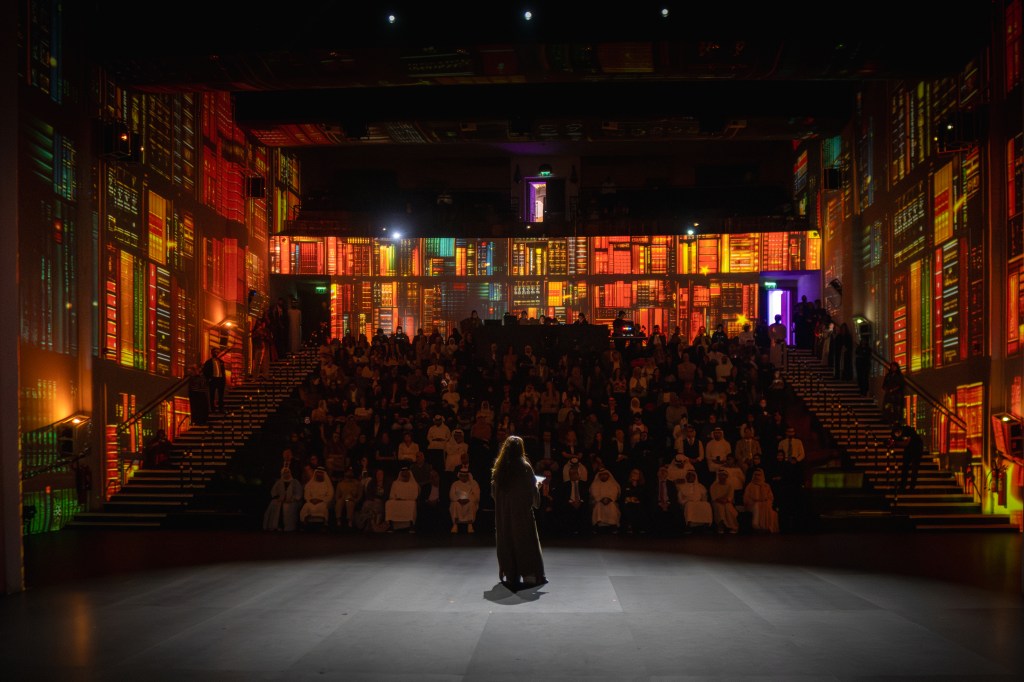
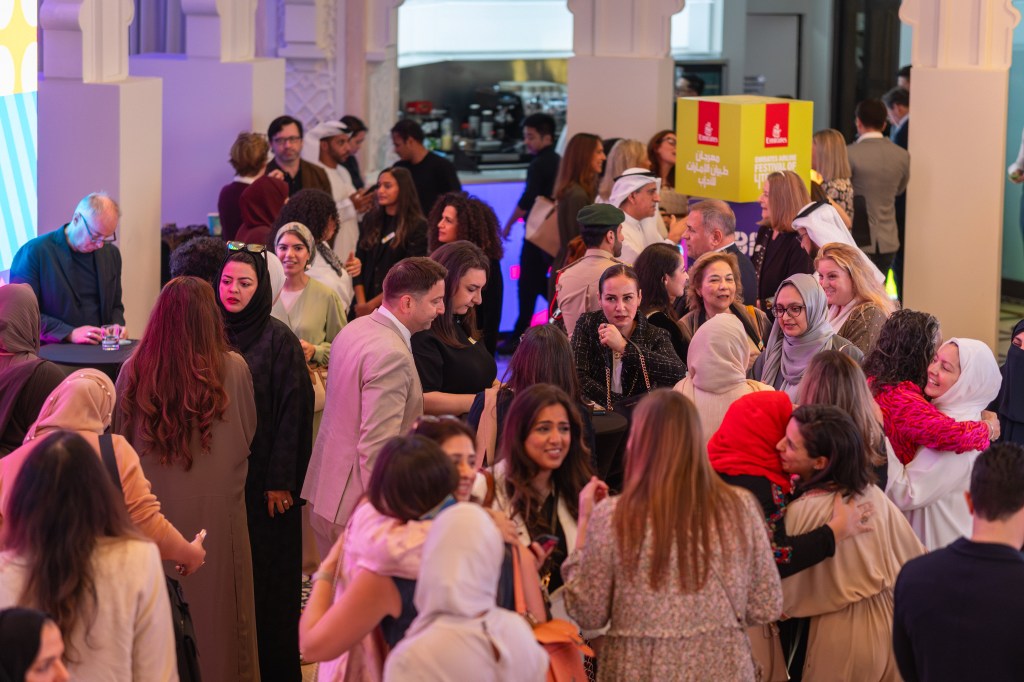
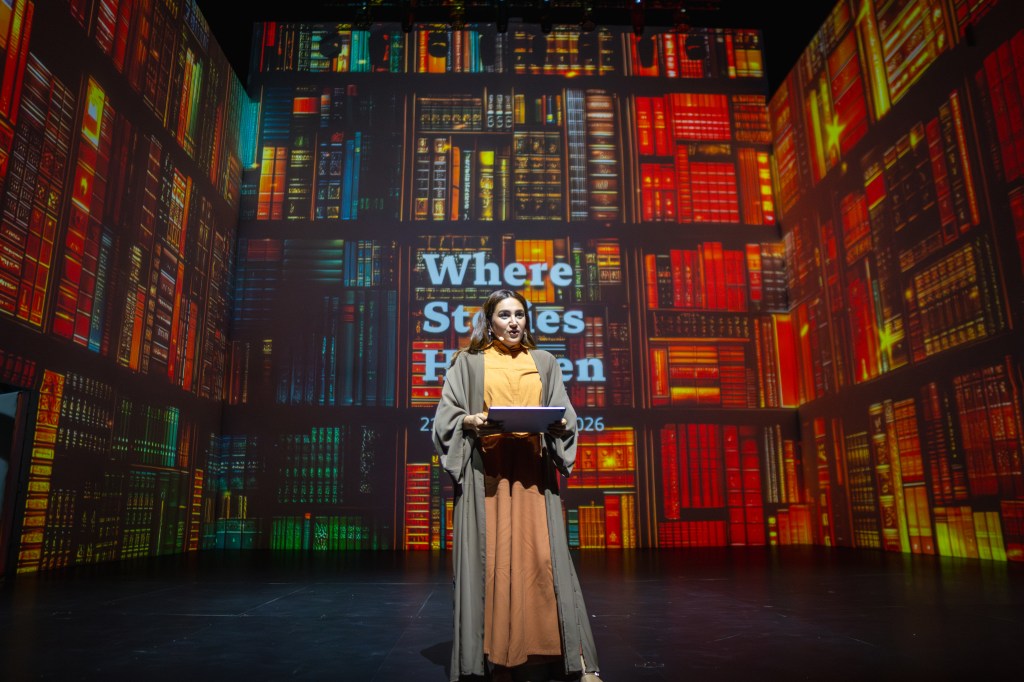
Indeed, Bolooki is now days away from helming the launch of the 18th edition of the Emirates Airline Festival of Literature. Set to be held from January 21-27, 2026, at the InterContinental Hotel in Dubai Festival City, the latest edition is set to feature nearly 200 authors, creatives, and literary pioneers from 40 nationalities, including renowned Palestinian journalist Plestia Alaqqad and Indian actor and standup comedian Vir Das.
But apart from the glitzy annual literature festival, Bolooki has led a number of other literary initiatives that run across the year.
The most notable of these is, perhaps, the ELF Seddiqi Writers’ Fellowship, the first global standard mentorship program in the region for aspiring writers from the UAE launched in partnership with UAE-based conglomerate Seddiqi Holding. While the Fellowship has been a launchpad for a number of new-age writers, the biggest success story has been that of Dubai-based Palestinian-American author Sara Hamdan, whose debut novel What Will People Think? took the literary world by storm even before its release in May 2025.
In 2023, when Hamdan’s manuscript clinched a two-book deal with US-based publishing giant Holt, it marked the first such book deal in the entire region. Then, in the midst of raving global reviews post its release, the book was also featured on popular American host Jimmy Fallon’s talk show. “Seeing Sarah Hamdan’s name on The Tonight Show with Jimmy Fallon, with him holding her book, was such a powerful moment,” Bolooki says. “And it’s not just Sarah — other fellows are also securing publishing deals that haven’t yet been announced, with much more good news to come from the fellowship. I think the Siddiqui Fellowship gave birth to so many great authors from Dubai in a very short amount of time. It’s a really good example of how this foundation sees the gap, and uses its network to benefit the local community. And, Mashallah, this is one of the projects that are so close to my heart and I feel so, so proud of!”
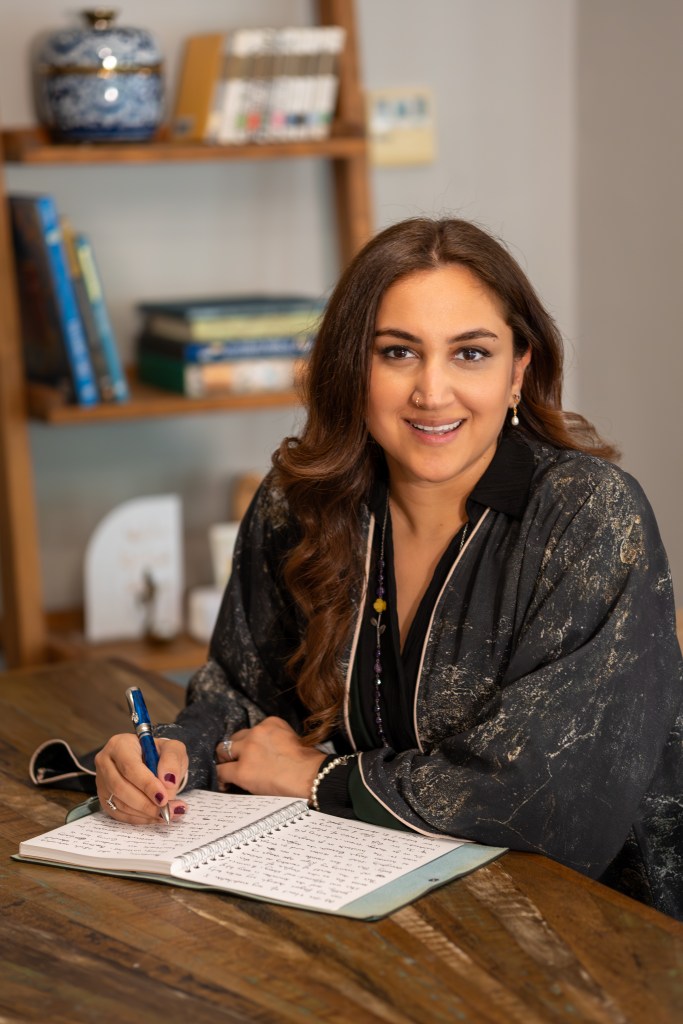
Another milestone Bolooki has been integral in is the Foundation’s partnership with UNESCO to advance literacy, reading culture, and cross-cultural understanding. “Beyond that, the contribution our foundation has made through our user group on Wikimedia [the global, non-profit movement and network that supports the creation and sharing of free, open-access knowledge; best known for Wikipedia] has been remarkable,” Bolooki adds. “When we began researching Arab authors online, we saw a clear gap: there was no structured data or metadata. So we undertook extensive research, built and supported a community of Wikimedia user groups in the UAE, and encouraged their growth. The progress has been significant — from 1,500 pages to 70,000 pages in just a few years. We’re now on a journey towards one million Wiki contributions. This involves working with editors from around the world to enrich information about the Arab world across all UNESCO languages on Wiki platforms, which also feed into large language models. That’s something I’m very proud of.”
Beyond fostering a strong local community of writers, the Foundation has also been extensive in extending its reach towards all readers — specifically through the translated works released by its own independent publishing house, ELF Publishing. “From UAE Minister and astronaut Dr. Sultan Al Neyadi’s space diary, Out of This World, which is set to be released at the upcoming Festival; to the English translations of Emirati writers shortlisted or longlisted for the International Prize for Arabic Fiction, as well as bestselling children’s authors – I’m proud to represent Emirati literature strongly at home, while also championing it internationally,” Bolooki says beamingly. “There’s also the work of our education department, which continues to grow year on year. Thousands of students take part in our competitions annually, with consistent, significant growth. It may not be a single milestone, but this sustained progress is something to celebrate. A competition that has been running since 2009 and still sees around 35% year-on-year growth is a strong sign of children’s continued interest in reading and literature, and of schools placing the right emphasis on it.” Here, Bolooki reveals that the Foundation is invested in 30 different initiatives at the moment. “This is an organisation with a great deal of heart, supported by partners, believers, and audiences who have been with us from the beginning, as well as those who’ve joined along the way. It has truly become a community hub — one that, I believe, is helping to make the world a better place,” she adds.
Bolooki’s aforementioned observational and improvement focused approach towards leadership is undoubtedly to be attributed for the scale of these successes. But here too, the CEO shares how it is her love for books that has shaped her psyche. “There’s a very important lesson that reading teaches us, because the more you read, the more you’re aware of how little you know and how much more information there is out there,” she says. “And so you will see that even some of the great writers of this world will be so aware and humble because they are aware of how much they still do not know. And I think this is an important place to start for any leader. I also think when you’re building a team, the best team you can build is one made up of people who have different strengths to you. There’s no point leading an organisation thinking you’re going to be the best at everything — you’re not. Nobody is. You need specialised people in every area who understand that area far better than you do. That requires focus.”
Throughout the conversation so far, there isn’t so much as a slight allusion to the technology that has, quite controversially at times, permeated into the creative and writing spaces, i.e. artificial intelligence (AI). So I raise the subject to gauge Bolooki’s thoughts on the matter. “I mean…it’s something that’s kind of quite disruptive in our time,” she says. “But I think as human beings, eventually we need to look at human-centric development on this planet. And I think this is something that eventually we will get to. I think this AI wave is all new now, and we have to live with it. It’s something that’s maybe not going away. But I think that regulations that protect a human-centric future are really important. At the same time, I would say, you know, the arts have always prevailed when it comes to even the darkest moments on our planet. Take even the COVID-19 pandemic when we were all at home in isolation and really disconnected from everything, including being near our families. What was there for us then? Music, books, films — those are the things that stayed. And I think when we read a book or when we engage with a piece of music… Yes, I mean, AI is creating things that you could perhaps enjoy, but at the end of the day, you know, nothing replaces human connection. And what did we miss after COVID-19 more than anything? To be together. We had Zoom fatigue. We had screen fatigue. And this is where, you know, life outside of screens still exists. And in that space of human connection, the arts are the most powerful thing.”
Here, Bolooki makes a profound point. “AI can only derive from what’s already there,” she says. “It can’t create a new experience. Like, two writers could be in the same room looking at the exact same thing, but there’s no way AI is going to predict what you think and what I think. As human beings, we have infinite capacity to create and to adapt. We just need to have a lot more faith in those innate human features that AI doesn’t have. There are books that have been read for hundreds and sometimes thousands of years — how have they surpassed all these generations? It’s because humans have put their genius into this work. Look, we don’t know what the future brings. But my hope is that humans will always choose a human-centric future and that we would prioritise that connection. You know, stories are something that will always prevail. I think human beings are — we’re creatures of stories. We understand the world around us through stories. It helps us explain so much. Take religion for example. All the different religions teach their lessons through stories and tales. When we think about history, we learn that through stories. When we look at maths, even at school, you know, the examples which tell a story is the thing that helps it resonate with us. So I think storytelling will always be something that we come back to as human beings.”
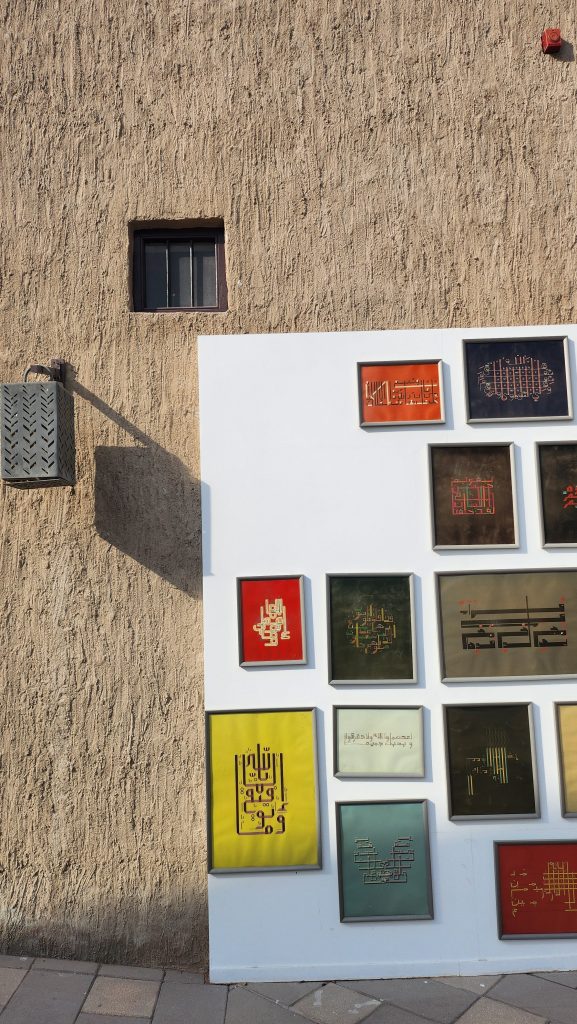
Bolooki, and indeed the Foundation’s, views in this regard have found supporters not just within the literary community but also in those within the corporate private sector who support the entity’s endeavors. “It’s such a supportive environment where everyone’s kind of thinking of how they can help and contribute — whether it’s through sponsoring, partnerships, volunteering, or bringing in students. There’s always this willingness to be part of this goal. I think when society believes in your vision, it applies to everyone — your team, the society, the country. When there’s a real buy-in into where you’re headed and how important that is, everyone sort of gravitates towards that journey. I think we’re very lucky to be in that position.”
This collective movement towards more literary programs and outlets has especially supported the greater need for children’s books, notes Bolooki – particularly as the kids of today grow up in an AI-driven world.
“When you think about the next generation, it’s a no-brainer that this should be the focus, and that this is the environment that is going to build curiosity, empathy, and the critical thinking skills that they need,” Bolooki continues. “Children’s literature is actually one of the most necessary things to be part of children’s lives because of fairytales and imagination. And this is what Einstein said too; that if you want your children to be intelligent, read them fairy tales. If you want them to be more intelligent, read them more fairy tales. Because this imagination that you create within them, and the scenarios that they come across and picture in their minds — things that are not part of reality but a possibility in their book — it always helps them navigate whatever they go through in life far into their adult lives. Because if you can imagine a solution, you can navigate anything.”
The upcoming Emirates Airline Festival of Literature 2026 is all set to uphold this sentiment with Bolooki sharing that the 18th edition features “the biggest children’s program we’ve ever had.” But what the Festival is particularly doubling down on this year is its efforts to bring forth more translated works. “Inshallah, we’re really looking forward to the festival,” Bolooki says. “There’s a very strong translation strand —12 sessions focused purely on translation— because we truly believe it’s a bridge between cultures. At a time when the world needs connection, translation sits at the heart of the festival. We’re also celebrating major literary milestones from the Arab world, such as the Saif Ghobash Banipal Prize for Arabic Literary Translation, which has helped bring so many important Arabic literary works into English and made them accessible to a wider global audience. The Sheikh Zayed Book Award [organised by the Abu Dhabi Arabic Language Centre] is also marking 20 years with us, the Ibn Battuta Geographic Literature Prize [by Abu Dhabi’s Arab Center for Geographic Literature] celebrates 25 years, and we’re also honouring the centenary of renowned Emirati poet Sultan bin Ali Al Owais. Alongside this, we’re welcoming outstanding international literary voices from around the world. Inshallah, it’s going to be a very special edition!”
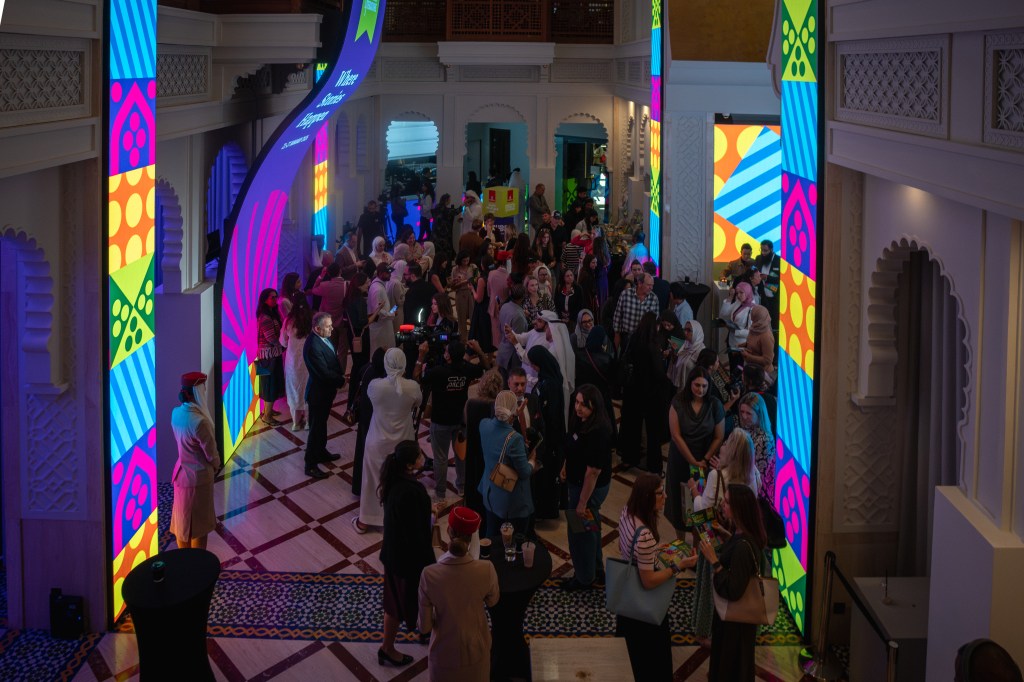
This year’s Festival also includes the inaugural Conversations Fest. “Every year I say this is my favourite program, but this particular addition this year is very special. It allows audiences to dip in and out of sessions and discover new conversations, which is one of my favourite things to do at literary festivals,” Bolooki says.
While the Festival is certainly taking over Bolooki’s schedule for the rest of the month, the Foundation CEO and Festival Director has set multiple other plans in motion in tandem. “Beyond the festival, we’re ramping up our publishing efforts next year, with plans to publish nearly double the number of titles,” she reveals. “We have some exciting books in the pipeline, including important literature from the UAE and new works that reflect our environment in ways that are much needed. I’m also excited about launching the Writers’ Centre in a big way and building this hub as the heart of the writing community across the city and beyond. Internationally, we’re in a unique position. We’re part of several global networks, including the Global Association of Literature Festivals, which we helped establish five years ago. We’re actively exchanging writers, sending Emirati authors abroad, and next year we’ll be doubling that effort while participating in more international festivals and book fairs.”
As Bolooki thus moves into what promises to be a busy 2026, she reiterates that what remains at the core of the Foundation’s endeavors is the simple vision it first started out with: to inculcate and grow a love for books and literature. “If I’m going to spend all this time working on something, I want it to be something that contributes towards a greater good, something that I believe in, and something that I feel the world really needs or could benefit from,” Bolooki says. “And so in my current role, I’m so lucky to serve in an area where I can see the impact of the work we’re doing on society every single day in a very tangible, direct way. Right now it all feels like a snowball effect — each year building on the work we’ve already done. Long-running initiatives are expanding geographically, across the region and into other countries. It’s an exciting time, and we’re committed to continuing this growth until, ultimately, every person in the world is a reader. That’s the goal!”
Watch Bolooki’s Anchored Echoes episode by clicking the link below:
Ahlam Bolooki has also been featured on Anchored Echoes, a video series by Entrepreneur Middle East- watch the full episode HERE.
“I don’t believe anything in life is an accident,” says Ahlam Bolooki when describing how a sturdy career in hospitality and marketing —including roles at Jumeirah Group and Dubai Tourism— eventually led her towards becoming the CEO of the Emirates Literature Foundation, the UAE-based not-for-profit non-governmental organisation that offers a roster of cultural initiatives (including its flagship Emirates Airline Festival of Literature) to foster a love for literature across the nation and wider region. “We’re always led towards our destiny, and everything I’ve done in my career or throughout my life, I believe, has led me to this moment in time,” she continues. “So I studied hospitality and worked in restaurant marketing, and through that gained a good understanding of operations and customer service. This is something that you gain from hospitality: how to deal with people and unhappy guests, how to navigate difficult situations, and how to be precise and well presented. And there’s a lot you learn in terms of how to work under pressure, long hours, and follow and build processes. But from there I moved on to the tourism board where we were promoting Dubai as a festival destination, among other things. That was an amazing experience as well, working citywide with a vast range of festivals, and seeing all the operations behind it. But reading, literature, writing…this has always been a love of mine and something I have always set aside time for.”
At a later point during the interview, at the Foundation’s tranquil headquarters in Dubai’s culturally rich Shindagha area, Bolooki tells me that an old classmate she met recently reminded her that “you would always make us go to Magrudy’s [one of Dubai’s oldest bookstores]!” That inherent love for books and the written word brought Bolooki, unbeknownst to herself, closer to her current role at the Emirates Literature Foundation. “I would do writing courses whenever I could,” she recalls. “But the way that I came across the Emirates Literature Festival is that I was doing workshops with them, then I was volunteering with them, and later I was moderating and hosting sessions at the festival. When the Writers’ Center initially opened in 2014, I was here at the opening. I attended all the amazing courses: the Joe Rose Fiction Writing course [by British novelist and creative writing lecturer Joe Rose], which was 10 weeks long; and the moderator training that they did with Fiona Lindsay [a UK-based executive coach, keynote speaker, and writer]. So I’ve always been a part of this community and I really believe that if you are passionate about something, you should show up for it and you should create time for it. And I’ve always carved time out for this! That naturally got me from the work that I was doing into this. And, you know, I just knew from the first day walking into this office in Shindagha that I’ve arrived at where I needed to be. This is the longest job I’ve ever had; I’ve already been here for almost nine years and I don’t see an end in sight anytime soon.”
Bolooki’s tenure with the institution began when she was appointed as the Director of the Emirates Airline Festival of Literature in 2018. One year later, in 2019, she officially took over as the CEO of the Emirates Literature Foundation – a role previously held by its founder, advisor and trustee, Isobel Abulhoul. It was in 2009 that Abulhoul –then the founding CEO– launched Emirates Airline Festival of Literature. The program’s continued success then led to the launch of the Emirates Literature Foundation in 2013.

Aalia Mehreen Ahmed • Senior Features Editor, Entrepreneur Middle East
Entrepreneur Staff
Senior Features Editor at Entrepreneur Middle East and host of Anchored Echoes, with nearly seven... Read more